Thursday, 27 September 2012

Foursquare. Now launches an "always on" notification. Online privacy is becoming a big issue.


Foursquare, like all geo-location Apps, has come in for its share of criticism.
It's as much about privacy (people knowing where you are) and frankly, intrusive sharing. Foursquare is basically a way of tracking your location on a map.

There are absolutely some great geo-location Apps and in particular those that deliver coupons/deals based on your location but generally, people location proves somewhat unacceptable.

Today Foursquare went a stage further with an "always on" notification.
What it means is, that any of your friends or family, no matter where they are, "check in" to Foursquare, you receive a notification.

Even if they're not near you or indeed, if you have your notifications switched off! So a friend in Perth, goes into a bar, I get to hear about it. No problem about that, except if every time a friend goes into a bar, I'll get a lot of notifications but....it also means, they'll get notifications about me.

So when I walk into a bar, they hear about it and probably like you, I'm not too sure I'm happy about that at all. Indeed, for women, it raises huge safety concerns. 

Already people are becoming more and more concerned about privacy, notably with Facebook but geo-locators take it to another stage. A stage perhaps, too far. The other problem is that few of us every understand the t&c's when we sign in nor do we ever really read them. 

So if you're considering using these types of Apps, be careful.
They won't stop at this and for some of us, it's quite scary.
Especially now, if it's "always on".

Online privacy issues is going to become a big discussion point when people begin to realise just what they're signing up to. And anything that's deliberately hidden in the small print, is not a good thing.

Companies argue that if you're concerned about disclosing your location, you shouldn't be using the App in the first place. True. If the company clearly told you in the first place what they were doing, indeed you might not have.


Wednesday, 26 September 2012

The TV advertising revolution has just been born. Interactive TV Commercials have started in a serious way. The most dramatic change since Black + White.


Here it comes, the revolution in TV advertising - interactive TV Commercials. Trust me, you ain't seen nothing yet.

In the past, traditional TV broadcasters used networks (satellite, cable) that didn't allow for engagement as such. So they simply pushed out content rather than allowing consumers to push back. The technology was one-way.

The internet changed that to a point but was adopted by those same broadcasters as simply a "new way" to broadcast their programming. It was just "another medium". Netflix showed a new way to use the medium.

Now however, the advent of TV internet connected devices such as Apple TV, Playstation and lots of others coming on stream, are discovering interactive TV commercials. 

As people view TV and video content from what they call "connected devices" (internet connected) it opens up a whole new way to engage during the playing of typical TV Ads. This, my friends, will open up a whole new world of creativity and is just waiting for Agencies with the talent to do this, to open their doors. A lot of the digital agencies will already have the skills and be able now to upsell into TV commercials.

It is THE opportunity that traditional Ad Agencies should have been waiting for. An Ad Agency that opens a division for interactive TV Commercials will be first in a space where eventually ALL Commercials will be interactive.

So when you watch a TV Ad on Xbox for example, you can now engage with it. Change the ending, look at more images, sharing it on Facebook immediately, delving into the content and so on. This is the breakthrough.

Ads can now become physically engaging and directly responsive.

Brainient, (http://brainient.com/) a start-up, is one of the first groups that's starting to get to grips with it over Xbox and connected devices. An Ad for the movie, 'The Hobbit' allows users to use hand gestures to interact with it and getting extra photo galleries and full cast biogs. It's being screened in the UK at the moment, and it's relatively simple engagement but this is the start. 

The first time I've seen it in this form. Wow.

Advertisers will be able to track brand engagement, develop other content attached to their Ad and publishers/broadcasters will be able to sell these extra engagements. You won't buy media space, you'll buy interactivity.

It's also good to note that Brainient claim to be working with traditional London Ad Agencies on 30/50-ish campaigns a month so you'll see more of this. That's a growth from only 100 in total last year.

As internet connected devices profilerate too, it presents more and more opportunities for advertisers. 

I think this is the biggest breakthrough on TV Advertising that I've seen in 25 years. The only people who'll underestimate it are traditional broadcasters protecting their patch. Because now they're going to have to change their model entirely.

Brands will devour it. 
Agencies will love it.
Consumers will get it into.

September 2012. You heard it here first.

Tuesday, 25 September 2012

Store cards, Coupons, Loyalty cards, all stored on your mobile? Exciting business, simple concepts. 'Gyft' gets going.


How many store gift cards do you have in a drawer and never used? In fact, they just go out of date. Most retailers estimate that about 20% are never redeemed, leaving a nice little profit on prepaid cards. Looks like that game is over.....

'Gyft' however, changes all that by allowing you to buy, share and redeem gift cards using your mobile and has just announced Apple "Passbook" integration. Which means buying them (or paying for them) has become much easier. More importantly, so is storing them. How cool is that?

(I blogged about better mobile payments yesterday - so if you're interested, it's the next blog below this one).

Because you can store your gift cards on your phone, it means that you can empty those plastic cards from your drawers and better still, this will warn you as they're about to expire.....Or indeed, to check your balance.They already have about 200 retailers on board but this is a very clever idea that tech was made for. It solves a problem.

Gyft is about bring the plastic card business to mobile by way of an App. 

Mobile is of course, ideal for anything associated with shopping. SnipSnap, a mobile coupon-sharing App and Belly, a loyalty card start-up, are also integrating with Apple's Passbook. SnipSnap for example, allows you to store coupons so when you visit a shop, you can see if you have any coupons for that shop on your phone. You have? use them.

Similarly with Belly, you always have your loyalty card to hand and according to Techcrunch, has been downloaded over 500,000 times. So you're in the store and you always collect your points.


The video above, will show you how to incorporate printed coupons into Passbook. But these are great ideas showing how mobile and apps can solve very simple problems,simply.

The key to them being, the development of mobile payment processing such as "Passbook". And points to Jack Dorsey being in the right place with his 'Square' mobile payments venture.

Again.

Monday, 24 September 2012

Online payments processing is changing. Out with the old, in with the new. Square gets a 3 billion valuation. It's all about time.


I was reading in the FT on Saturday (which is completely recommended as a great weekend paper along with The Sunday Telegraph) about Brad Miller, a techy in California.

He goes into a coffee shop, but the time he gets to the till to pay for his coffee, his picture has appeared on the ipad, which the coffee shop uses as a terminal. The assistant identifies him from the photo, taps the screen and he's paid. It's one new mpayment system called 'Square'.

As he leaves, a receipt drops into his iphone.

This is becoming a world without cash and a world without cards.  Called mpayments (or mccommerce) as in 'mobile payments' it extends the way we buy tickets, coffee and anything from a smartphone. Indeed, one questions the need for ATM's in the future?

Payment processing is something I do know a little about having been involved as a Director with 'Realex payments' from the start, who have been the dominant Irish payments processor for some years. However, what's going on, is an upending of the traditional payments business made possible by tablets and smartphones.

Square, one such new company of about 150 start-ups in the space, headed up by Jack Dorsey of Twitter, reached a 3 billion usd valuation this week. A fairly slick App, it's linked to a users credit card or bank account. Running constantly in the background on a smartphone, it allows facial recognition in shops and that single tap to complete the transaction.

But changing habits will take time and technology can still get better. What it is doing however, is playing traditional payment processors such as Visa, Amex, off the field and indeed, traditional processing companies. 

Paypal are seemingly trying to re-invent themselves and fit into the mobile payment revolution but I think their game is up. Definitely, their margin is up (!) as is the traditional outrageously high margins charged by Mastercard, Visa and all. They're definitely facing a low income future - whatever happens - and about time too.

They'll certainly also have new competitors in the form of these start-ups but also mobile operators, well placed to adopt these new technologies and embed them in handsets. Which is absolutely key. Own the distribution, you own the customer.

Google and Microsoft are moving in and Apple have started, albeit gently, with their 'Passbook'. The space is heating up.

Gathering payment data has also other advantages in linking it to say, coupon features, shopping suggestions or indeed, advertising - and yes, given the privacy issues. 

One thing is certain too, we're looking at a boom in mobile payments at the expense of companies who've had it too long their own way. Digital is changing this business and replacing fat companies with new, lean, smart, start-ups.

And you'll see the new folks win.
And you'll see the big boys fall.
As we've seen before.

And no harm too.

Friday, 21 September 2012

Samsung's new commercial takes on Apple. Very cool.


I have to say, I don't like Samsung and particularly following their recent court case. But hats off when you see a great marketing response to the Apple Iphone 5.

Under the headline, "the next big thing is already here", this Samsung commercial has a go at Apple fanatics - but in an uber cool way. During the commercial it points out all the product problems with the Iphone - marketing language being one, location of the new headphone jack, the new dock connector, the lack of NFC but most importantly, showing the Iphone as a phone that your parents will probably want.

And how uncool is that.

It's a classic strategy of pointing out the clear product differences and at the same time, bringing the Samsung Galaxy into coolness. A commercial that almost has the same "look and feel" as Apple and with the same brand values.

It's probably targeting long term Iphone users who maybe, are looking for a change. And there is probably a market for that. But I think more importantly, it's putting Samsung on the techy map.

The Ad Agency was '72+sunny' whom I've never heard of, but so what. It was directed by Michael Downing who simply has to have Irish roots with a name like that and whose work I do know from the terrific Shreddies "Diamond" spoofs.


If you haven't seen them have a look. A great dig at research. Rory Sutherland presents them at a TED talk and it's just magnificent. Rory is with Ogilvy. Worth your while to view the whole talk too on youtube. Clearly Michael knows how to direct when the commercial is focused on people. 

So well done to Michael and them all at Samsung.
I don't like the brand, but you've made me think again.

Thursday, 20 September 2012

Yahoo! gets nearly 8 billion for its 40% share in Alibaba. Open Sesame?


Yahoo! has sold it's 40% stake in Alibaba for 7.6 billion USD. You may never of heard of them, but Alibaba is huge. Yahoo! on the other hand, is a one-time world dominant search engine that lost its way, post-google.

After tax that's 4.3 billion usd net, of which 3.6 billion will be returned to Yahoo shareholders who, after all, have had to endure a lot of pain.

Not bad, given they bought their shareholding in 2005 for 1 billion usd.

It's the first big news following the appointment of Marissa Mayer as Yahoo CEO. And people are watching to see what she'll do with the money.

Alibaba is basically the Chinese version of Ebay with a valuation of circa 40 billion usd and a claimed, 79 million registered users. China is limited with physical internet access but as more bandwith becomes available, the site will show natural growth.

The deal has been on and been off over the last 2 years and now makes Alibaba a totally private company. It has been flagged that Alibaba will float on the stock market (IPO) within 3 years. It also allows Yahoo now to have an influx of cash and allows Mayer the freedom to purchase start-ups, part of her vision for the company. Pinterest and Foursquare are the hot rumours, but then, they always are.

It's a fairly amazing amount of money, although the deal is more complex that I've shown, in this day and age. Pointing again, to high values for online businesses. Simple ideas can bring high results.

Of course it wasn't a core business for Yahoo, which is basically in Search and under more threat now from Facebook who will be entering that market. Yahoo needs to reshape itself and venture more into Social Media to rebuild the once-great brand it was.

If this is a sign of clever thinking on behalf of Marissa Mayer, then that's a good signal for Yahoo. But it's what she does next that will really make Yahoo sink or swim.

Open sesame.
Too cheesy?

Wednesday, 19 September 2012

Muslim Rage. Newsweek's Twitter. Another fine mess.


Recent Muslim protests about the You Tube video (which you can see here http://streamabout.blogspot.ie/2012/09/people-are-being-killed-for-it.html) , prompted Newsweek to run a cover story "Muslim Rage: How I survived it, how we can end it" as a serious attempt to start a debate on Muslim tolerance. Or lack of it.

But an old world publication like Newsweek, showed little understanding of Social Media and invited responses on a hashtag 'muslimrage' in order to promote debate. And boy did they get a response....

"I'm having such a good hair day. No one even knows. (hash)MuslimRage". Was one.

"Lost your kid Jihad at the airport. Can't yell for him. (hash)MuslimRage". Another.

"Head & Shoulders still hasn't made a beard conditioner. (hash)MuslimRage"

Newsweek covers and hashtags are to "spark debate" said a Newsweek press release and indeed they are. It was the most trending topic in the USA on Monday with 75,000 tweets that very afternoon.

Actually too, some of it was funny. Although not intended to be, clearly, it helped "break the ice" as it turned out and some Muslims responding in a funny way too. 

Interestingly, a number of Arab sites are giving out about the image on the cover not the tweets. Ironic.

Brands like Newsweek, need to understand that once they enter Social Media and notoriously Twitter, they automatically lose control of their brand. You hand it over. 

There's no problem with that, provided you know what to expect. In this case it had the risk of making things worse, not better. And a dangerous game to play given the underlying mayhem that this issue has caused.

But it could also have given the public a chance to tell Newsweek, on Newsweeks own twitter account, why they hated the publication. It's that loss of brand control that's an issue.

The lesson here is don't venture onto Social, unless you understand what it is.
Brands need to understand that and this is an example how not to do it.
It can be lethal.

Tuesday, 18 September 2012

Facebook enters Search. One big competition for Google.


Facebook are about to enter Search.
And nobody is better placed to take on the might of Google.

Investors are nodding their heads too, giving it a thumbs up by rocketing the share price. Revenues from search, could well compensate Facebook's problems on mobile and give them a whole new Ad frontier. It's big business and perfect for Facebook.

At the moment, Facebook search is about finding people and frankly, a very poor effort, allowing you to find names only. So if you search a common name - John Smith - you'll end up with millions of results and no real way to refine them. So the engine is poor....at the moment.

However, clearly Facebook has great content. So imagine that perhaps you'd like to find a car/city/hotel which your friends like? Or a brand on Facebook your colleagues like? Anybody I know work for a company I'm about to join? and so on.

Using "likes" it can bring search into relevance by giving me results which like-minded people might suggest and recommend. In other words, not just a list of good restaurants, or indeed a list of 5 star restaurants, but rather, restaurants that my friends like and therefore I might too. Relevance.

Google returns about 3 billion searches a day. Facebook returns about 1 billion, without "even trying" says The Zuck.

"Search is interesting. We do on the order of 1 billion queries a day and we’re basically not even trying. Today with search the vast majority of it is people trying to find people, but there’s also a meaningful portion of queries where people are trying to find Pages, brand Pages, other business Pages — so there’s a bunch of that that actually does link to commercial behaviour, and I think there’s a big opportunity there and we just need to go do that." Mark Zuckerberg last Tuesday.

The betting at the moment is that Facebook Search will not be a standalone but rather incorporated better onto Facebook pages where it will live, and which makes total sense. It's an easy integration and an even easier marketing job.

In June, it already renamed its Search box from just "Search" to "Search for people, places and things", a sign of what's to come.

Facebook has a lot of work to do but it has the cash and this provides a good solution to its never ending saga of generating more revenue. It's surely a winner.

In July, Techcrunch reported that Facebook had already started to test "sponsored results" allowing advertisers access on a ppc (pay per click) basis. 

And now with Zuckerbergs comments, where as an IPO floated company he has to be real careful, we know it's coming.

Early adopters please note.
It's going to be a real opportunity for brands.

Actually when you spell check 'Zuckerberg' you get 'Knickerbockers'.
Interesting start.

Monday, 17 September 2012

Apple Iphone 5 Sells out. Two weeks waiting list. It's that old marketing trick again - create scarcity.


The use of "scarcity" as a marketing trick is one that has gone on for decades. In olden times, shop keepers would pay customers to form queues which in turn, got the attention of passing trade whom also wanted to join the queue.

A well known Irish travel agency did exactly that, each Christmas. Paid customers to queue over the Holiday, generating both PR and a sense of scarcity for their product - if it's going this quick, you'd better get one now!

Apple are the masters of this trick since they started.

The Iphone 5 launch has become the latest victim.

Seemingly, we're told, demand was just so huge, the phone sold out. You might know that the Iphone 4 sold out in 20 hours and the Iphone 4S in 22 hours. You'd think with that experience, Apple would have multiplied its stock levels for the iphone 5? But that wouldn't be the point. They have stock, they just want to create demand. 

Not a chance of getting one now we're told, it has sold out in 60 minutes, 20 times faster than the Iphone 4S so now, you've a two week wait minimum - scarcity.

I have no doubt the Iphone 5 launched well, but that was to be expected because of all the chatter. However, I don't expect anyone with a brain in their head to think the demand wasn't anticipated and this "sold out" nonsense, is something more than that. But yep, online hacks everywhere are buying into it! 

Fairly astute Techcrunch goes with the headline that this sell out shows "Apple's dominance". They should know better. It's a trick, nothing more, to show success and create what we call "pent up demand". I quote:

"I guess I shouldn’t be surprised anymore that Apple product launches somehow continue to exceed expectations, the machine reliably churning out another hit. But I am. Mostly because of how rampant the obsession is to buy the next generation of iPhone as soon as possible".

Oh dear Techcrunch.

I'll bet the next one sells out as fast too. 
Nobody, least of all me, disputes Apple's greatness and worthy of its high value. Equally there's no doubt, the Iphone 5 will be a huge success and compete properly with Samsung.

But I've no doubt too, you're seeing the oldest marketing trick in action.
Start a queue, you'll create a demand.
Job done.
And everyone falls for it - again.

Friday, 14 September 2012

People are being killed for it. Embassies being burned for it. A YouTube video. See it here.


So there you have it - people are dying for a YouTube video.

This week I seem to be blogging about censorship in the 911 anniversary week 
http://streamabout.blogspot.ie/2012/09/today-11th-anniversary-of-bravery-of.html and not the usual social media stuff - even overtaking the Iphone 5 launch (which by the way, was considered kind of underwhelming).

This is important though.

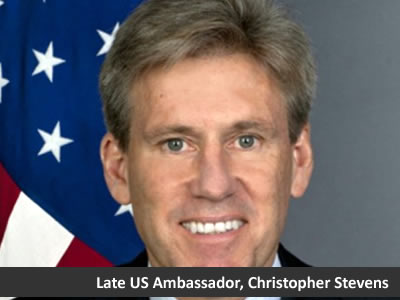
The US Ambassador to Libya was killed along with 3 other staff members; in Yemen they attacked an embassy; in Cairo they're out on the streets. Over this film.

It's spreading to Iraq and Iran.
To Bangladesh.
Muslims don't like it.
Understatement.

If you look at the YouTube video, you might go on to read the comments, fairly awful as they are. You'll note a consistent attack on "Jews" when complaining about the film. Which is just like attacking Muslims isn't it? Anybody get it?

Hilary Clinton on Sky news called the video "disgusting and reprehensible" in a pretty appalling political attempt to limit the protests, which are expected to break-out again today, after Friday's prayers. Prayers? Irony of ironies.

But the video continues to be broadcast on video sharing sites.

Putting their offices at risk and putting their staff at risk.
And nothing to do with religion, nothing to do with offence, but to do with freedom of speech. The right to express your view within the general law, which this is. Social Media allows everyone to do that, like it or not.

Google owned YouTube have left it up.
Good on them.
And so have I.


Thursday, 13 September 2012

Iceland now considers online ban of porn of gambling. Vodafone considers it too.


I've blogged before about countries trying to restrict access to online and Social Media largely, for political purposes. China obviously restricts Facebook and recently, those two great bastions of democracy - Eygpt and Turkey - have done the same. http://streamabout.blogspot.ie/2012/09/india-turkey-start-to-ban-social-media.html

It follows on from Social Media playing a key role in revolutions and overturning Governments. Governments, that is, that they don't like.

Now, for different reasons, Iceland is in on the game.

Their two largest ISP's - Vodafone and Siminn - are looking to shut down porn, gambling and wait for it, "other questionable content". Would that be the Russell Brand site? Because I'd be in favour of that. But once you hear a loose statement like that - "questionable content" - you know you're in trouble.

The reason is of course, like Turkey, Eygpt and China have their reasons, to "protect" Icelandic citizens from "viruses" and "malware". Indeed. Kind of like concerned parents.

In April of course, the UK blocked sites like "pirate bay" to stop illegal downloads - to protect their citizens I guess....or is that to protect multinational companies? I'm just not sure. They are actively considering a ban on porn applying pressure on ISPs according to The Sunday Times.

Worse still, they've almost introduced, as part of their 'cyber security strategy', a ban on "criminals" and "cyber bullies" online. Worrying stuff because loose definitions allow abuse. Are Scottish nationalists "cyber bullies"? 

Perhaps Vodafone and Siminn would like to return the profits they made from allowing access to porn and gambling? Nice signal of sincerity I'd have thought. And of course, this is exactly the ban that Mitt Romney wants too. Australia is also actively considering it and extending it to "terrorist sites". Hmmm, they'd be the sites the Australian government don't like. Aboriginal sites perhaps?

If a stance is going to be taken that gambling is "wrong" online, then it should proceed surely, to horse racing, football betting, and so on. Yet I don't hear calls to ban that. Why? Because this is a focus of all things online. This is an attempt to restrict online access because Governments don't like it.

They control media through licensing or judicially in the offline world. It is an outrage that in Ireland, you need a Government approved licence to broadcast a radio station. Outrageous.

Whether you like people to gamble or to look at porn is not the point. Once you allow someone else to start closing down sites, at their discretion, you are now into censorship of online. Perhaps consider closing alcohol sites because they might lead to drink driving or because you're Muslim? Or political sites that eschew revolution and anarchy? Or whatever.

I'm surprised at Vodafone particularly. Their concerns on "malware" and "viruses" seems only to apply to the good citizens of Iceland. Why not extend that concern to their global offices? Does that concern not outweight their financial gain I wonder.

You're allowing some balding, middle aged bloke, with his shoes on a big desk, in a grey suit, decide what you should and shouldn't see each morning. And that's wrong.

There's a start of censorship here, to control the media - which is more and more online. To control your voice.

As someone wise once said - I don't agree with what you're saying, I don't like what you're saying, but I'll fight to the death for your right to say it.

Personally, for example, I think the US ban on online ammo sales is probably a "good thing". But don't fall into that trap. Because someone has a different radical view than you, or you don't like their religion, or their politics, or just because they're different, don't deny them their rights - within the law. 

And this is not about that, trust me.
It's about trying to get on top, to control, Social Media.

Let people be heard.
All the people.

Wednesday, 12 September 2012

App downloads doubling but 89% are free. 3 Dollars looks like your maximum pricing.


The App market, largely developed and driven by Apple, continues to explode. Facebook App store and Amazon's similar offering, are coming up on the rails though with Facebook having the power to take a greater hold on the Apps market.

However, interesting fact is that it's driven by Apps that are free. 89% of them. This year they expect about 46 billion app downloads - nearly double the 2011 figure - and the price for those that do charge is circa 3 dollars (the cost of 90% of "paid for" Apps).

What all that means is that App developers need to think of other, new ways to make money than purely the cost of the download. Perhaps generating subscriptions or getting margin from purchases using the App.

Worse still, advertising.

In line with that, Google's YouTube have just launched an Iphone App in the Apple store. For the first time they're generating Advertising through pre-rolls on the App which they share (small share as it is) with the video owners. It's also going to be a better experience with "finger slide" making it easier to switch from channel to channel. They also have better sharing from Google+, email and text as well as the old reliables.

So whilst the App market remains buoyant and increasing dramatically, the lesson here is to go free and then generate money some other way. It would seem that a price point of 3 Dollars is about as high as you'll get if you decide to ask for the App to be paid for.

More and more models are being built around advertising revenues.
Which means, more and more hands in the jar.
Which means less and less money to be shared.
Which is exactly what happened in traditional media.

Advertising money is one way to run your business, your App, but increasingly it's becoming difficult. Better models, such as margin on third party sales, are well worth considering as core revenue. Or at least, have two income sources.

Forgive me for linking an Irish App developer whom I have no idea about but no harm to support because it looks imaginative http://www.apps.ie/ 

46 billion downloads.
That's a lot of cut through and imagination you'll need.
There's an App for that.

Tuesday, 11 September 2012

Today 11th anniversary of the bravery of NYPD officers. A fitting tribute on Social Media by the NYPD and FDNY is underway.


Today marks the 11th anniversary of the terrorist attacks on The World Trade Centre, Pentagon and Flight 93.

The New York Police Department are using Social Media this year, to commemorate their fallen colleagues. Or should I say, heroes.

Since Saturday, they've been tweeting the names, one an hour, of those who died from the NYPD from their official Twitter account (@nypdnews). The tweet then links back to a Facebook page where you can view the officer's photo and details. The names will then be read at a memorial service today.

It's the first time it has been done and the NYPD only decided to go online with Twitter and Facebook, earlier this year. Families of the fallen are also supporting the memorial by retweeting and feel it brings the names back to a reality. 

It's all searchable through hashtag 'neverforget' and The Fire Department are using Social through their Twitter page (@fdny) by sharing thoughts and memories.

It should also be noted that most people under 20, won't directly remember the attacks whilst this Social campaign will involve them and bring it into their memory. It's a great way to educate younger generations about 911 and also to engage them. It's a positive use of Social Media and some healing for their families to know they're not forgotten. In fact, it's hard to think of Social being used in a better way.

When you imagine the bravery of these men and women who showed no concern for their own lives, in the service of others, it's fitting that they are remembered - albeit on Twitter and Facebook.

We should not forget. 
And Social Media used in this way, will help us to remember.

John 15:13 Greater love hath no man than this, that a man lay down his life for his friends

Monday, 10 September 2012

Apple Iphone 5 about to launch. Their secret Iradio launched discovered. And this is much, much bigger.


Next week, Apple's CEO Tim Cook will unveil, what we now know, will be called The Apple Iphone 5. This is Apple's next generation phone to compete with Samsung's Galaxy S3 launched earlier in June and of course, facing possible bans in the US after Apple's victorious court case which I blogged about here: http://streamabout.blogspot.ie/2012/08/court-ruling-apple-persist-samsung.html . 

It will also be compared Nokia's Lumia 930, launched this week, although the mobile phone pioneer, Nokia, has had its shares cut to "junk status". So hardly a competitor.

What we didn't know, was that Apple was secretly working on the launch of iradio, as big a gamble as itunes - but more of that in a minute.

The Apple Iphone 5 we know very little about except strong rumours. 

It's going to be taller than the current iphone with therefore, a taller screen and about 30% thinner. The connector gadget is getting smaller, with the connectors getting better, giving much faster wireless and ultimately, quick 4G connections. It's likely to have more RAM and a faster processor - so generally just a better phone.

More importantly, reports strongly suggest that Apple is planning its own internet radio service allowing it to compete in the music streaming business against people like Pandora, We7 (UK owned by Tesco) and Spotify.

What would happen is that people select tracks from a 'catalogue' and play them continuously via an internet feed or, more likely, it will feed you music based on your interests (as distinct from actually picking the track).

Rather than owning them or downloading them as in the itunes model, you get continuous radio based on what you like. 

Depending on whether Apple choose to go for the model where customers pick their tracks or instead, feeding them music based on interests, they will be a direct head-to-head with Pandora/Spotify. 

Spotify (where you pick your own tracks) loses money quite heavily due to music licensing issues whereas by feeding out music based on listener interests (Pandora), it has been much more successful.

Most of us know the type of music we like but don't know what we want. So developing internet radio based on a indication of preferences, seems to make sense. 

Other similar business saw share prices fall dramatically Friday, on foot of the news. Apple is such a good company, nobody wants to see it enter into the same space and even talk of Apple entering into online radio saw Pandora shares drop 18%. I think the radio option makes more sense (streaming you music based on your preferences) and indeed it's not that long ago when I chatted to Irish radio businessman, Dermot Hanrahan, who outlined exactly the same vision. Yet again, ahead of his time.

Online radio, iradio by Apple, will be a world beater and by being deeply integrated into their products, such as the Iphone 5, will guarantee distribution. Furthermore, if they get a lot of listeners to their iradio, it will also generate sales on itunes, as when listeners hear a track they like, they might want to buy it.

Great business.

Unlike the giants of old, Microsoft as a clear example, Apple do not sit on their hands. Innovation and invention precedes their greatness.

Friday, 7 September 2012

Clinton Speaks, the world tweets. 22,000 a minute beating Romneys paltry 14,000. But behind Michelle Obama. Social Media measurability!


We talk about the impact of Social Media on brands and customer engagement but just to show how measurable it is, I think you'll find this interesting...and thanks to Mashable for the analysis.

Bill Clinton, speaking at The Democratic National Convention last night, had the most tweets. He beat Mitt Romney tweets at The Republican Convention, last week.

But he didn't beat Michelle Obama.

Clinton spoke for 50 minutes and the number of relevant, related tweets was a staggering 22,087 a minute! Romney's last week was 14,289, so a little over half. Michelle Obama was 28,003 meaning Clinton wasn't a mile off.

But measurability of Social Media can go further. We know, for example, that Clinton's tweets peaked when he talked about jobs and Obamas job record - so suspect that will be included majorly in Obamas speech.

Next biggest topic was his appeal to vote; then his "we're all in this together" soundbite; next when he was talking about Mrs. Clinton; and lastly his "takes some brass" piece.

So the measurability of this will actually help formulate future speeches and issues. It's a real, relevant use of Social.

5.5 million tweets were sent during the night.

I'll show off a bit and tell you I've met Bill twice including a lunch and trust me, you've never met a more absorbing, charismatic guy. In particular, he knows how to read a room - he knows what needs to be said and how to say it.

The Republicans brought on Clint Eastwood who didn't do a good job and the Democrats used Bill. Bill won on tweets but more than that, he won on engagement.

We'll see what happens to Social Media after Obama does his bit.
But I guarantee you, they've taken notice of Clinton's twitter and they'll adjust Obama's speech.

My money is on the fact that he'll emphasise jobs and do it early.
Because you ignore Twitter in politics, at your peril.
And you ignore it as a Brand, and you're dead.

Thursday, 6 September 2012

Wikipedia. 12% of global internet traffic a month. Highest search refer. 6th biggest site. And we forget about it?


Wikipedia, the online encyclopedia created by users, is running the world's largest photo competition.

Called "loves monuments" it's asking people to photograph monuments of historical and cultural interest. Clearly, Britain's Nick Clegg comes to mind but what they're trying to do, is to create a more visual site.

Wikipedia is the highest result on Google so a lot of brands, companies, people don't realise that they can and should be, on the site. Although there are rules governing what's acceptable, it's still a good place to spread information.

Launched in 2001 by Jimmy Wales and Larry Sanger, it currently has about 23 million articles. It's talked about as being the world's 6th most visited site and isn't monetised. No ads, just donations, run largely by volunteers online which gives it an amateur feel. After all, who else would run a photo competition on monuments? A little bit of the 'village fete' about it.

It's also "sticky" with "high dwell times" because it takes time to find and to read the information. A holy grail for website owners.

One is reminded of Microsoft's Encarta which was launched in 1993 but Wikipedia has really overtaken all contenders. Wikipedia has also shut down twice in protest on censorship so it's very much a non-commercial site.


The consequence of that non-commerciality, is that it's both visually unappealing and frankly, difficult to edit, post, search, although it did launch its first visual editor late in 2011. Hence a strive to get more photos.

That being said, it has heritage which gives its content, credibility. And as we all know too well, content is king.

Whilst Wikipedia would never wish to be seen as something to be used in marketing, the fact is that such a substantial site, which such good search results, should not be ignored by marketeers. A word of warning, its editors are always referred to as "grumpy" so the content does need accuracy.

And of course the content needs interest and relevance but a presence on Wikipedia brings traffic and possibly more importantly, kudos. We do forget about it in some ways whilst it happily generates about 12% of the worldwide Internet traffic every month.

We will see if the "loves monuments" project improves the look of the site.
But we should not forget its power.
Nor should we forget to use that power.

Wednesday, 5 September 2012

India + Turkey start to ban Social Media. Thicks.


The great democracy, India, has now banned a series of websites and Social Media. Clearly, they have issues around freedom of speech and especially when they've seen the role of Social Media in revolution across the globe. They think by banning Twitter, they'll maintain their control. Uh huh, wrong answer.

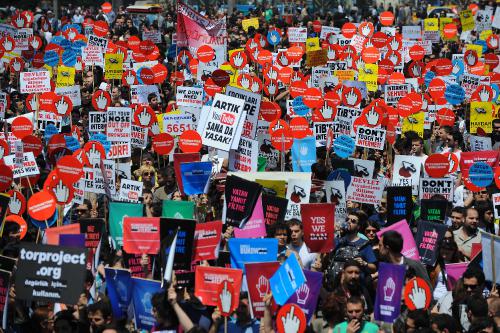
(Turkish protests against internet censorship)

Turkey has now followed their lead with temporary bans on Facebook and Twitter. Temporary because they're watching to see the reaction. 

Turkey's Minister of Communications said that "Social Media can cause good things to happen" but went on to say "but it could be also used to provoke great masses and provoke them". Of course it could. Let's not provoke and misguide the masses.

So these two great bastions of democracy, have decided that a ban on the freedoms of their citizens is the way to protect them. 

India's ban prompted the misguided masses to revolt, leading to some restoration of service. Turkey's constant battle with the PPK, was one reason given for their ban, that seemingly Social Media "exaggerated PPK claims of military success". Those PPK chancers.

Of course both countries have shamefully poor records on human rights anyway, with Turkey, a Muslim state, getting the most flak. You'll know of some of their abuses with The Kurds and indeed, clean-up attempts as part of a process to join the EU. They have already been fined this year by The European Court of Human Rights for breaches of, human rights. In the ECHR annual report, it ranked Turkey number one abuser of rights from a list of 47 countries who signed the European Convention on Human Rights.

Only this week, there have been calls for India to abide by the UN resolution to repeal their 'Armed Forces Special Powers Act' which goes without the need for explanation. They have a history of execution and an army of "disappeared".

Their bans on Social Media is further proof of their desire to stifle protest and objection. It will also bring the concept to other states such as Iran, that great beacon of tolerance, whom undoubtedly will want to follow suit.

It is a measure of their oppression and one which we should all be aware of. We should tweet it, post it, blog it because at least, they can be embarrased by it and possibly, recant.

Unlikely perhaps but it's owed to the citizens of India and Turkey who wish to remain online and share their lives. At least you know about it now. And at least, you can tell someone else.

Social Media is a danger.
It can bring down a regime.

Tuesday, 4 September 2012

Myvouchercodes. An App that gives you geo-located vouchers and now allows restaurant bookings. Smart.


Forgive me but this is one of those things which I think is clever and always generates the reaction, "hasn't that been done?". Seemingly not.

Myvouchercode claim it to be a UK first.
Founded by Mark Pearson (you might have seen him on Secret Millionaire), he's funded the business on its own, without external funding and retained 100% of the equity.

It has just added a restaurant booking ability within its GPS location based, voucher saving, smartphone app. So now where you're out and about, you get vouchers that are directly relevant to where you are and the ability to book.
Location based vouchers AND location based restaurant booking.

It gives their 500 restaurant customers more business and their app users, better relevant content. So say you're in town (or a town you don't know very well), you look at the local restaurants, see a voucher and you book one there and then. Nevermind just availing of the vouchers as normal. Their clients include Gap, Warehouse, Yo!Sushi and Argos. This will help drive that client base.

Easy to use, easy to book and it's getting about 5,000 downloads a day. I'm not surprised. 

I blogged before about 'Deal Fatigue' here http://streamabout.blogspot.ie/2012/08/groupon-pioneer-of-coupons-online.html

To me this isn't in that category and in fact, brings the whole deals business a step along the way. Furthermore, it's one useful geo-location based App which people won't resent. Whilst we don't like people to know where we are at any given time, this one makes sense and will be more acceptable.

It shows the power of innovation.
A good App is hard to find. 
Here's one.

Monday, 3 September 2012

Television broadcasting takes another hit at The Republican Convention. Google Hangouts are another nail in the broadcaster coffin.

GOP Convention

Another nail arrives in the coffin of Television news broadcasting.
It's called Google hangouts.

What once was the exclusive domain of the Television networks, is now fully open to citizens and with encouragement from Google, they used it at length from The Republican Party Convention. Without the need to call "lights, action, make up", a whole new breed of citizens reported back live about the convention.

No trucks, no cables and no, media types.

Standing in front of small cameras or smartphones they did their report, their piece to camera, just in the style of Sky News, Fox or CBS. Some perhaps were a little unpolished - but that will come in time and some broadcasts were a bit, well, "fuzzy" but so too will that be corrected.

We are so used to Skype and dodgy cameraphone pics, that perhaps there is an honesty about this type of broadcasting. The fact that it's not manufactured, means it's real.

However, in return, what we got was honest news from honest attendees and the start of a technical revolution where "ordinary" people will become adapt at sending pictures back live via streaming networks. And easy it is.

Indeed. Google I suppose, is now a TV network in its own right with video "journalists" literally in every street, every home. Whilst the quality might not just be up to standard yet, it will be and one wonders how traditional TV stations are going to compete with this?

The answer is they can't unless they got involved in creating their own citizen network which they haven't and they won't. They see the intenet as a threat and so they pooh-pooh it and run away whilst their newspaper competitors embrace it and jump onboard. It is newspapers that will be the new TV.

Whilst Google isn't a "content company" (like Streamabout), it is a network that facilitates the distribution of content and although not quite "there yet" it's well on the way. The Huffington Post Live is one of the great early adopters of this type of hangout news.  And I blogged here about that recently http://streamabout.blogspot.ie/2012/08/tv-broadcasters-watch-out-newspapers.html

See what you think and then ponder the future for TV news.
Then think about Netflix and the future of TV entertainment.
Then think about Apple TV and the future of TV companies.
And wonder how they let it all get past them.


Wednesday, 29 August 2012

TV Broadcasters watch out, Newspapers are coming......


There was a time when we all said, newspapers were dead.
Online news was where it was at.
Free online news. 

I didn't disagree and neither did most of us at the time. Wrong again.

Recent research (ABC) data seems to show that newspaper readership is in decline and whilst that may be true, it takes no account of the growth of their online assets, which are not.

What you're seeing is a switch of readers from one format to the other. And if I was investing, I'd invest in newspaper publishing - no doubt about it - because they are the new TV.

As Rupert Murdoch said recently, "news is the most valuable commodity in the world" and the recent, very excellent launch of Huffington Post Live, confirms that but the definition of "news" is changing.


I blogged here about that launch http://streamabout.blogspot.ie/2012/08/huffington-post-live-launches.html

Look at youtube. What people want to watch are short (the average youtube length is 2 minutes 1 second) video clips giving more entertaining news. No more press conferences but rather, interesting interviews and insights into opinions about the news - exactly what the huffington post is all about.

The problem was of course, that printed versions of newspapers can't show video. But their online editions can - and boy, are they moving fast. Plus they can not only show you video but give you the full news story. Extensive, informed news with live action.

Firstly, they can have video posted by the hour, whereas TV broadcasters hold their news until their traditional ad breaks (such as the 6 o'clock or 9pm bulletins).

So now newspapers can time beat TV broadcasters to delivering news/sport/entertainment/weather. 

Secondly it's what consumers want. When something happens, they want to see it now, not later and certainly not when it suits a TV broadcaster to show it. If something happens, out with the mobile phone and you view it there and then.

Thirdly, it lets newspapers enter the TV advertising market using the variety of pre, mid and end rolls (ads before/during/after the video) at a premium price and thereby attract in those TV advertiser brands that they never had before.
That means more revenue.

So it's the real magic combination whiich newspapers are perfectly placed to capitalise on. And they are.

Look at www.independent.ie for example (the website of The Irish Independent, Ireland's largest daily www.independent.ie) and you'll see lots of video. Even daily weather video in a newspaper - who'd ever have thought it!

Which will bring lots of readers and consequently, lots of Ads. Irishtimes.com, The Daily Mail and Examiner.ie are well into the race too and all are to be congratulated. Meanwhile, TV Broadcasters are stuck showing old series through their iplayers. Successful, for now.

Because Newspapers have taken something which in the internet age, was a major threat and turned it into a new opportunity. As so few others did - such as Video rental businesses and music/book sellers.


Newspapers are the new broadcasters. 
It's TV that needs to look out.

Tuesday, 28 August 2012

Mario and Luigi 20 years old. The game that really started it all.


It's just twenty years old on August 27th, when the game of games got its first Japanese release.

Nintendo's Super Mario Kart.

And probably the game that started it all. A huge business that gaming is.

The best selling video franchise of all-time, it was 32nd in the Nintendo top 100 popular games of all time (although I think that's a little unfair).

It's basically the first Kart racing game and the 2nd biggest selling WII game with over 32 million copies sold. There's been 7 versions since.

Luigi was always the hero but Mario is best known serving as Nintendo's mascot and designed by Shigeru Miyamoto (whilst developing Donkey Kong). Mario was an italian plumber (although a carpenter in the first game) who lives in Mushroom Kingdom and probably the best known mascot ever. Both Mario and Luigi were designed as being from Brooklyn in New York.

And it influenced so many other games, practically solely responsible for the Nintendo Entertainment System success. The Guinness book of records dubbed it "the godfather of gaming". It fostered a movie (with Bob Hoskins) and a TV series.

Of course things have changed a lot in online gaming but it's important to note that it's only 20 years when it all started. We've come a long way.

Gaming is one of the internet massive growth industries especially with the development of Flash and Java and is worth more than 20 billion usd annually. The online gaming association recently announced that 20 million players on Xbox Live had spent over 17 billion hours playing. 78% play with at least one other player and in some ways it's an addiction. 58% are male and therefore surprisingly, 42% female. 'Call of Duty' is considered to be the most pirated game of all time.

Amazing business is gaming.
And we forget about it sometimes.
Happy Mario Birthday.