Showing posts with label mashable. Show all posts

Thursday, 18 September 2014

Scotland goes to the polls. Newspapers fiddle. Rome "burns".


Very interesting piece on Mashable, given the day that's in it when Scotland goes to the polls, to examine the newspaper front pages today.

There's something beautiful about the design of 'The Guardian'; The 'Scottish Daily Mail' pins its colours to the mast; FT takes a more objective view; 'The Telegraph' (my paper of the decade) gets its readers right; 'The Sun' walks the line; 'The Mirror' doesn't and 'The Independent' looks great but says nothing.... Or something about democracy and the rest of the world....

Interesting though.

It'll be a Yes. 
No doubt about it. 
As Robbie Burns himself, once said.

(day after and I got that wrong! astonishing because I was never so sure of it and I cover/watch a lot of it. There you go)


Tuesday, 20 May 2014

If the future is ad-free Netflix, what's the future for Ads?


Very interesting view reported by Mashable from Neil Hunt Chief Product Officer (what?) at Netflix on the future of TV at the NYC Internet Conference.

What he's saying firstly is that they will be a huge proliferation of channels (48 million he thinks) so viewers will have choice. He's right, because Internet TV is global rather than currently, national. So if you produce a channel say, on knitting, there's enough global viewers interested in knitting to make it sustainable.

Secondly, with that, comes creative freedom to produce shows like that without depending on the TV moguls. So smaller shows but with devoted audiences. Indeed "smaller" only in the global sense. Episodes might also not be the standard half or hour long either. 

Thirdly and I think most importantly, he outlined that with the massive growth in connected or Internet TV's (after all, will you be buying a TV next? probably not) that potential audiences will grow to sites like Netflix. And they will be, subscription based.

Consequently, not an advertising funded model and Netflix, as a market leader, have no plans to seek advertising because they believe, it interferes with the viewing experience. 

Indeed we know too from Apps, that consumers are prepared to pay premiums for 'ad free' Apps.

Now if that's the case and Netflix grows as it is, advertisers are going to have a problem with placing their TV Commercials. There will be less media and already, in Irish homes, Netflix have 200,000 subscribers. That 200,000 homes without access to TV advertising when they're on Netflix.

Interesting.....

Friday, 7 March 2014

You will find this shocking because, it is. Powerful online video.


Simple piece of video, nothing too complicated here to shoot and no massive budgets - but powerful? Is it ever.

Online video when it tells a story can really reach out and in this case, for "good". Over 10.5 MILLION views since March 5 (3 days) giving it a reach no Advertising campaign could without spending literally, millions.

And it will get results. It already has.

Brilliant concept, superb copyline (which I'll leave you to work out).
You'll note too, some touches such as the Dad's newspaper headline, "Government declares martial law" and so on.

10,000 children have died in Syria alone. 5 million have been "displaced" in tents. Ours, sleep happily tonight.

And you can click the video to help. So there's your call to action.

It's all round, a great piece of work and thanks to 'Mashable' for pointing it out. It shows the power of what online video can do. What we do.

Friday, 20 December 2013

Mashable's brand of the year? Netflix. Here, here.


Mashable, the probably best regarded technology blog, has named its breakthrough brand of 2013 as Netflix. Right too.

Two years ago Netflix was dead and it's a real lesson how a bricks + mortar business embraced online. You might not know, but Netflix then, was a DVD seller sending them to you by post.

When they opened their online streaming business, they offered both (online or by post) but increased their price by 60% causing outrage on social Media (and a mass customer exodus).

CEO Reed Hastings was named the worst CEO by The New York Times and the shares went into freefall. Then.

It was only a new focus on their online business that brought back customers and early in 2013, their first real good performance with a 7m usd profit on the last quarter of 2012. And a big growth in subscribers, eating Blockbuster along the way who didn't react.

They ploughed money back into the service with more content and international roll-outs. They used their money to build their business with a clear identification of low cost movies aimed at families with kids. No porn here and possibly no blockbusters, but good solid family stuff at 7 dollars a month.

They released 'House of Cards' in February and it all started to come right topping 40 million subscribers now. Stunning. It was the top performing share early in 2013, up 300% year-on-year (YOY).

The future could not look brighter.

Better content supported by their cashpile, with an opportunity to enter new markets and with business acumen to keep at their brand, couldn't be better. 

They are already the new TV. Advertising money, if they decide to take it (they may not since it's not conducive to their brand offering) awaits in the billions.

Subscribers looking for additional premium services like live sports, await on the sofas.

It's a great digital story. 
The new Apple one.

Thursday, 25 July 2013

Pay your bills with your face. Keep smiling.


Pay your bills with your face. 

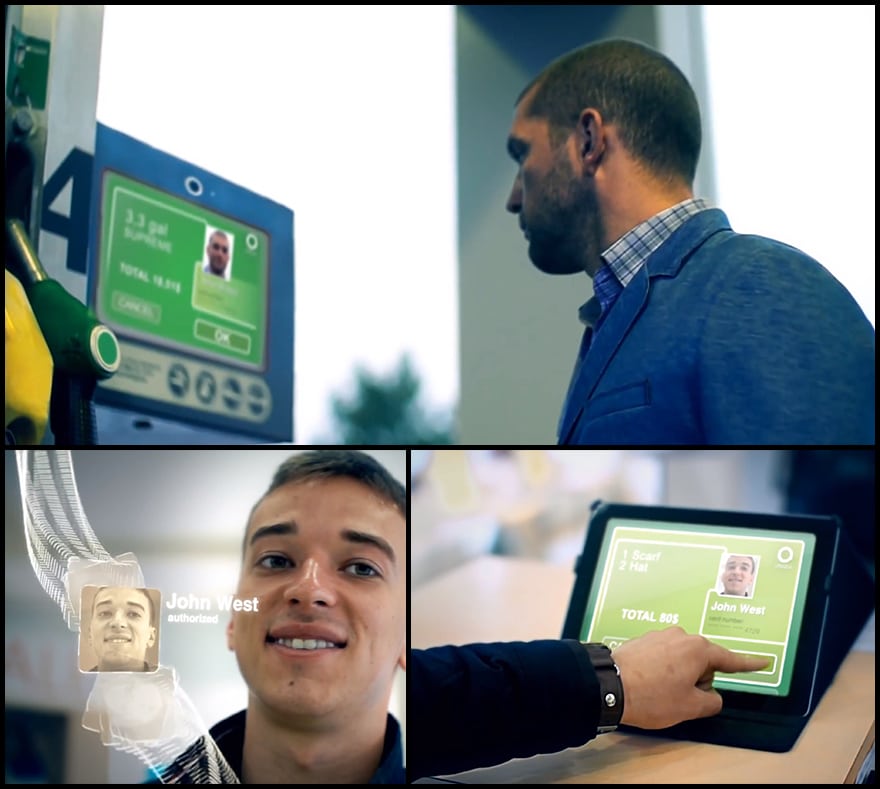
Like fingerprints, facial recognition software is even more foolproof and whilst it has been in development for things like security access at Banks, Hospitals and so on, it has never been used for payments.

What happens is that the payment provider holds your encrypted credit card data and your facial features. When you go to pay for something, you simply look into a camera (like at an Airport), it recognises you, clears the payment and you just click 'ok'.

So no need for plastic, no need for cash. Ideal if you're abroad or just stuck somewhere. Furthermore, it has big implications as it develops, for credit card issuers like Visa/Amex. It also has implications for currency exchange businesses and banks.

Developed by a Finnish company, Uniqul, it has been tested in Helsinki according to Mashable. But of course, the key here is the cost and uptake of the camera kit by retailers. You need retailers onside first and foremost and then the confidence of consumers.

But people will like it once they see it works and have used it once. It's a much easier way to pay and the initial intrigue, will drive it on. Furthermore, it should be more secure and overcome credit card theft and ATM phishing frauds. So it's a safer way to pay.

The world just changed.

Wednesday, 3 July 2013

Consumers chose 'recommendation by friends' over advertising. Both can work.


Mashable, the once great Techy site, has run another ridiculous story today about 'Do Consumers believe in advertising?'

http://mashable.com/2013/07/03/infographic-advertising-do-you-buy-it/

It's up there with their other stories today about a woman building a prosthetic leg from Lego and the 12 penny pinching cats. It all went wrong when it was bought for 200 million usd by CNN. Anyway...

However the story has a point in one way. 

Of course Advertising works. Of course it sells, but one interesting piece from the article is an infographic. What it shows is that people mostly trust "recommendations from people I know" over other forms of advertising.

Of course too, word-of-mouth has always been the most powerful marketing tool. 

Advertising's first job is to inform - tell people that the product is available and then try to make them like it. Often referred to usefully as 'I see it, I like it, I buy it'. Without advertising, you simply wouldn't know the product exists. And if you don't know it exists, it can't go on your shopping list.

The olden days, the golden days of advertising were based on 'demonstration' where live commercials interrupted programmes and showed the product.

Consequently, the role of recommendation or word-of-mouth is now more key than ever. And Social Media fits into this part of advertising, perfectly.

Perfectly for example, through Facebook posts encouraging followers to comment/recommend; through Twitter by starting a hashtag and a conversation; through Instagram and Vine Video by showing the product and sharing it; through website video explaining it. And so on.

Skype has a role as does Google hangouts to have brands go online and talk to potential customers.

So it's this Social Media element that fits WITH advertising to encourage recommendation. 

Not that we didn't really know that..... but because it's becoming the most important feature (as the Mashable story points out), it's not getting the push it needs. Not getting the budget as traditional agencies continue to rubbish it and not getting the strategy because planners don't understand it.

It should be part of any mainstream activity - if not central to it. Advertise the product but in tandem, encourage recommendation through Social Media activity. 

People always think you Ad is "selling to me" - which it is - but if the brand offering stands up, get in deeper with purchasers. Show them how the brand helps and get them to tell their friends not through continuous, mindless, Advertising but through on-the-ground social media activity.

An online fashion show will help to sell the dress; Twitter tips on "how to" will sell the beauty products; Facebook pics and fact sheets will help show off the car; Skype programmes will help answer consumer questions on the new Financial product.....

Traditional and Digital are not mutually exclusive. They are in tandem and more powerful when they are. Ad Agencies still ignore it substantially and live in the dream that it will go away. Stopping digital is like standing on Dollymount Beach and trying to push out the tide

If advertising and agencies don't become more engaged, they will lose. 

It is after all, what the client wants. And more importantly, what the consumer buys. Recommendation. Your job is simply to encourage that.

Tuesday, 28 May 2013

Ad Agencies report online video advertising better than TV. Words are being eaten in this sea change.


There is a sea change in the way that Advertising is changing.

Most Ad Agencies are struggling in their mindset to cope with the switch to digital and trying to recover the reputational damage caused to themselves, by themselves, in early attempts to rubbish it.

It is ironic for me to watch Ad Agencies now claiming to embrace digital, having had years embroiled in debating it with them. Like leopards, they now know where the money is and are desperate to be seen as evangelists, with consequential dire attempts to negate their previous claims of it being, a waste of money. It will be hard to erase their histories on Google though.


Thanks to Mashable today however, they now report that "Advertising executives" admit that the tide of advertising has changed and that online video ads are taking the lead http://mashable.com/2013/05/28/online-videos-tv-advertising/

75% of them said that online video ads are more effective than TV Ads - a drum that Streamabout has been banging for some time. Only 17% said they were "less effective".

The report produced by the reliable 'emarketeer' showed that online video was even more effective than display ads (print ads) and better for direct response. Which it is.

Video views grew by 23% this year - far greater than the declining audience on TV and it will continue to bury traditional TV broadcasters despite their claims. They know it.

Spend on online video is estimated to grow at 40%, outstripping all other media. Except of course, media that embraces online video like newspaper publishers.

It's a sea change alright.
It is, wakey wakey time too.

Friday, 1 March 2013

Mixed fortunes at daily deal sites LivingSocial and Groupon. CEO resigns and his letter is here. Both companies were stars....once.


Bizarre changes in fortune at Daily Deal sites LivingSocial and the original, Groupon, all on the same day.

LivingSocial announced today that it has raised 110 million usd in funding from largely, its original investors - so that sounds more like a "cash call" which might indicate difficulties at LivingSocial if it is. 

A memo from CEO Tim O'Shaugnessy (some Irish connection there I would think...) said it was to "build our reserves". And building they need given a loss of 650 million usd in 2012 up from a loss of 499 million the previous year. Over a billion usd in losses in two years.

It cut its staff by 10% (400) at the time with reports in December that it was "running dangerously low of cash". With losses like that, it's not sustainable.

On the other side, Groupon, the 4 year old, daily-deal-market-maker, fired its co-founder Andrew Mason who was also CEO (that's him above with the cat). It came just 24 hours after reporting bad numbers again for Q1 bring a 25% drop in share value. Now down -75% since it floated which 'Forbes' magazine calls 'The Groupon Disgrace' and said "talk about a CEO who no longer has any credibility with investors". Strong stuff.

Mashable posted his staff resignation letter which actually, I liked.


(This is for Groupon employees, but I’m posting it publicly since it will leak anyway)
People of Groupon,
After four and a half intense and wonderful years as CEO of Groupon, I’ve decided that I’d like to spend more time with my family. Just kidding – I was fired today. If you’re wondering why… you haven’t been paying attention. From controversial metrics in our S1 to our material weakness to two quarters of missing our own expectations and a stock price that’s hovering around one quarter of our listing price, the events of the last year and a half speak for themselves. As CEO, I am accountable.
You are doing amazing things at Groupon, and you deserve the outside world to give you a second chance. I’m getting in the way of that. A fresh CEO earns you that chance. The board is aligned behind the strategy we’ve shared over the last few months, and I’ve never seen you working together more effectively as a global company – it’s time to give Groupon a relief valve from the public noise.
For those who are concerned about me, please don’t be – I love Groupon, and I’m terribly proud of what we’ve created. I’m OK with having failed at this part of the journey. If Groupon was Battletoads, it would be like I made it all the way to the Terra Tubes without dying on my first ever play through. I am so lucky to have had the opportunity to take the company this far with all of you. I’ll now take some time to decompress (FYI I’m looking for a good fat camp to lose my Groupon 40, if anyone has a suggestion), and then maybe I’ll figure out how to channel this experience into something productive.
If there’s one piece of wisdom that this simple pilgrim would like to impart upon you: have the courage to start with the customer. My biggest regrets are the moments that I let a lack of data override my intuition on what’s best for our customers. This leadership change gives you some breathing room to break bad habits and deliver sustainable customer happiness – don’t waste the opportunity!
I will miss you terribly.
Love,
Andrew

Groupon was the worst performing stock in the US market in 2012. Shares trade below 3 usd now, from when they floated at 20 usd. 11 billion of value has been wiped out. Groupon had turned down an offer of 6 billion usd some years ago from Google. And you might remember the accounting controversy at the time of the IPO.

What interests me in both of these stories is that you'd expect, in a recession, deal sites to be doing well. After all, it's in a recession that people want a deal and all the PR was, that this was what was happening. When clearly it's not and especially not for the segment leader, Groupon.

So I'm surprised. 

But then again there could be a more simple explanation. The market is good but these two companies were lousy. It could just be that, although that would surprise me.....

It seems that's what Forbes thinks who undoubtedly contributed to Andrew Mason's demise because they're such an influential magazine. Mind you, they seem to have forgotten that at the time before the IPO they were influential too calling Groupon, "the fastest growing company, ever".

Tuesday, 5 February 2013

Superbowl Power Outage. Brands really capitalised on it with Social Media. Full marks to Oreo, Jim Beam, Tide and 6 others.


Full marks to Mashable too, out quick with a great story about brands who capitalised on Superbowl Social Media without paying for the expensive commercials. And great too, because it showed brands who were literally, thinking on their feet.

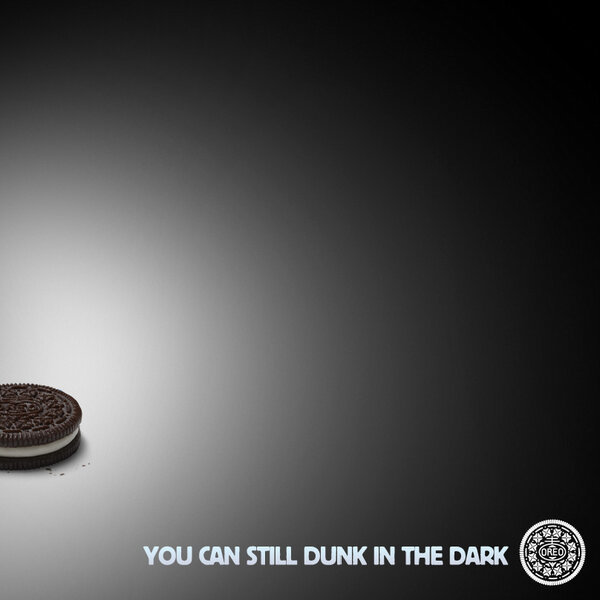
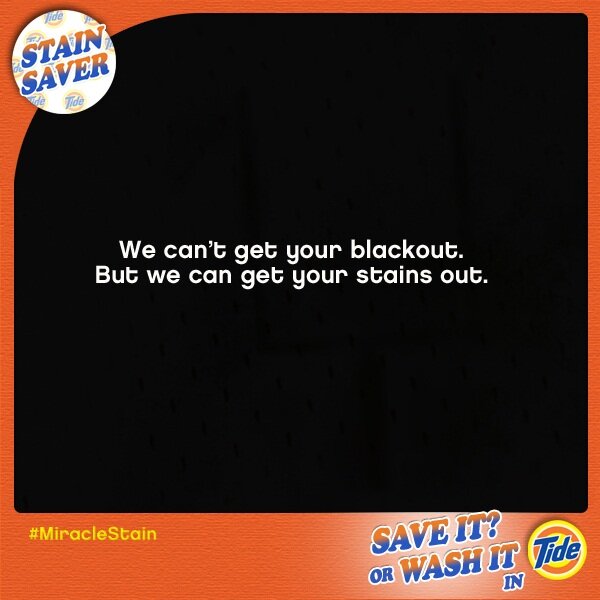
You may (or may not) have been watching The Superbowl, as I was, and as it entered the third quarter, a blackout/power cut ensued. The game stopped and the stadium went into darkness. Out then popped the top Ad for Oreo on Social Media, 4 minutes after the blackout - "No power? No problem.You can still dunk in the dark". Super. And I've no idea how they got it ready so quickly.

Next up was Tide with this...


And then Jim Beam who have a brand called 'Black'.....


Other brands got in too. Calvin Klein with a video of a fairly hunky man doing press ups under the headline, "Since the lights are still out..."

PBS, the Broadcaster, (the excellent broadcaster), tweeted that viewers shouldn't worry because they had 'Downton Abbey' on instead.

Walgreens tweeted that they had candles for sale.

And Audi said they were going to send some of their LED lights to the stadium.

They were also bidding immediately (especially brands like Bud Light) for Adwords 'power outage' and 'blackout'. How brilliant that is.

Fairly great that Agencies and their Clients were that alert to capitalising on something that they couldn't have predicted. Pretty smart thinking. And good energy.

It was a touch-and-go game at the end with Baltimore's Ravens winning what has become a really fabulous spectacle. 

A magnificent night in New Orleans.

Friday, 30 November 2012

Microsoft's Windows 8. Not delivering? Key moment in the life of a one-time giant.


The critical launch of Windows 8 for Microsoft didn't deliver the key bounce it expected, or so it would seem. Reports on Mashable indicate sales are actually down - 21% against 2011 numbers, since the October launch. Whilst it doesn't include sales of their new Surface Tablet and of course, holiday sales are ahead of them, it's still not a good sign. Especially since it's more than three years since the launch of Windows 7.

The advent of Windows 8 was expected to lift the market and Microsoft are really needing that bounce. Although during the week, Microsoft have blogged that they sold 40 million Windows 8 licences, this raised eyebrows on the retail reality ground and without detail of those sales, it's not clear what it means. Some of these will have been sold to hardware partners initially rather than sold on to users; some of them sold into Microsoft's own stores; some have been sold at a low price initially, so what will happen when the price goes up; and so on.

Microsoft CEO Steve Ballmer (pictured) has said that their new Surface tablet sales have been "modest".

The PC market is of course, pretty dire at the moment anyway and one only has to look at HP awful numbers to see that, never mind Dell's continuing struggle too. The real growth here is in other multi devices (which Windows 8 does straddle to a point) and notably in business, a key Microsoft territory, where Executives now operate 2+ devices.

The PC issue explains why Microsoft isn't the power it once was. It had/has a monopoly practically, but in the wrong things.

Fundamentally too, having rumoured to have spent 1.5 billion usd on the Windows 8 launch, it hasn't had cut-through. Most of us are simply not aware of it unlike Microsoft launches of the past. So Marketing hasn't delivered I think.

The next few weeks will give a clearer picture but the retail buzz is not good and in that I'd trust. It is a critical juncture for the company, so we'll see.

In a lot of ways, make or break.

Friday, 7 September 2012

Clinton Speaks, the world tweets. 22,000 a minute beating Romneys paltry 14,000. But behind Michelle Obama. Social Media measurability!


We talk about the impact of Social Media on brands and customer engagement but just to show how measurable it is, I think you'll find this interesting...and thanks to Mashable for the analysis.

Bill Clinton, speaking at The Democratic National Convention last night, had the most tweets. He beat Mitt Romney tweets at The Republican Convention, last week.

But he didn't beat Michelle Obama.

Clinton spoke for 50 minutes and the number of relevant, related tweets was a staggering 22,087 a minute! Romney's last week was 14,289, so a little over half. Michelle Obama was 28,003 meaning Clinton wasn't a mile off.

But measurability of Social Media can go further. We know, for example, that Clinton's tweets peaked when he talked about jobs and Obamas job record - so suspect that will be included majorly in Obamas speech.

Next biggest topic was his appeal to vote; then his "we're all in this together" soundbite; next when he was talking about Mrs. Clinton; and lastly his "takes some brass" piece.

So the measurability of this will actually help formulate future speeches and issues. It's a real, relevant use of Social.

5.5 million tweets were sent during the night.

I'll show off a bit and tell you I've met Bill twice including a lunch and trust me, you've never met a more absorbing, charismatic guy. In particular, he knows how to read a room - he knows what needs to be said and how to say it.

The Republicans brought on Clint Eastwood who didn't do a good job and the Democrats used Bill. Bill won on tweets but more than that, he won on engagement.

We'll see what happens to Social Media after Obama does his bit.
But I guarantee you, they've taken notice of Clinton's twitter and they'll adjust Obama's speech.

My money is on the fact that he'll emphasise jobs and do it early.
Because you ignore Twitter in politics, at your peril.
And you ignore it as a Brand, and you're dead.

Friday, 27 July 2012

Olympics, The Social Media Games starts Today. Where to look online.


These Olympics,will be the Social Media and online games, if ever there was one, because Social Media has exploded since the last games in 2008. 

Facebook alone has gone from 100 million users to 900 million. Tweeting had really only started too, Pinterest didn't exist and Mashable was a proper blog, back then.

Already Twitter has claimed its first victim and they don't even start until today.

Greek triple jumper, Voula Papachristou, (above) has been exited from The Olympic Games.....because of a tweet.

She tweeted "With so many Africans in Greece…at least the West Nile mosquitoes will eat homemade food!!!” yep, hilarious. But she wasn't notified before or after, the committee just issued a press release and that was that. If your life revolved around training and preparation for the games, it's a pretty big deal to be banned.


It also had the knock-on affect of her fellow team members being told that they were not to use Social Media except to talk about the games, not themselves.

But if you're looking out online for the games, here's some places that you might like to start with.


The IOC Olympic Athletes Hub (http://hub.olympic.org/) is a good place to start. Good search features, great updates and an easy list of tweeters to follow.


Broadcaster NBC has its own Olympic Channel (http://www.nbcolympics.com/) which looks really good including live streaming. So you'll see lots of video here but the real focus is on the USA team obviously. 


I actually liked Yahoo's version - very Social and seems to have lots of stuff going on (http://sports.yahoo.com/olympics/) plus a nice piece on Beach volleyball, "its popularity explained". Which somehow they've managed to make a story out of rather than just posting a pic.


The Storify site is a little more upbrow and less Social, but possibly quite cool (http://storify.com/topics/olympics). Lots of video so it makes it worth a browse but not at the same content level as say NBC or the IOC Hub.


Sports Illustrated, the real insider here, is terrific (http://sportsillustrated.cnn.com/olympics/2012/) but will lack the events coverage. Still, if you want the inside track, go here. Nice pics too....


The Telegraph, probably the greatest newspaper on the planet, has really good local insights because the games are in its home town (http://www.telegraph.co.uk/sport/olympics/). Also has a nice blog and twitter feed so this is where I'll be going for sure.


Facebook have a hub of course (https://www.facebook.com/pages/olympics) but frankly, I find it boring. Still if you're on Facebook no harm in liking it I suppose. But it just looks a bit dull and dreary...so far.


And the ESPN site, not to be forgotten (http://espn.go.com/olympics/summer/2012/) is pretty good as you'd expect offering lots of interactivity.

Mashable also have suggestions regarding the top 25 competitors you should follow on Twitter ( http://mashable.com/2012/07/24/olympic-athletes-twitter/).


And an interesting one from left of centre is Zoomph (https://www.zoomph.com/Events/london2012/default.aspx) with geolocation. Actually it's pretty smart.

Athletics was never my thing but it's clear these games are going to offer brands lots of opportunities online. Social Media will be really ramping it up and perhaps bring in a new audience whom previously, mightn't have been bothered.

As they say at the start of most Agency creative meetings and it's not funny anymore - Let the games begin.

Thursday, 19 July 2012

LinkedIn steps up a gear with Forbes number 1 listing and site revamp. Is there something more to this?

 
If you've been on LinkedIn today, you'll have been left in no doubt about their news.

One, they launched in Norway which hardly warranted the excitement it seemed to generate sitting in Dublin. I'm delighted for Norway - just thrilled - but that means they didn't have it until now?

Secondly, LinkedIn made number 1 in the Forbes list of high growth Tech companies and the CEO made the Forbes cover.

And how did you know? because seemingly everyone who works for LinkedIn was basically posting away even on pages where they're not linked (isn't that spamming?). I had about 10 posts this morning and they're gone (taken down) by lunchtime. Did they get a reaction I wonder?

Forbes have chosen LinkedIn as the fastest growing technology company. Ahead of Apple, Qlik, Athena Health and Equinix in the top 5. But it's a bizarre list of what is a "tech company" - no Facebook, Google, Microsoft mentions etc. Or possibly what is "fastest growing".

Following from the Twitter fiasco 
http://streamabout.blogspot.ie/2012/07/twitters-row-with-linkedin-is-about-ad.html, 
and their June security passwords hack, 
 http://streamabout.blogspot.ie/2012/06/linkedin-passwords-hacked-change-yours.html

So they're trying to get some good news out there. This for example from the normally independent Mashable today too;

LinkedIn isn’t just a digital destination for your resume; it’s a vibrant online hub offering all kinds of useful information, tools and functionality.
If it’s been awhile since you explored the site, check out this list of five things you might not know you can do on LinkedIn. Let us know in the comments below how you find LinkedIn a useful tool.

And then goes on to tell you how you can do 5 new things. Hmmmm. Sounds like PR to me. Unusual to see a Mashable story ending with "let us know in the comments below how you find LinkedIn a useful tool". Kinda' like saying "and tell us how great they are". Surprising.


There's also the Mashable story today again that they've revamped their homepage to make it look "more like Facebook and Google+". In essence a cleaner design with some increased functionality based around giving you the updates you want, instead of the flood you get.

"This simpler and cleaner design makes it easier to navigate the page and quickly find the updates you’re looking for – whether that’s a news article your boss has recently shared or it’s to see who has just started a new job,” writes Caroline Gaffney, a product manager at LinkedIn, in a blog post explaining the move.

LinkedIn launched in 2003 and went public (IPO) mid 2011 achieving about 170 million users as a professional networking site. Shares have leaped 64% this year largely because of the Recruiter usefulness of the site and a 24% surge in mobile traffic. The "bulls eye" as the unfortunately named CEO Jeff Weiner calls it and recruitment is a 27 billion usd industry.

What they're saying is that they're turning your resume, your CV, into cash. Businesspeople have value and LinkedIn makes it easy to reach out to them more than a Facebook ever can.

It would seem that LinkedIn is starting to wake up and moving forward with new design, new features, share growth, new territories and a niche business play. This type of publicity and activity will do their share price no harm.

But it's all happening very quickly - like a PR machine has just got into gear. Is there something afoot?

Tuesday, 17 July 2012

Microsoft and NBC divorce from MSNBC. It puts Microsoft in the news. Again.


Microsoft made more news today by pulling out of its 1996 joint venture that was MSNBC.com (Microsoft + NBC News, now owned by Comcast) with NBC buying Microsoft's 50% share.
Whilst both companies have said they want to get on with their own online news agenda, it would seem that Microsoft have its own news agenda and plans.
Up to now, Microsoft for example had to feature the news feed on all of its inventory and it's well believed that NBC's "liberal" (pro-Obama) agenda was not well liked. NBC always sees itself as the opposite viewing choice to pro-Republican Fox News. It also meant that Microsoft couldn't offer other alternative news feeds, or indeed its own, exactly as AOL/Huff Post has done or The CNN/Mashable alliance/acquisition.
It's widely believed that this represents another poor Microsoft online venture (they've lost 10 billion usd online in recent years) having paid 220 million usd into it, it's believed it received 300 million usd back (just about the capital + interest). Equally of course, the corrollary is true - this allows NBC News to supply its content to other non-Microsoft websites and the divorce is being seen as "amicable".
Although to be fair, in 2002, Microsoft CEO Steve Ballmer is credited with saying that they shouldn't have gone ahead with the deal.
According to the NBC site announcement the "focus on hard news and original reporting would remain the same" although we know of Microsoft plans to launch a new news service in the Autumn.
The joint venture was considered one of the most profitable news sites in America by "the trade".
It is being viewed as a move by NBC to take out Microsoft and given that they're the buyers, that seems to make sense.
Given too all of the negative publicity regarding Microsoft (as you'll read plenty regrettably, in this blog alone http://streamabout.blogspot.ie/2012/07/vanity-fairs-expose-of-microsoft-and.html), the timing is possibly co-incidental or perhaps, commercial.
It could be a simple matter that NBC don't want to bet on a brand that's diminishing and that makes sense.
It also makes sense that NBC News are gearing up for a better news service following The AOL/Huff Post live announcement and when they're facing one hell of a competitor on August 13 and they want to plan for that.
News gathering is the hottest topic of the moment http://streamabout.blogspot.ie/search/label/rupert%20murdoch as of course is the whole role of citizen journalism http://streamabout.blogspot.ie/2012/07/citizen-journalism-is-spreading.html
It'll be interesting to see how this divorce develops - on both sides - but also how the whole news content online flourishes and how TV particularly suffers. we know the demand for online news has already impacted negatively on traditional TV viewing.
Let's get ready to rumble.

Thursday, 28 June 2012

Microsoft acquires Yammer for 1.2 billion. Leaving billions scratching their heads. A bubble?


OMG! Microsofts Steve Ballmer and the Yammer boys badly pictured officially by Microsoft - could have flashed it through Instagram - announcing the acquisition this week and looking very 1970's. The new leaders in Social Media wouldn't you say?

I've been blogging a fair bit about whether we're in a bubble or not and as recently as last week here    
http://www.blogger.com/blogger.g?blogID=4671466363911057753#editor/target=post;postID=1971760983930398308

But I also go back to the Instagram deal and Mashable valuation in their CNN sale, and marvelled at the prices. After all, I'm not against a bubble and if money piles into the space, then good for us.

I note too that 3 year old Pinterest (yes, sure, I know, we all love Pinterest) without any revenues of note, raised 100m usd in the last week. But the hugely interesting thing about that, is that it was based on a valuation of 1.5 bn. 1.5 BILLION. Now it was late last year (yep 7 months ago) when Pinterest valued itself at 200 m. So how does a valuation increase so dramatically so quickly? Unless because of other high valuations and a scramble to do deals at any price. A clear sign that we're in a bubble.


And so along comes Microsoft. Remember them? They were the people who largely owned this space until Apple re-invented itself with Jobs and once Social started. I think they've lost their way although have made some good strides in the mobile phone market with Samsung but generally, not the ship they were. They did pay 8.5bn (yep, 8.5 BILLION) for Skype mid 2011 and did, well, not a lot with it and have recently announced a payment plan (which kind of defeats the purpose, doesn't it?) and Advertising. 

And this was the big plan.......increase payments and bring in advertising?

So I can't help thinking that they want to be back in the space, at the forefront, and now are desparate for attention. So they see Facebook and their 1bn acquisition of Instagram and they say, let's go one better.

Then they find Yammer. Never heard of them? Nearly everyone on the wires agree even those who'd you expect to know it all. Nope they say and look blankly. And Yammer has now been acquired by Mircosoft for 1.2 bn usd. A little bit more than Facebook's deal. Interesting pyschology that.


Yammer launched in 2008 and it provides for private communications within businesses - sort of a social network for your company. In September 2010, it was reported to have 3 million users and predominantly Fortune 500 valuable companies. My understanding is however, that this was based on free trials, but I could be wrong (BusinessInsider have a story that estimates only 20% of Yammer customers actually pay).

Features include allowing workers to share events directly to Microsoft Outlook. Videos and URLs can be shared. Topics of conversations can be shared. Conduct polls can be created, files can be shared. It allows you to see who's online and who's not. Sorry, have I missed something? That's it?

But I think critically important here, is the reporting features that allow company owners track their employees activities. Perhaps that's why companies use it? Perhaps? You think? Yeah Yeah.

It was also well funded having received circa 150m usd in support but obviously a big cash day in this acquisition. Clearly of course, it opens a channel to expose Microsofts products to high-end Yammer customers but a 1.2bn channel? 

A lot of people are bemused with this acquisition.
It's difficult to really see the pull of Yammer and the 'perfect fit' for Microsoft. 
It's more quickly and possibly unfairly, seen as an attempt to get back into the game with big time acquisitions, flagging big time ambitions.

I don't know.

But it seems a lot for a company that no one had ever heard of.
Except if we were in a bubble. 

Wednesday, 27 June 2012

Techcrunch blogger has the extra bottle of wine at The Flipboard launch and starts to write....yep, another one. Oh dear.


You know the way it is.


You've gone to lunch, had that bottle of wine too many and now you're going to tell everyone what you really think. So you draft that email but most of us never send it until the next day at best, because we're old hands.


Or that text you send and the next morning you look at the phone, arm extended, with one eye, going "no, please, I didn't, did I?".


Just like Jerry Comyn did last month http://streamabout.blogspot.ie/2012/05/irishman-jerry-comyn-leaves-us.html and Greg Smyth of Goldman Sachs, before him.


So you're a blogger with Techcrunch


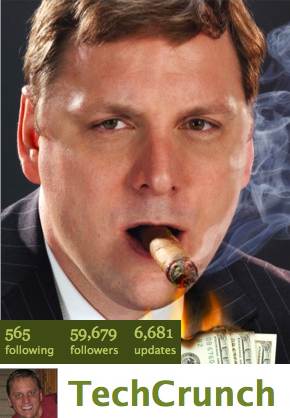
Techcrunch was founded by Michael Arrington (yeah, that's him at the top of the blog. Get my drift?) in 2005 who is no longer there but famed for a 2010 a verbal confrontation with CEO of Yahoo!, Carol Bartz. Arrington started the interview by asking Bartz, "So how the fuck are you?" To which she responded, "Is that appropriate?". Later in the interview, Bartz became perturbed with Arrington's criticism of the Yahoo! business model of conglomeration rather than single revenue source producers. Bartz then responded to Arrington saying, "you are involved in a very tiny company" and ended the exchange by telling him to "fuck off." Bartz received some support from bloggers for her response, including Guy Kawasaki who stated, "I respect Carol Bartz even more now." (per Wikipedia).


Techcrunch is one of the top 2 techy blogs along with Mashable, and so as one of their writers/reporters, you're invited by Flipboard (which I love) to a function to tell you about how it's expanding their monetization policies. Not exactly fascinating but still, has to be done. Pays the rent and all that.


But you have had that extra bottle of wine and you've just about had enough. So you start to write your post for Techcrunch. Think of a good headline. Here's the one Alexia Tsotsis went with


Flipboard Expands Its Monetization Options To Paywall. Welcome To The Future, Old Media Assholes.


Old Media Assholes? Hmmmm interesting approach. But having started, let's not stop there. No way, let's go all the fucking way.


Fuckers I am so sick of reporting on incremental tech news for fucking two years now, so sick I’m pretty much considering reverting full-time to fashion coverage. (Don’t believe me? Well, how amazing and beautiful is my“Clothing I Like and Want To Buy” Pinterest board? A.k.a. my greatest accomplishment in my life thus far …).


But yeah, The New York Times took a step towards the future this blasted Sunday night and all of us tech press are expected to cover it like lemmings. Fine. Sure. It’s a big deal, in a business that is slowly dying, to show an understanding of 21st Century distribution mechanisms. Kudos NYT. You’re still worth less than Instagram. Hahahahhaha, lol (drink).


But still you, The New York Times, are way more important than I am, because you convinced Flipboard CEO Mike McCue to work with you early on, which by the timing of this post you could probably figure out that I couldn’t do (in time). Fail. But we’re still covering it because this is the first time Flipboard has offered a paywall option, and it shows a promising alternative revenue stream for both parties involved  … Welcome to the future, old media assholes.


So in between the downing of tonight’s two bottles of wine, I had the good fortune to ask new media visionary McCue the questions y’all are dying to ask, and here they are — Because he was cool enough to answer me  …


And then the questions all seem reasonable - like they're straight from a press release.


But let's not finish there. Let's just roll it all up in a final insult.


So there you have it. If both Flipboard and The New York Times were public companies and you asked me to convert my invaluable Aol stock into either right now, one and a half bottles of wine deep, I’d instinctively go with Flipboard. Suck it, old media. And please die more slowly from now on, because I (clearly) hate you.


Of course, you're all saying this didn't appear on Techcrunch yesterday.
http://techcrunch.com/2012/06/25/die-less-slow/


And you're also saying it wouldn't have got past the editor.
Nope because Alexia is the co-editor.


Alexia Tsotsis
CO-EDITOR
Alexia Tsotsis is the co-editor of TechCrunch. She attended the University of Southern California in Los Angeles, CA, majoring in Writing and Art, and moved to New York City shortly after graduation to work in the Media industry.


She made the Forbes, "30 under 30 rising stars media list". One wonders will she do it again this year?


As for Techcrunch?
Well to be fair, they've left the post up. 
There's a bit of integrity about that somehow.


But a shocking bit of concern that albeit "approved sources" can write anything on Techcrunch without somebody reading it? That is a huge issue.


Techcrunch needs to be seen as impartial and honest.
If no-one is checking the writing, it opens up huge potential pitfalls - paid to blog just being one.

Tuesday, 19 June 2012

GetGlue. A Social network that's going to be big.


I've mentioned live streaming and the new power of youtube and the Love Film/Netflix drive to generate their own content before. It's all about the role of the web in new broadcasting and indeed, in delivering news to traditional publishers.

Now we have GetGlue (which we've actually had since 2008) driving forward with nearly 3m users (100m "check ins" during 2011) as a Social networking site purely about broadcasting content.

What GetGlue does is that it allows interaction (called "check in") of users about TV, Movies and Music in a social networking way. Largely on mobile, users talk about the entertainment they consume in a like-minded way. It partners with brands like HBO, 20th Century, MTV and Universal Pictures to name really, but a few of its 75+ partners. In turn it rewards users for their comments.


So the TV Guide for example, is not really tailored for your own taste and GetGlue gives you a guide that knows the shows you watch by giving you reminders/alerts but also lets you know when your friends are watching. Integration with Foursquare, also gives you friends locations. Clearly too therefore, it can give you recommendations and in so doing, push content to you on behalf of a broadcaster. That's a real change here and as more and more sites have users, they can talk to those users with relevancy.

It's a key change in the way the web is doing business. No longer do I need to go looking for content, it's coming to me and flipboard a clear another example of that.


Well funded (having raised 12m usd recently on top of other funding) they'll be able to offer more features - like sneak peeks/trailers and interviews as well as giving broadcasters back feedback on say, a pilot show.

It will have big brand appeal too as users in an "entertain me" mode, will be more willing to accept advertising messages. The content has huge Ad traction.


What it does show is a further opportunity in Social that brings users together albeit in a niche way, but does so succesfully enough to achieve high levels of funding. And you thought Social Networking was over?


GetGlue is a brand that's bound to be a success.
And a brand that's cool enough to be integrated into all broadcasting sites. It works for the broadcaster and it works for the user.

Social Media Day in the US is June 30th and one of the participants is Get Glue founder Alex Iskold. You'll find stuff about him on Mashable no doubt, after that.


(If you're still reading Mashable.
And that was last week's blog http://streamabout.blogspot.ie/2012_06_03_archive.html. VC's Mashable and how it can go horribly wrong.)

Have a good look at GetGlue.com and see something interesting....from the start. Or in other words, pre-ipo!


LASTLY, One Cry for help http://www.independent.ie/national-news/search-for-irish-fan-missing-in-poland-enters-third-day-3143935.html An Irish football fan is missing. If you pass it on, it might be the difference in finding him. Photo is on the link.