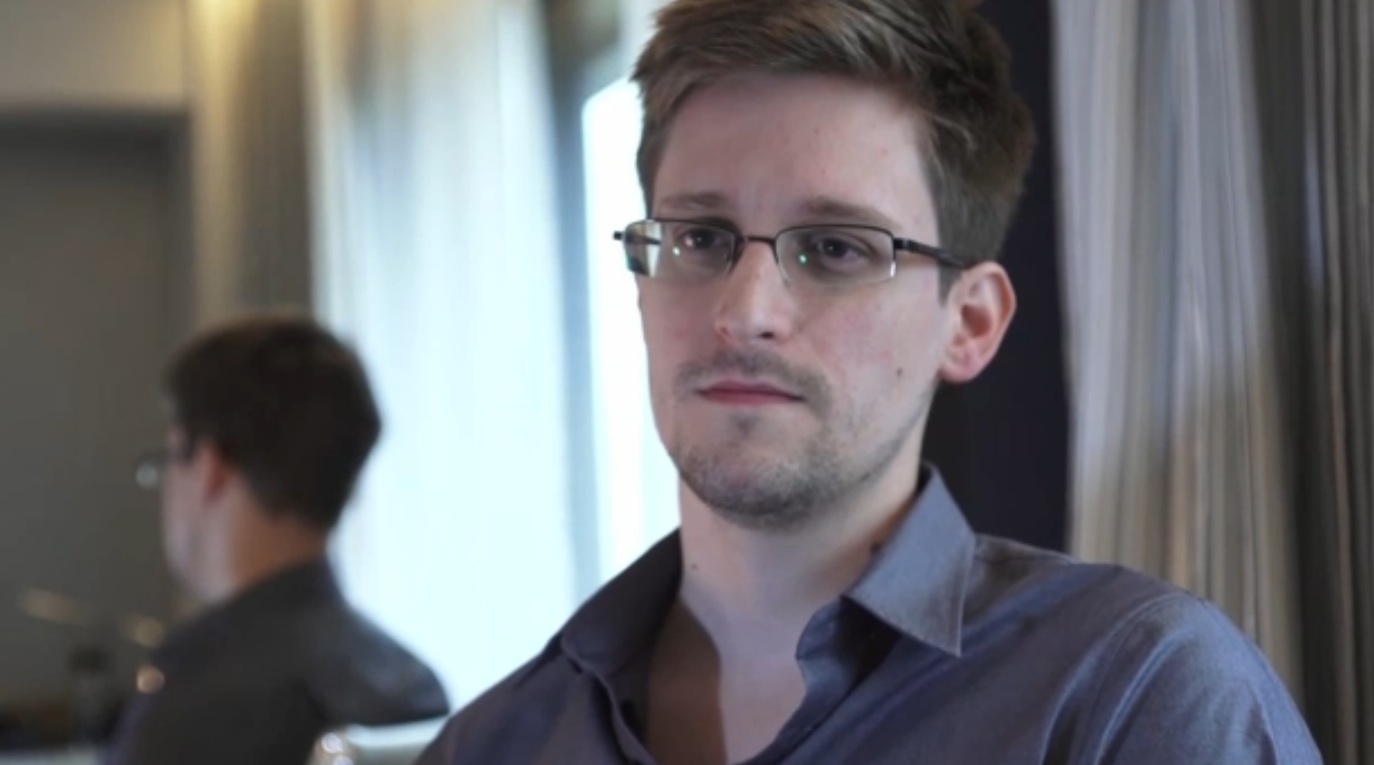
Edward Snowden, the 29 year old who revealed the US Government's spying secrets called 'Prism' in part, has now gone underground.
(Previous blogs here http://streamabout.blogspot.ie/2013/06/obama-prism-spying-now-extends-to-uk.html and here
http://streamabout.blogspot.ie/2013/06/us-government-data-spying-prism-this-is.html)
He originally made his documents available to The Washington Post and The Guardian from a hotel in Hong Kong (The Hotel Mira in Kowloon) because he believed it was a safe place given China's involvement in Hong Kong. He also talked about Iceland as being another safe-haven. However, he's now on the run (OTR as the IRA refer to it!).
There is no warrant for his arrest, but there will be, as The US Government hunt him down and charge him with treason (not unlike the Bradley Manning Wikipedia case). An extradition understanding does exist between Hong Kong and the US but requires Chinese approval.
He is unquestionably, a human rights activist and has done the world a favour.
A former operative of the US NSA, through various subcontractors (most recently a company called 'Booz Allen') he lived in Hawaii and said he could access your emails, your passwords, your credit cards and phone records. Given that Ireland is a hub for many Internet companies and are supported by servers based in the US, your data is probably in there too.
Here is a transcript of the interview he gave to The Guardian;
Edward Snowden: "My name is Ed Snowden, I'm 29 years old. I worked for Booz Allen Hamilton as an infrastructure analyst for NSA in Hawaii.
Glenn Greenwald: "What are some of the positions that you held previously within the intelligence community?"
Snowden: "I've been a systems engineer, systems administrator, senior adviser for the Central Intelligence Agency, solutions consultant, and a telecommunications informations system officer."
Greenwald: "One of the things people are going to be most interested in, in trying to understand what, who you are and what you are thinking is there came some point in time when you crossed this line of thinking about being a whistleblower to making the choice to actually become a whistleblower. Walk people through that decision making process."
Snowden: "When you're in positions of privileged access like a systems administrator for the sort of intelligence community agencies, you're exposed to a lot more information on a broader scale then the average employee and because of that you see things that may be disturbing but over the course of a normal person's career you'd only see one or two of these instances. When you see everything you see them on a more frequent basis and you recognize that some of these things are actually abuses. And when you talk to people about them in a place like this where this is the normal state of business people tend not to take them very seriously and move on from them."
"But over time that awareness of wrongdoing sort of builds up and you feel compelled to talk about. And the more you talk about the more you're ignored. The more you're told its not a problem until eventually you realize that these things need to be determined by the public and not by somebody who was simply hired by the government."
Greenwald: "Talk a little bit about how the American surveillance state actually functions. Does it target the actions of Americans?"
Snowden: "NSA and intelligence community in general is focused on getting intelligence wherever it can by any means possible. It believes, on the grounds of sort of a self-certification, that they serve the national interest. Originally we saw that focus very narrowly tailored as foreign intelligence gathered overseas."
"Now increasingly we see that it's happening domestically and to do that they, the NSA specifically, targets the communications of everyone. It ingests them by default. It collects them in its system and it filters them and it analyses them and it measures them and it stores them for periods of time simply because that's the easiest, most efficient, and most valuable way to achieve these ends. So while they may be intending to target someone associated with a foreign government or someone they suspect of terrorism, they're collecting you're communications to do so."
"Any analyst at any time can target anyone, any selector, anywhere. Where those communications will be picked up depends on the range of the sensor networks and the authorities that analyst is empowered with. Not all analysts have the ability to target everything. But I sitting at my desk certainly had the authorities to wiretap anyone from you or your accountant to a Federal judge to even the President if I had a personal e-mail."
Greenwald: "One of the extraordinary parts about this episode is usually whistleblowers do what they do anonymously and take steps to remain anonymous for as long as they can, which they hope often is forever. You on the other hand have decided to do the opposite, which is to declare yourself openly as the person behind these disclosures. Why did you choose to do that?"
Snowden: "I think that the public is owed an explanation of the motivations behind the people who make these disclosures that are outside of the democratic model. When you are subverting the power of government that's a fundamentally dangerous thing to democracy and if you do that in secret consistently as the government does when it wants to benefit from a secret action that it took. It'll kind of give its officials a mandate to go, 'Hey tell the press about this thing and that thing so the public is on our side.' But they rarely, if ever, do that when an abuse occurs. That falls to individual citizens but they're typically maligned. It becomes a thing of 'These people are against the country. They're against the government' but I'm not."
"I'm no different from anybody else. I don't have special skills. I'm just another guy who sits there day to day in the office, watches what's happening and goes, 'This is something that's not our place to decide, the public needs to decide whether these programs and policies are right or wrong.' And I'm willing to go on the record to defend the authenticity of them and say, 'I didn't change these, I didn't modify the story. This is the truth; this is what's happening. You should decide whether we need to be doing this.'"
Greenwald: "Have you given thought to what it is that the US government's response to your conduct is in terms of what they might say about you, how they might try to depict you, what they might try to do to you?"
Snowden: "Yeah, I could be rendered by the CIA. I could have people come after me. Or any of the third-party partners. They work closely with a number of other nations. Or they could pay off the Traids. Any of their agents or assets. We've got a CIA station just up the road and the consulate here in Hong Kong and I'm sure they're going to be very busy for the next week. And that's a fear I'll live under for the rest of my life, however long that happens to be."
"You can't come forward against the world's most powerful intelligence agencies and be completely free from risk because they're such powerful adversaries. No one can meaningfully oppose them. If they want to get you, they'll get you in time. But at the same time you have to make a determination about what it is that's important to you. And if living unfreely but comfortably is something you're willing to accept, and I think it many of us are it's the human nature; you can get up everyday, go to work, you can collect your large paycheck for relatively little work against the public interest, and go to sleep at night after watching your shows."
"But if you realize that that's the world you helped create and it's gonna get worse with the next generation and the next generation who extend the capabilities of this sort of architecture of oppression, you realize that you might be willing to accept any risk and it doesn't matter what the outcome is so long as the public gets to make their own decisions about how that's applied."
Greenwald: "Why should people care about surveillance?"
Snowden: "Because even if you're not doing anything wrong you're being watched and recorded. And the storage capability of these systems increases every year consistently by orders of magnitude to where it's getting to the point where you don't have to have done anything wrong. You simply have to eventually fall under suspicion from somebody even by a wrong call. And then they can use this system to go back in time and scrutinize every decision you've ever made, every friend you've ever discussed something with. And attack you on that basis to sort to derive suspicion from an innocent life and paint anyone in the context of a wrongdoer."
Greenwald: "We are currently sitting in a room in Hong Kong, which is where we are because you travelled here. Talk a little bit about why it is that you came here and specifically there are going to be people…people speculate that what you really intend to do is to defect to the country that many see as the number one rival of the Untied States, which is China. And that what you are really doing is essentially seeking to aid an enemy of the United States with which you intend to seek asylum. Can you talk a little about that?"
Snowden: "Sure. So there's a couple assertions in those arguments that are sort of embedded in the questioning of the choice of Hong Kong. The first is that China is an enemy of the United States. It's not. I mean there are conflicts between the United States government and the Chinese PRC government but the peoples inherently we don't care. We trade with each other freely, we're not at war, we're not in armed conflict, and we're not trying to be. We're the largest trading partners out there for each other."
"Additionally, Hong Kong has a strong tradition of free speech. People think 'Oh China, Great Firewall.' Mainland China does have significant restrictions on free speech but the people of Hong Kong have a long tradition of protesting in the streets, of making there views known. The internet is not filtered here more so then any other western government and I believe that the Hong Kong government is actually independent in relation to a lot of other leading western governments."
Greenwald: "If your motive had been to harm the United States and help its enemies or if your motive had been personal material gain were there things you could have done with these documents to advance those goals that you didn't end up doing?"
Snowden: "Oh absolutely. Anyone in the positions of access with the technical capabilities that I had could suck out secrets, pass them on the open market to Russia; they always have an open door as we do. I had access to the full rosters of everyone working at the NSA, the entire intelligence community, and undercover assets all over the world. The locations of every station, we have what their missions are and so forth."
"If I had just wanted to harm the US? You could shut down the surveillance system in an afternoon. But that's not my intention. I think for anyone making that argument they need to think, if they were in my position and you live a privileged life, you're living in Hawaii, in paradise, and making a ton of money, 'What would it take you to leave everything behind?'"
"The greatest fear that I have regarding the outcome for America of these disclosures is that nothing will change. People will see in the media all of these disclosures. They'll know the lengths that the government is going to grant themselves powers unilaterally to create greater control over American society and global society. But they won't be willing to take the risks necessary to stand up and fight to change things to force their representatives to actually take a stand in their interests."
"And the months ahead, the years ahead it's only going to get worse until eventually there will be a time where policies will change because the only thing that restricts the activities of the surveillance state are policy. Even our agreements with other sovereign governments, we consider that to be a stipulation of policy rather then a stipulation of law. And because of that a new leader will be elected, they'll find the switch, say that 'Because of the crisis, because of the dangers we face in the world, some new and unpredicted threat, we need more authority, we need more power.' And there will be nothing the people can do at that point to oppose it. And it will be turnkey tyranny."