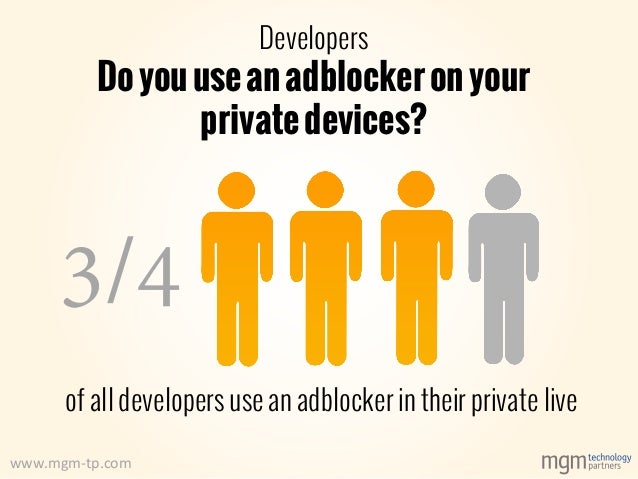
The Ad blocker problem rumbles on...
One of the clear (and clever) ways for Publishers to deal with Ad blocking is to not let readers who are using them, to see any content.
The argument goes, that the content has to be paid for and Advertising is the way that does that. So if you block the Ads (using an Ad Blocker), there's no way of paying for the content.
So Publishers automatically detect you have an Ad blocker and deny you access. It follows the legal action against 'Brave', already featured on this Blog so is part of the story.
However, it might now seem that the very detection by publishers of Ad blocking is illegal because it's being done without permissions.
There's talk of a letter from The EU which outlines that privacy is the main issue and readers must give consent to have their Ad blocker well, blocked.
200 million people are using Ad blockers and Publishers are really suffering. This is another problem on top of that problem for them. Now that it's found it's way into the 'privacy community' and activists, will only add to it.
But remember! Video is not Ad blocked! streamabout.com
The row about Ad-Blocking rumbles on but is anything being achieved and isn't it simpler than all of this?
Some of the UK's and US largest publishers have sent a 'cease and desist' legal threat to 'Brave', a new browser with Ad blocking backed in, run by the former CEO of 'Mozilla'. The publishers include The NY Times, USA Today, Wall Street Journal et al - 17 of them at least. Presumably too, they've a lot of letters to send to a lot of Ad blockers.
They seem to favour a long legal battle about 'copyright' than using their heads.
'Brave' blocks all Ads except...their own. Clever boys, although the premise is that publishers also get a share (estimated 55%). Publishers claim it's a breach of copyright and will seek damages. Fair enough, that's going to take a legal while....
(As an aside, Denis O'Brien's mobile Digicel is blocking Ads since September, for a different reason because as a 'platform' that carries traffic to the publishers, they too want a share of the Ad money.)
The difficult bit of course, is that online publishers rely on advertising to pay for (and profit from) their sites. Ad blocking diminishes that revenue and Ad blocking is on a surge in an overcrowded market. But you have some sympathy for publishers who are running a business too.
However, it's often forgotten that it's the users who want to Ad block, a point that seems to be missed.
And why? Because of the Ads, not because of the content.
They do not want to be extensively tracked (and they are with the 'consent' of the publisher) and they want a faster browsing experience (which heavy 'rich' advertising negates).
'Brave' sells itself as 'Browse safer and faster'. That's what users want and that's why users are using Ad blocking like 'Brave'.
More than 200 million people use Ad blocking software for these reasons and as a consequent, browsers such as Chrome, Firefox, Safari are all allowing users to do so. Adblock Plus, the most used blocker, takes payment from companies to bypass their Ad blocking software, often referred to by critics as 'extortion'.
So Ad blocking is something the user wants and we know, the user also wants content. After all, that's why they're online.
Is the solution therefore, not simpler?
If the publisher simply refuses any content to users with Ad blockers (no access to any news for example) that will fix it. And if the publishers come together (which 17 titles seem very keen to do legally), this can be done overnight.
ITV and Channel 4 are good examples of the start of this journey.
You want access to the site? Switch off your Ad blocker or you get none.
It's really that simple because on balance, users want the content more than they'll suffer the Ads. Exactly as they do in traditional media.
You want to stop Ad blocking then just stop giving the content. Today.
Online newspapers seem to grow and grow, yet paywalls seem to fail and this is all spelling out a really difficult future for traditional daily newspapers.
This week's 'Economist' outlines the points very clearly (as they always do).
Axel Springer bought BusinessInsider in September for 442 million usd and NBC invested 200m usd in BuzzFeed, in what's perceived as an attempt by traditional publishers to bring more online inventory into traditional media ownership.
Largely because their traditional Ad revenues continue to fall.
Between 2005 and 2014, traditional print Ad spending in US newspaper dailies has dropped -60%. As it dropped, staff and newsrooms were cut. A bleak future response then, delivering a self-fulfilling prophecy. Ad revenue falls, staff are made redundant, product suffers, ad revenue falls.
Indeed, there may come a day when print advertising per se, drops to Zero and indeed, online Ad prices are falling too, as media options (where to place them) increases widely. Increased supply drives prices down and with Social Media options (Facebook, Twitter) developing a pace, they'll suck in more and more Ad dollars from newspapers.
Getting readers to pay for news has not been a success either - marked recently by the UK 'Sun' dropping their subscriber paywall. Metered or Limited paywalls have worked for some (notably The UK FT) but with so much free content, it's not going to work well. And certainly, will not compensate for the losses in Ad revenue in any real way.
Boosting online Newspaper Ad revenue is one way, but Newspaper online Ad revenue is only up +11% since 2007 - not enough. Not nearly.
Although while Advertisers do look for more 'native content' (sponsored content) and online video, Newspapers just do not have the skills to produce video to an acceptable standard either - nor, in some ways, should they.
Sponsored content will also have a poor knock-on affect to readers who will realise that what they're reading as "news" is in fact Advertising - and they won't like it. It's breaking brand trust.
The real super threat is Programmatic buying, now becoming standard, where an advertiser buys the reader and not the Title and so that's a real threat to publishers. They should not embrace it but difficult to see how not to either. Turkeys and Christmas.
So Media buying by Title, is coming to an end. Ad Blocking proliferation is another threat too (and notably, video is not ad blocked).
One way suggest The Economist, is for publishers to branch out into areas such as Music, Sport, Health or Religion and they note, The Boston Globe developing a health site called 'Stat' this very month. Gardening and Wine Clubs too, possibly ideal for the Sunday reader (as in The Telegraph typically), may bring in some money.
It signifies a shift away too from 'Breaking News' which of course, given the print deadlines, traditional newspapers can no longer do. They still can of course, give insights into stories that have already broken, or special investigations. But it's limited.
There's no joy in saying it, but the traditional daily Newspaper days are numbered. They're facing an onslaught through online programmatic media buying; through ad blocking; through increased digital media supply bringing lower prices; by paywalls not delivering because of free news; through lower ad revenues; and a possibility of breaking reader trust with Native Stories.
Difficult to see a way out of this.
But it is clear that Newspapermen have to consider that their biggest asset is online and not what's being printed. If they stopped printing the Newspaper and focused on their online property, they'd save a lot. And that's considered heresy.
The Washington Post has started to block the ad blockers.
So if you have an Ad blocker installed, you won't get access to their articles.
Whilst it reduces traffic, the point is, that there's no future in having traffic unless it's watching the Ads.
Basically, you get a pop-up when you log onto the Post and they ask you to disable the Ad blocker on your browser if you want access (people who do, will be tiny). But they say it's "a test".
However, if Ad blocking continues at the extraordinarily high rate it is (circa 198 million users), especially in that lucrative younger demographic, online newspapers simply won't exist. Subscriptions alone, won't cover it.
Already, Ad revenue losses to Ad blockers is estimated at 22 Billion usd - don't worry about the actual number because all you need to know is that it's high. Very high and getting very higher!
Ads slow down websites and so Ad blockers improve the browsing experience. Furthermore too, people do not like being cookie tracked by advertisers so that's driving the Ad blocking. And it's hard to see how it will halt and therefore, it's hard to see online publishers dealing with it.
Therefore, they need to move to other formats - such as native content and video - which is impossible to block.
Fighting the Ad blockers is frankly, like standing on the beach trying to push out the tide.
(Graphic from independent.ie).
The Ad blocking story goes on.
A story in today's independent.ie shows 18% of Irish users (676,000) blocking ads online and if that's Ireland....it's pretty extensive. The UK is a massive 20% and Germany 25%.
So that's a lot of people not seeing your banners or Ads placed in content. Pure video is of course, not part of it because they're not 'Ad blocked' as such.
The report compiled by Adobe in conjunction with PageFair, estimates the cost to Irish online publishers alone, at 100 million usd a year. Apple too are more and more allowing ad blocking extensions, as does Google Chrome, in their software (notably IOS9) and there are now 198 million (USA 45m) users globally, using ad blocking. Up +41% in a year.
Gaming is the most blocked category (27%) and of course it's more common in that 18-24 year old demographic. Mobile blocking is low but surely that will change we would think? In fact if ever you wanted to block an ad, it's on mobile mostly.
The problem here is for publishers obviously.
Users gain through higher download speeds and less intrusion but publishers lose revenue. And in this day of traditional media owners trying to replace traditional advertising falls with increases from their digital properties, it's a big issue. They're suffering already.
The solution? Native advertising, where promotions appear not as Ads, but as content. Sponsorship another of news pages or of reports or sections.
But the Banner Ad as a format, was well passed its sell-by date anyway and this will only accelerate that demise.
You can read it all here;
http://www.independent.ie/business/technology/news/irish-publishers-set-to-miss-100m-as-adblocking-continues-to-soar-31447140.html
Ad Blocking, which really hurts online publishers who depend on Advertising, just got easier.
It looks like Apple have just made it easier to block Ads on Ipad and Iphones through their new 'safari' browser release by allowing ad blocking extensions as an option.
Ad blocking is growing by over +70% a year with 144 million users in 2014. It's going to hurt Google and Facebook and will push publishers onto Apple's iad product in order to have Ads on Apple devices.
So basically, if Apple is bringing traffic to Ads via their Safari, they want a cut and encouraging general ad blocking is one way.
We'll see but, not a good day for publishers.
The surge (or scourge depending on who you are) in the growth of Ad blocking software is likely to accelerate on digital and that's a worry.
Simply, they remove Ads from content online so you watch without the Ads - although it's unclear if publishers still count them as "impressions" when the Ads are never seen. Easy to download, Ad blockers just sit in your browser as an extension and they're available for every browser. They even take out YouTube Ads.
Adblock, one of the better known software, already stands at 300 million downloads. It's reckoned that over 200,000 downloads of Ad blockers occur every day. A recent survey of 100 million impressions on top tier websites, saw 9% of them being blocked already, with usage growing at 70% per year.
That's a lot.
Some publishers are rumoured (but it's true) to pay Ad blockers not to include their site, such is the scale of the issue.
The appeal to viewers is not just stopping what they consider, "annoying Ads" but by blocking them, you browse faster. That's a real advantage so it's hard to see the surge decreasing.
Of course we're bound to say it, but generating your own Video content or Video Ads, is one way around it. They haven't found a Video blocker, nor will they!
Streamabout can help!