Showing posts with label forbes. Show all posts

Thursday, 10 October 2013

Newspaper Paywalls. The Sports Illustrated Experiment. And perhaps a better one.


There's a lot of talk in Newspaper circles about paywalls. 

Leaky paywalls, full paywalls and basically any paywall way of generating revenue from the news and content they provide.

It is ridiculous when you think about it, that we all expect our news to be free, when it is probably the most expensive content to produce. But we do, because it's always been like that.

And the whole problem is bolstered by a decline in Newspaper printed cover prices as people opt to get their free news online. It's not that they're consuming less news, they're just choosing to get it for free.

So not only is online not generating revenue, but it reduces revenue from print cover prices, as people switch to the "free" version. An Age old discussion, I know. But what happens in effect, is that Newspapers develop excellent online sites to actually damage themselves. There's no choice....or is there?

A problem too, is that if one title in a local market, introduces a paywall and their competitors don't, then they will lose their readers to the competitor's free version. No doubt. So either everyone introduces a paywall same day, or nobody can.

However, when you have a "free" online newspaper or magazine, there is some benefit in generating money from the substantial traffic that follows, through advertising. 

Typically banner advertising, page take-overs and pre-rolls on video. At the minute, that advertising does not come close to compensating for the provision of the service. Nor is it ever likely to

If on the other hand, you introduce a paywall, and provide content only to those who pay for it, then that general traffic dramatically decreases, literally overnight, as people switch to other free sites. Hence any chance you had of generating those Ad dollars, disappears.

The San Fran Chronicle recently dropped their paywall for this very reason.

It's a huge quandary but .....there may be answers.

One is and an interesting one, to see US magazine 'Sports Illustrated' try something different. They're testing a paywall that allows users access to all of its content for free, IF readers watch a 30 second video Ad first. 


Watch the Ad, you get the content "free" for 24 hours. Then you need to watch another video ad for another 24 hours free.

Not unlike the way TV stations force you to watch video ads before their online programmes - sometimes 7 videos!

The view on Sports Illustrated to date, is that 70% of readers will watch the video Ad to get to the content. Forbes have been doing something similar for ages too. 

Because too, those Sports Illustrated (or indeed Forbes.com) readers, are so well targeted (the demographic is clear), Sports Illustrated sell the video ads at a premium.

So they still have the traffic (because the content is ultimately free inside) for advertisers, albeit with a drop-off in readers (-30%). And they now have a new Advertising stream in forcing readers to watch the video ad.


Good experiment, well worth a look and if it works, it could be one answer to the prayers of online newspapers.

However, there is another, which I've been saying for a long time and spoken to Newspaper CEO's about. And which probably needs another Blog in its own right but it's a thought......

If you have 40 or 50 million views (impressions) a month, it doesn't really matter why they are there really, what matters is, that they are

In essence, you have a consumer market to sell into. Ready made Shopping Mall.

And so the answer might be to turn the Newspaper into a shop

When you read a story about a Sports match - let customers buy tickets, buy merchandise etc there and then via a clickthru. When you read a piece about a book, a play, a movie etc let readers buy tickets. When you read Fashion, Beauty, even some breaking news, let readers buy. That's the new revenue stream and therefore, you'd actually want encourage free readers with more free content. The more readers you have, the more shoppers to sell to.

Coupled with the Advertising revenue that's already there, it could be the trick.

And even better still, when you have an Ad in the online edition, don't charge advertisers for traditional space, charge them for results. Change the Ad model.

Don't sell a Car manufacturer an "Ad", sell them test drives (which was probably the purpose of the Ad in the first place!).

Don't sell a pharmacy a page take over rate, sell them customers and take a percentage.

After all, that's what Advertisers want - Results. 
And that's what readers want - free content. 
And that's what online Newspapers have - millions of consumers with the potential to generate real money from them.

With 50 million consumers a month, some Irish Newspapers could be the biggest Shopping Sites in Europe.

Friday, 1 March 2013

Mixed fortunes at daily deal sites LivingSocial and Groupon. CEO resigns and his letter is here. Both companies were stars....once.


Bizarre changes in fortune at Daily Deal sites LivingSocial and the original, Groupon, all on the same day.

LivingSocial announced today that it has raised 110 million usd in funding from largely, its original investors - so that sounds more like a "cash call" which might indicate difficulties at LivingSocial if it is. 

A memo from CEO Tim O'Shaugnessy (some Irish connection there I would think...) said it was to "build our reserves". And building they need given a loss of 650 million usd in 2012 up from a loss of 499 million the previous year. Over a billion usd in losses in two years.

It cut its staff by 10% (400) at the time with reports in December that it was "running dangerously low of cash". With losses like that, it's not sustainable.

On the other side, Groupon, the 4 year old, daily-deal-market-maker, fired its co-founder Andrew Mason who was also CEO (that's him above with the cat). It came just 24 hours after reporting bad numbers again for Q1 bring a 25% drop in share value. Now down -75% since it floated which 'Forbes' magazine calls 'The Groupon Disgrace' and said "talk about a CEO who no longer has any credibility with investors". Strong stuff.

Mashable posted his staff resignation letter which actually, I liked.


(This is for Groupon employees, but I’m posting it publicly since it will leak anyway)
People of Groupon,
After four and a half intense and wonderful years as CEO of Groupon, I’ve decided that I’d like to spend more time with my family. Just kidding – I was fired today. If you’re wondering why… you haven’t been paying attention. From controversial metrics in our S1 to our material weakness to two quarters of missing our own expectations and a stock price that’s hovering around one quarter of our listing price, the events of the last year and a half speak for themselves. As CEO, I am accountable.
You are doing amazing things at Groupon, and you deserve the outside world to give you a second chance. I’m getting in the way of that. A fresh CEO earns you that chance. The board is aligned behind the strategy we’ve shared over the last few months, and I’ve never seen you working together more effectively as a global company – it’s time to give Groupon a relief valve from the public noise.
For those who are concerned about me, please don’t be – I love Groupon, and I’m terribly proud of what we’ve created. I’m OK with having failed at this part of the journey. If Groupon was Battletoads, it would be like I made it all the way to the Terra Tubes without dying on my first ever play through. I am so lucky to have had the opportunity to take the company this far with all of you. I’ll now take some time to decompress (FYI I’m looking for a good fat camp to lose my Groupon 40, if anyone has a suggestion), and then maybe I’ll figure out how to channel this experience into something productive.
If there’s one piece of wisdom that this simple pilgrim would like to impart upon you: have the courage to start with the customer. My biggest regrets are the moments that I let a lack of data override my intuition on what’s best for our customers. This leadership change gives you some breathing room to break bad habits and deliver sustainable customer happiness – don’t waste the opportunity!
I will miss you terribly.
Love,
Andrew

Groupon was the worst performing stock in the US market in 2012. Shares trade below 3 usd now, from when they floated at 20 usd. 11 billion of value has been wiped out. Groupon had turned down an offer of 6 billion usd some years ago from Google. And you might remember the accounting controversy at the time of the IPO.

What interests me in both of these stories is that you'd expect, in a recession, deal sites to be doing well. After all, it's in a recession that people want a deal and all the PR was, that this was what was happening. When clearly it's not and especially not for the segment leader, Groupon.

So I'm surprised. 

But then again there could be a more simple explanation. The market is good but these two companies were lousy. It could just be that, although that would surprise me.....

It seems that's what Forbes thinks who undoubtedly contributed to Andrew Mason's demise because they're such an influential magazine. Mind you, they seem to have forgotten that at the time before the IPO they were influential too calling Groupon, "the fastest growing company, ever".

Tuesday, 31 July 2012

Twitter have banned LinkedIn. Now they ban Instagram. Instagram is owned by Facebook. Twitter is walking on dangerous ground.


Well Twitter are at it again.

Having pulled its API from LinkedIn last month (http://streamabout.blogspot.ie/2012/07/twitters-row-with-linkedin-is-about-ad.html,) thereby denying LinkedIn users the ability to post via Twitter, it has done it again. This time on Instagram.

It breaks the link between Twitter and Instagram.

What's interesting here is that at the time of the Twitter/LinkedIn announcement, a view circulated that Facebook was next to get the Twitter shove and Instagram is of course, owned by Facebook.

What Twitter are doing is to try and generate more cash, more revenue, by driving its users away from third party platforms and back onto the Twitter site itself. In doing that, it will generate more eyeballs and therefore, more advertising.

But the consequences could be high given that it seems to me anyway, as a trade between advertising dollars versus good user experience. Twitter users want to express themselves on third party sites, there's no doubt and now they can't.

Instagram is of course the darling of mobile. With 80 million users and over 4 billion photos shared, it's extraordinary growth in under 2 years for what is, a mobile only play. The 1 billion dollar acquisition by Facebook earlier this year will of course further Facebook integration and growth for Instagram which will leave Twitter out in the cold.

At the time, when Facebook paid, what was generally considered a high valuation, there was a feeling it was because there were two bidders. Subsequently I heard the other was Twitter and if this is a reaction to losing the bid, it's poor business. Forbes today have hinted at something similar.

What these Twitter moves are also doing is to aggravate the community - they'll have lost friends at Instagram and LinkedIn - not a good thing when it comes to Social Media, in return for a quick buck.


The internet started as, and always will be, an open network where things are shared and exchanged. Closed networks just don't work.

If Twitter maintains this stance and it says it is going to, it will open the opportunity for a copycat that will allow third party access. And those third parties (like LinkedIn, like Instagram) will not only adopt the copycat but make damn sure their users in turn, know all about it. Twitter will then be faced with the power of competitors.

Twitter is walking on dangerous ground.

Thursday, 19 July 2012

LinkedIn steps up a gear with Forbes number 1 listing and site revamp. Is there something more to this?

 
If you've been on LinkedIn today, you'll have been left in no doubt about their news.

One, they launched in Norway which hardly warranted the excitement it seemed to generate sitting in Dublin. I'm delighted for Norway - just thrilled - but that means they didn't have it until now?

Secondly, LinkedIn made number 1 in the Forbes list of high growth Tech companies and the CEO made the Forbes cover.

And how did you know? because seemingly everyone who works for LinkedIn was basically posting away even on pages where they're not linked (isn't that spamming?). I had about 10 posts this morning and they're gone (taken down) by lunchtime. Did they get a reaction I wonder?

Forbes have chosen LinkedIn as the fastest growing technology company. Ahead of Apple, Qlik, Athena Health and Equinix in the top 5. But it's a bizarre list of what is a "tech company" - no Facebook, Google, Microsoft mentions etc. Or possibly what is "fastest growing".

Following from the Twitter fiasco 
http://streamabout.blogspot.ie/2012/07/twitters-row-with-linkedin-is-about-ad.html, 
and their June security passwords hack, 
 http://streamabout.blogspot.ie/2012/06/linkedin-passwords-hacked-change-yours.html

So they're trying to get some good news out there. This for example from the normally independent Mashable today too;

LinkedIn isn’t just a digital destination for your resume; it’s a vibrant online hub offering all kinds of useful information, tools and functionality.
If it’s been awhile since you explored the site, check out this list of five things you might not know you can do on LinkedIn. Let us know in the comments below how you find LinkedIn a useful tool.

And then goes on to tell you how you can do 5 new things. Hmmmm. Sounds like PR to me. Unusual to see a Mashable story ending with "let us know in the comments below how you find LinkedIn a useful tool". Kinda' like saying "and tell us how great they are". Surprising.


There's also the Mashable story today again that they've revamped their homepage to make it look "more like Facebook and Google+". In essence a cleaner design with some increased functionality based around giving you the updates you want, instead of the flood you get.

"This simpler and cleaner design makes it easier to navigate the page and quickly find the updates you’re looking for – whether that’s a news article your boss has recently shared or it’s to see who has just started a new job,” writes Caroline Gaffney, a product manager at LinkedIn, in a blog post explaining the move.

LinkedIn launched in 2003 and went public (IPO) mid 2011 achieving about 170 million users as a professional networking site. Shares have leaped 64% this year largely because of the Recruiter usefulness of the site and a 24% surge in mobile traffic. The "bulls eye" as the unfortunately named CEO Jeff Weiner calls it and recruitment is a 27 billion usd industry.

What they're saying is that they're turning your resume, your CV, into cash. Businesspeople have value and LinkedIn makes it easy to reach out to them more than a Facebook ever can.

It would seem that LinkedIn is starting to wake up and moving forward with new design, new features, share growth, new territories and a niche business play. This type of publicity and activity will do their share price no harm.

But it's all happening very quickly - like a PR machine has just got into gear. Is there something afoot?

Thursday, 5 July 2012

Vanity Fair August article to add to pressure on Microsoft. CEO Steve Ballmer's window is closing.


This is Steve Ballmer. CEO of Microsoft. The man who took the reins from Bill Gates in 2009 when Gates stepped back. Hardly Steve Jobs now is he? Although I think he tries to be. I mean who came up with the track "get on your feet"? Kind of like playing "simply the best". Cringeville.


There's an awful lot of people having a go at Microsoft at the minute.
And it has to be putting immense pressure on CEO Steve Ballmer.
One wonders if he'll survive it and especially after an article in Vanity Fair due on the newsstands in August.


But they're having a go firstly, because it's the launch of Windows 8 coming up. Oh, didn't know? Exactly. And remember the excitement, the queues for 95.


Secondly, the acquisition of Yammer for 1.5 billion (yep, billion) of a company few of us ever heard of, and which earns little revenue, is being seen as a bizarre way of buying yourself onto the front pages. One way to get that Facebook/Instagram 1 billion limelight. I blogged about it here http://streamabout.blogspot.ie/2012/06/microsoft-acquires-yammer-for-12.html


The official Microsoft announcement photo two weeks ago, did little to help things too and here it is. Steve Ballmer and the Yammer boys looking like something from the 70's rather than the new leaders in Social Media. Shocking.


As an aside, interesting too that when you go onto the Microsoft news centre and search 'Yammer' - nothing comes up. So Microsoft could do with updating their site - which for Microsoft, is pretty poor.


Thirdly, Microsoft have just taken a 6.2 billion write down this week following their disaster purchase of digital network aquantive in 2007 - then the biggest deal in Microsoft history. The 8.5bn acquisition of Sykpe by Microsoft in 2011 beat it. And what exactly have they done with Skype? Nada. Looks the same to me except with higher prices and more advertising. Vision?


But this write-down, wipes out fourth quarter earnings and that will have a stock/investor issue, adding more pressure.


The acquisition was seen at the time, as a response to Google's acquisition of Doubleclick (with which I was involved in a small way in Ireland) because the Microsoft move came only a month later. Kind of a "anything you can do" thing. But one huge 6.2 billion loss.


Fourthly, the success of Apple has been one-in-the-eye for Microsoft and continues to be. Apple's iphone division alone is worth more than Microsoft. Here's the genius Steve Ballmer in 2007 on the iphone. "500 dollars for a phone? You're kidding".


I could post the video where he laughs off the ipad or indeed this next one where he's not a fan either of the Android phone from 2011. Jesus.


And of course he teamed up with Nokia...who've recently had their ratings cut to "junk status".
So "visionary" doesn't exactly spring to mind and the company is slowly disappearing into a morass. Yes I know about Bing and Xbox but this was THE dominant player worldwide that now is being, well, just eroded. 


But lastly, the real crowning glory this week is an article in Vanity Fair August edition which seems to slam work practices at Microsoft and makes the company totally uncool. This sort of publicity might be the straw that broke it because it will be hard for Ballmer to escape it. 


Sometimes publicity is the killer blow because it's so public.


Titled 'Microsoft's lost decade' it's written by well regarded scribbler, Kurt Eichenwald.


It's not on the newsstands yet, but Geekwire have seen a full copy and refer to it as "epic". In other words, explosive.


Forbes have referred to it as "a devastatingly destructive management technique at the heart of Microsoft’s problems" and others are calling the exposure "Microsoft's downfall".


Techcrunch don't have the story because when they asked for a preview, they were asked for a fax number to "fax it on over". Honestly. And they've written a good humorous piece on that......
http://techcrunch.com/2012/07/03/can-someone-send-techcrunchs-fax-number-to-vanity-fair/


The controversy, supported by interviews and emails collected, is about management style and creativity. Or lack of.


It's based around a work system for employees in Microsoft called 'stack ranking' where employees are rated from good to poor. And according to Eichenwald that meant that "Every current and former Microsoft employee I interviewed—every one—cited stack ranking as the most destructive process inside of Microsoft, something that drove out untold numbers of employees.” 


“If you were on a team of 10 people, you walked in the first day knowing that, no matter how good everyone was, 2 people were going to get a great review, 7 were going to get mediocre reviews, and 1 was going to get a terrible review,” says a former software developer. “It leads to employees focusing on competing with each other rather than competing with other companies.”


Which could well be the reason why the company under Ballmer, flounders.
Basically, it crippled the company and stifled innovation.


And from what I know it seemed to be a dreadful place to work which in itself is bizarre given the 'great places to work' awards Microsoft have achieved. I always wondered about those awards though, always did. I saw companies winning them who I knew to be dreadful.


But they were big companies who'd always take a table or two at the Awards dinner.


We'll see what happens when Vanity Fair comes out.
Watch out for the noise and watch out for Steve Ballmer.
Except it to be huge.
His window is closing. (sorry).

Wednesday, 27 June 2012

Techcrunch blogger has the extra bottle of wine at The Flipboard launch and starts to write....yep, another one. Oh dear.


You know the way it is.


You've gone to lunch, had that bottle of wine too many and now you're going to tell everyone what you really think. So you draft that email but most of us never send it until the next day at best, because we're old hands.


Or that text you send and the next morning you look at the phone, arm extended, with one eye, going "no, please, I didn't, did I?".


Just like Jerry Comyn did last month http://streamabout.blogspot.ie/2012/05/irishman-jerry-comyn-leaves-us.html and Greg Smyth of Goldman Sachs, before him.


So you're a blogger with Techcrunch


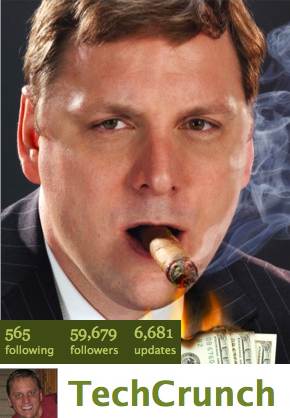
Techcrunch was founded by Michael Arrington (yeah, that's him at the top of the blog. Get my drift?) in 2005 who is no longer there but famed for a 2010 a verbal confrontation with CEO of Yahoo!, Carol Bartz. Arrington started the interview by asking Bartz, "So how the fuck are you?" To which she responded, "Is that appropriate?". Later in the interview, Bartz became perturbed with Arrington's criticism of the Yahoo! business model of conglomeration rather than single revenue source producers. Bartz then responded to Arrington saying, "you are involved in a very tiny company" and ended the exchange by telling him to "fuck off." Bartz received some support from bloggers for her response, including Guy Kawasaki who stated, "I respect Carol Bartz even more now." (per Wikipedia).


Techcrunch is one of the top 2 techy blogs along with Mashable, and so as one of their writers/reporters, you're invited by Flipboard (which I love) to a function to tell you about how it's expanding their monetization policies. Not exactly fascinating but still, has to be done. Pays the rent and all that.


But you have had that extra bottle of wine and you've just about had enough. So you start to write your post for Techcrunch. Think of a good headline. Here's the one Alexia Tsotsis went with


Flipboard Expands Its Monetization Options To Paywall. Welcome To The Future, Old Media Assholes.


Old Media Assholes? Hmmmm interesting approach. But having started, let's not stop there. No way, let's go all the fucking way.


Fuckers I am so sick of reporting on incremental tech news for fucking two years now, so sick I’m pretty much considering reverting full-time to fashion coverage. (Don’t believe me? Well, how amazing and beautiful is my“Clothing I Like and Want To Buy” Pinterest board? A.k.a. my greatest accomplishment in my life thus far …).


But yeah, The New York Times took a step towards the future this blasted Sunday night and all of us tech press are expected to cover it like lemmings. Fine. Sure. It’s a big deal, in a business that is slowly dying, to show an understanding of 21st Century distribution mechanisms. Kudos NYT. You’re still worth less than Instagram. Hahahahhaha, lol (drink).


But still you, The New York Times, are way more important than I am, because you convinced Flipboard CEO Mike McCue to work with you early on, which by the timing of this post you could probably figure out that I couldn’t do (in time). Fail. But we’re still covering it because this is the first time Flipboard has offered a paywall option, and it shows a promising alternative revenue stream for both parties involved  … Welcome to the future, old media assholes.


So in between the downing of tonight’s two bottles of wine, I had the good fortune to ask new media visionary McCue the questions y’all are dying to ask, and here they are — Because he was cool enough to answer me  …


And then the questions all seem reasonable - like they're straight from a press release.


But let's not finish there. Let's just roll it all up in a final insult.


So there you have it. If both Flipboard and The New York Times were public companies and you asked me to convert my invaluable Aol stock into either right now, one and a half bottles of wine deep, I’d instinctively go with Flipboard. Suck it, old media. And please die more slowly from now on, because I (clearly) hate you.


Of course, you're all saying this didn't appear on Techcrunch yesterday.
http://techcrunch.com/2012/06/25/die-less-slow/


And you're also saying it wouldn't have got past the editor.
Nope because Alexia is the co-editor.


Alexia Tsotsis
CO-EDITOR
Alexia Tsotsis is the co-editor of TechCrunch. She attended the University of Southern California in Los Angeles, CA, majoring in Writing and Art, and moved to New York City shortly after graduation to work in the Media industry.


She made the Forbes, "30 under 30 rising stars media list". One wonders will she do it again this year?


As for Techcrunch?
Well to be fair, they've left the post up. 
There's a bit of integrity about that somehow.


But a shocking bit of concern that albeit "approved sources" can write anything on Techcrunch without somebody reading it? That is a huge issue.


Techcrunch needs to be seen as impartial and honest.
If no-one is checking the writing, it opens up huge potential pitfalls - paid to blog just being one.