Showing posts with label online publishing. Show all posts

Thursday, 12 May 2016

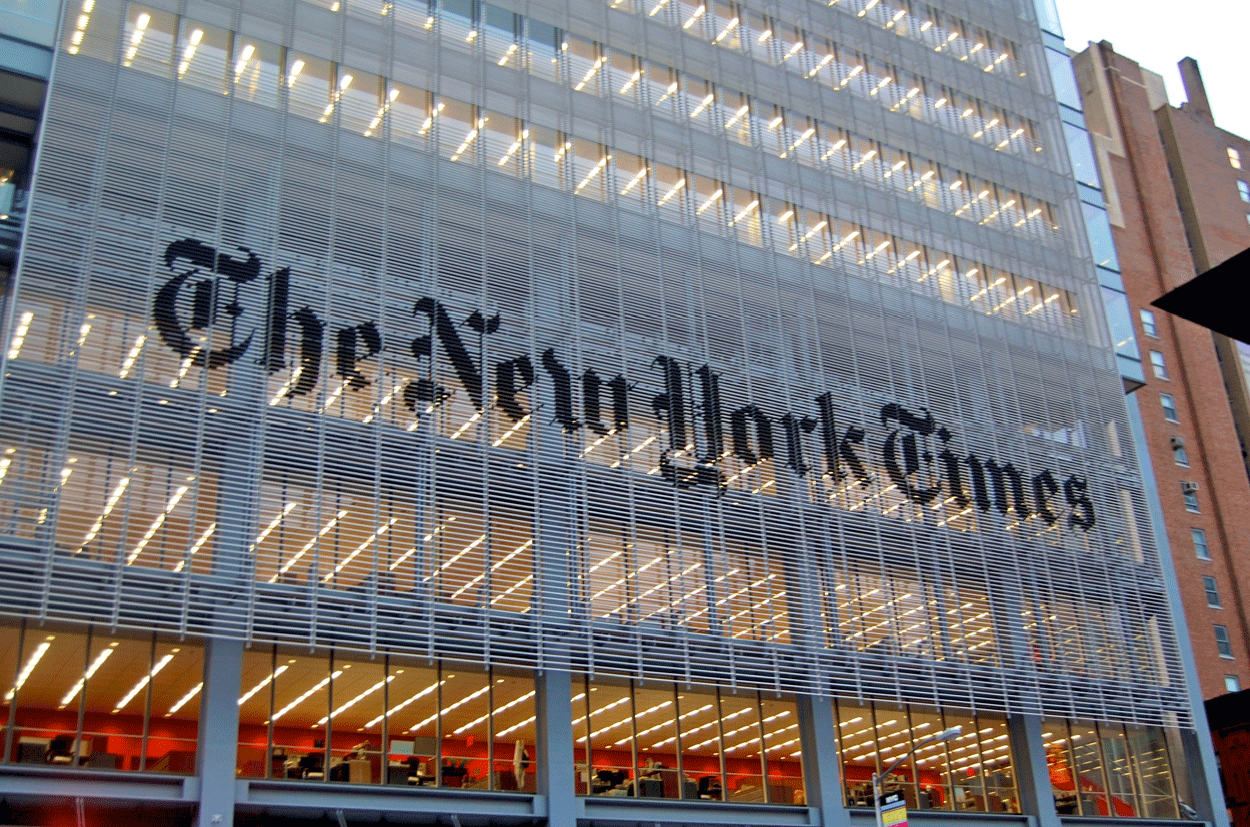
New York Times post loss Q1 2016. How soon before it goes Digital only?


The very excellent New York Times (if you see it on a Saturday, just get it) reports a loss of 14 million usd in Q1 2016.

It's about the decline in print advertising but digital is up, although as usual, does not compensate for the print decline, just yet.

It added 67,000 digital subscribers in the quarter - huge - bringing it to 1.4 million overall. 

Total revenue in the quarter was 380 million usd and it's hard to understand (very very hard) with revenues like that, you can make a loss at all! 

Here's the point....Revenue from digital subs was 54 million. Revenue from print and digital advertising was less, at 42 million. 

There comes a time when the cost of printing the paper becomes so loss making because of the massive cost of production (paper, printing), whereas the cost of producing the digital edition is massively lower and profitable.

And with their growth in digital subscriptions, there has to come a point where it makes more sense for The New York Times to become digital only. 

It has to be an outcome. 

You heard it here first!

Friday, 7 November 2014

Native Advertising is sponsored content. Is this the way for online publishers?


Native Advertising or in other words, sponsored content, is proving a strong revenue earner for Media.

It is an ethical issue because it is "disguising" Ads, as non-commercial content and I for one, are seeing more and more "news" which is clearly paid for. So it will affect the reader "trust" of the brand.

The New York Times has called it the "driver" for its growth in online revenue last week, clearly indicating that there's a lot of it about.

Forbes have "Brand Voice" Ad options.

Sponsored Posts/Native commentary is over 30+ of LinkedIn's overall Ad revenue. Like their "sponsored updates". 

Tumblr are introducing similar "sponsored video posts".

The UK's Guardian is doing the same as are, most Irish online publishers.

It's euphemistically called "content marketing" but in reality it is PR dressed up as news. And that's an issue for the PR Industry because they may find that Clients will simply have to pay to have their brand stories appear. In fact it cuts across the very core as to what PR is about. Regrettably.

Traditional Broadcast Advertising to be fair, has at its core, a warning.

Called an 'Ad break', listeners and viewers clearly understand that at that part of the broadcast, someone is trying to sell them something (legitimately).

And Traditional Press Advertising is 'bordered' off from content so they're obviously Ads, not content.

So there must be, should be, some concerns raised about "native content" or sponsored content or whatever it's called designed to hide the fact, that it's advertising without a warning. And the very fact that they're trying to hide it by renaming it, in itself shows the concerns are already there.

But money is money I guess.

There must be questions raised too, by media owners themselves, that by "prostituting" their product in this way, could damage their trust amongst their consumers who may depart to other reliable publications.

Fundamentally, we all agree and want, online media to generate more revenue. Absolutely.

However, we should question, is this the way.

Without fear or favour - seems to me to be more favour than without.

Tuesday, 23 July 2013

Tired of The Royal Baby? The Guardian has another version of its site for you today.


The Birth of a Royal Baby is big news for one part of UK society but a bit of a yawn for the other. Notably, the birth was greeted by a poor response on Twitter, well behind The Pope for example.

But of course it's "local" news in one way whereas The Pope is more well, "global" really.

But for those tired of the Royal Baby news, UK publisher The Guardian, has developed today, two versions of its site - one royal baby free and one royal baby full. A Toggle switch in the top right allows readers to move to whichever version they prefer.

Interestingly, they named the button, 'not a royalist?' and you just click through it if you're not for extra sports and entertainment coverage instead. Although The Guardian did this before for the marriage of Prince William, it does open an interesting idea for newspaper publishers to produce and extend different versions of their site.

Perhaps Sports free? or Sports full? Or entertainment free or full? And so on.
Generating perhaps new readers and perhaps new Ad revenue. In some ways www.independent.ie have made steps in this way with both their I Magazines and notably, 'Independent Woman'. 

However, The Guardian is offering a totally different edition rather than add-ons. One small step in the individualisation of news?

Friday, 8 February 2013

New York Times. Subscriber paywall working but Ad revenues are down. This is the line quality publishers need to walk.


The New York Times is growing its digital subscriber base although its advertising revenue is declining.

668,000 thousand digital subscribers for the group is up from 566,000 in September. Advertising revenue though is down by -8%, largely due to declines in the print versions (down -10%) whilst digital revenue is down just under -2%. But they're down.

The problem here is a trade-off between a model that makes money from a subscriber paywall versus a model that makes money from advertising. If you have paid subscribers (paywall) then you've less readers compared to when it's free. As some of the content is closed off for subscribers only, free readers move away elsewhere. Therefore the page impressions decline and consequently too, the ad revenue will fall. Charge for content and you'll have less readers and therefore, less advertising.

However, the NYT overall revenue is up +5% so the growth in subscribers revenue is more than offsetting the consequential loss in ad revenue. For now.

In return too, its shares are up +15% bringing more capital value - so people like what they're seeing.

If a paywall subscriber model is adopted by publishers like the NYT, it actually puts pressure on content. Paying readers want more up-to-date content, more services, more video, more coverage because they're now paying for it. They'll want detailed business analysis for one. Quality journalism.

So a paywall will work best in a quality title where affluent readers will be more able and more willing, to pay. It's a risk for sure but that depends too on where the paywall is placed - a combination of good free content (on the homepage for example) with subscribers getting detailed content, might be a good balance between maintaining digital Ad revenue and generating subscriptions.

If you can walk that line, it's an opportunity that The NYT is proving.

Monday, 22 October 2012

Newsweek stops publication December 31. It's going digital.


Newsweek, fresh from doctors surgeries everywhere, will end its print edition in December and focus exclusively online. December 31st will be the last issue of this 80 year old magazine and the online editions will be known as 'Newsweek Global'.

Whilst this is the first 'high profile' magazine to do this, it most certainly won't be the last. Newsweek already has an App available for 19.99 euro a year and it's believed the new online mag will be subscription only.

Brit Tina Brown, editor (formerly of Vanity Fair/New Yorker), described one reason as the cost of printing being "incredibly archaic". However, in truth, its circulation has halved in the last 5 years to 1.5 million which is surprisingly small for a global magazine. 

A decade ago it sold 4m copies with 2.7m in the US alone. It also has become more 'dumbed down' and not the current affairs focus it was known for. 

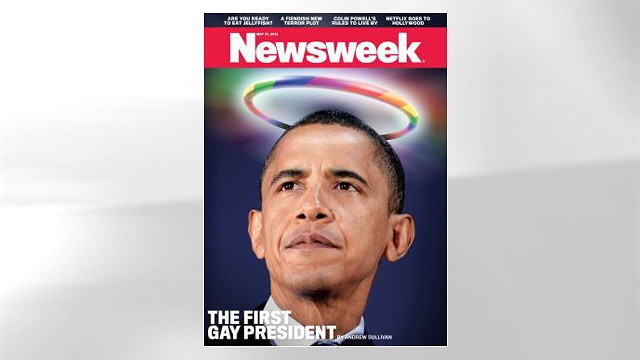
Headlines over a picture of Obama asking "Americas first gay president" and doctored photos showing The Duchess of Cambridge walking with Princess Diana, were typical. It is actually Brown's stewardship that has lost the readers and brought its demise. It has been a sore subject.

Moving the operation online will also mean it get the magazine out with less staff costs because it's thought to be losing about 40 million dollars a year.

It's owned by Sidney Harman (audio pioneer) but it was merged with billionaire Barry Diller publishing interests and Harman bought Newsweek in 2011 from The Washington Post (who had bought it in 1961), famously, for a dollar. 

The tempo of news over the internet has overtaken glossy magazines. The UK Guardian newspaper is rumoured to be going digital only and of course 'Life' magazine has closed - mind you, with a circulation of 7 million at the end.

Newsweek were first with the Clinton/Lewinsky story but held it for checking only to be trumped by The Drudge report which actually established the internet as a place for breaking news, ironically.

So a little bit of history comes to an end but yet, internet publishing gets a boost. There's no question, you'll see more and more of this.

The internet isn't a threat to established publishers, it's just a different way of delivering.

Tuesday, 16 October 2012

New York Times launch digital editions for China + Brazil. Newspapers are flourishing......online.


Given all the doom and gloom about print publishing in the digital age in times gone past, in fact the Internet has turned into an opportunity for newspapers as I've said many times before (here being one http://streamabout.blogspot.ie/2012/08/tv-broadcasters-watch-out-newspapers.html)

Now, The New York Times has just launched a new digital edition in Portuguese which is to target Brazil. It includes translated stories as well as contributions from local reporters and images. About 40 articles a day with a focus on news, business and culture. Original photography and local graphics will come later they say.

Earlier this year, they tested a Chinese language version of the paper which is expected to be fully available before year end. Interesting too, that you'll see a screenshot at the top of this blog and who is the advertiser in the top ear spaces? Cartier.

Whilst the US edition has a paywall (subscription) which by all reports has been a great success (I'm hearing the number of subscribers has now exceeded the number of traditional readers - even if that's wrong, it's clearly an upward trend), these editions will remain free for now.

So newspaper publishing online is becoming a fast growing business and these launches, show optimism. In time, newspapers will be 90% focused on their online papers with the printed versions taking a back stage - no harm there at all.

Irish newspapers are also showing signs of getting deeply involved in the digital space too, largely through video, bringing greater strengths to their groups. They have the credible brands to deliver news and if readers want that online, rather than printed, then why not give it to them? It's simply a matter of a different format - nothing to be scared of.

The difficulty with news online is the "trust" factor - you don't know what you're reading nor by whom - whereas traditional brands have got that trust. And so if you read a brand like The New York Times, The Irish Times or The Irish Independent online, you know you can trust it just as much as the printed version. 

You'd expect serious investment to follow in newspapers online as these initiatives grow. They're actually building value with the possibility of capital gain in their online presence. In other words, someone will want to buy them. In Ireland, when we question why well-known investors get involved in investing in newspapers now, don't. Stop and think.

And when you think of what we were saying some years back, about the inevitable decline of publishing, how mad is that now?

Instead it's an example as to how traditional business, once it gets its head around digital, can get into the space in a good way. Imagine the market opportunity in China for The New York Times? Wow. And imagine if they tried to do it the old way with paper producers, printing houses, vans, retailers, etc.

All they have to do now, is to do it online with an emphasis on design and they'll flourish. Content is and always will be, king.