The US Supreme Court might decide the future of Television, today.
Aereo, a start-up, rebroadcasts TV content like Fox, ABC, NBC, CBS on the basis that those signals are free and in turn it charges customers to watch them (about 8 usd a month).
Subscribers can watch, record and see a lot of content on their various devices.
But cable companies like Time Warner and Comcast, pay those broadcasters billions, to be allowed re-broadcast their content. They in turn sell it on to consumers as part of a cable subscription (like Sky).
Broadcasters have sued Aereo on the basis of copyright infringement. However, if Aereo's model is found to be legal, this will be a dramatic day for cable companies and for traditional TV broadcasters.
If Aereo loses, it might have to shut down. If it wins....re-broadcasting free signals is now going to expand and perhaps broadcasters will be forced to do it themselves and by-pass cable.
For example, NFL (America Football) would overnight be "free to air" through re-broadcasters online.
But of course, the bigger picture is copyright and as to who owns it and what rights the copyright holder has.
However, the even hugely bigger picture is that TV Broadcasters have now to resort to legal actions to defend their business. Always the sure sign that technology has overtaken them. And it has.
Original online content is growing, to compete with traditional TV, just as expected.
Following Netflix with 'House of cards' and others, Amazon have announced two new original series which they're producing.
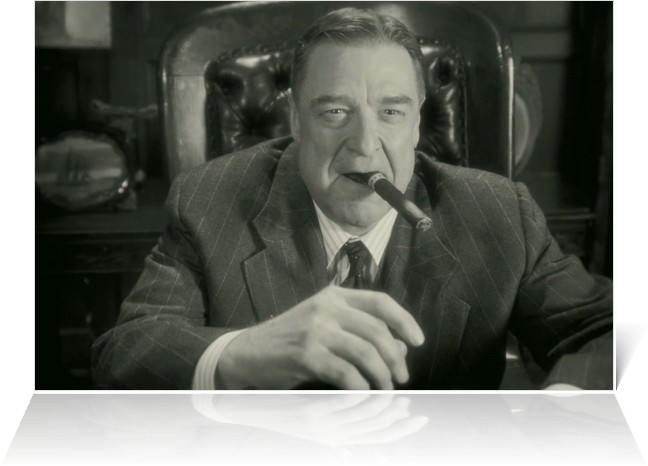
Alpha House, a comedy about US Washington Senators (with John Goodman), goes out on November 15th on Amazon instant. It is written by the great Garry Trudeau of Doonesbury fame.
Betas, a series about social media start ups (yep, could be good), starts at the end of November. Silicon valley friends have their moment in setting up a new Social Media play.
Both have 11 episodes. They've also 3 kids shows in production.
This is the first time Amazon have produced their own original Series and no doubt, follows Netflix. It allows the online broadcasters to compete for viewers with good, quality programming and is great news again, for the online digital video sector.
But it's more bad news for TV.
Already being hit as viewers switch over to online low cost, programming on subscription, as well as, an ongoing obliteration of their audience by Social Media, now they have a content challenge. Their only hope was to retain viewers because of the content traditional TV offers and even this, is being eroded.
Furthermore, Netflix and Amazon are sitting on big cashpiles, and we understand that they're going to compete to buy broadcast rights for live events - notably big sporting occasions. TV will not be able to compete with them here either.
Even as content providers, the recent YouTube deals show that online broadcasters, as YouTube is, are prepared to pay TV stations less for their content. So that revenue stream, small as it might be right now, is definitely reducing.
And as sure as night follows day, Advertising money follows audience. More and more of it is going online.
Yet, TV Stations persevere in the hope that terrestrial broadcasting will "see off" the continuing online challenge as they try to spin "good news" that's just not credible. They continue to live off in some cases, huge state aid, instead of getting into the space, embracing it and being prepared to re-formulate their model. Like newspapers have been prepared to do.
The ticking clock, just got a lot louder.
The role of "Television" or "Broadcasting" is changing and indeed, those terms need new definitions. No longer should we think of "Television" being the sole domain of "Television stations".
After all, consumers are now watching content in a variety of different ways. It's these changes in distribution, that's the core issue.
Whether we watch content through a traditional TV set currently, it's more likely that viewers will be watching via a connected device such as Xbox or the very excellent, Apple TV next. Indeed, the myriad of choices offered by Apple TV alone, encourages viewers to watch other content than traditional TV broadcasts. It brings a lot of movie sites, YouTube channels and Social Media into the livingroom, which in turn, brings consumers massive choice. Apple TV, for a low investment, is just stunning.
Where there's global choice of content, there's likely to be less viewing of domestic traditional TV "broadcasts" and the major US networks continue to lose audiences.
Social Media is also getting in on the act.
Twitter is trying to close the gap by becoming more involved in traditional TV through real-time conversation. Mind you, a tweet yesterday from Twitter UK saying "great to see the Xfactor bringing audiences closer and turning up the show's social soundtrack" was instantly slammed by users. Twitter are trying to become friends of the TV industry and it will fail.
Twitter wants to be the 'TV Social network' that helps build audiences which in turn, means bigger audiences for Twitter. Indeed, they're showing 60 second Ads during TV shows on Twitter as an "add on" to the programming and encouraging advertisers to sync their advertising. Take a spot at a particular time on the traditional TV show and sync it with one on Twitter.
In my view, they've tied their colours to the wrong mast.
What connected "broadcasting" devices are bringing is choice and choice that may come without Ads (such as the current online DVD boxset "binge"). A choice that means you never miss the start, the end, or forget to record a programme because online content is not hamstrung by TV schedules.
In the online world you get content, when you want it, rather than when a broadcaster decides to push it out. That is the main structural problem with traditional TV - Scheduling....rather than viewing freedom. And it's a difficult problem for TV stations to deal with, being so ingrained in their culture.
Of course too, content makers (which includes traditional TV stations) have to get used to a new model, where they're prepared to give out that content to other networks, with the copyright/royalty issues that come with that. But they will in effect, become content providers rather than "broadcasters".
BBC are starting on this path allowing 30 days access to content rather than a week, announced last week. Moreover, they'll allow some content to be viewed online before it has been traditionally broadcast. That's the sort of thinking required.
The development of "live" programming (notably Sports) is going to be interesting too. At the moment, few online channels, outside of traditional TV stations, have shown an interest in providing live content because of both cost and technology issues. But they might buy it in.
The difficulty with "TV" is that distribution has changed and will change completely. If TV stations are to survive it, they have to be prepared to change their model and few, it seems to me, are. They'd rather rubbish the online experience in the hope that it will go away, which it won't. And whilst they take the seat of Nero, everything changes around them, quickly.
Netflix develop original, exclusive content (winning Emmy's for their content such as 'House of Cards') but they're not the only ones as Amazon and Hulu now do the same. Big budgets too, so their content is real TV competition.
Binge viewing is driving online as well, as all the content of a particular show (the full series for example) is available same day. No longer do you have to wait for weeks to get to the ending. Movie releases are following suit with some Studios releasing Movies online first.
YouTube channels are developing at pace allowing ordinary content providers (be they members of the public or production companies) opportunities to broadcast. Awesomeness TV, a children's channel, now has a staggering 60 million viewers a month on YouTube. One YouTube gaming channel has 251 million. So these YouTube viewers have to be watching less traditional TV.
Social Media such as Twitter and Facebook are venturing into the space albeit in a collaborative way, for now. But they will develop their own content in time with News content being their initial entry.
Without any doubt, traditional TV has to change and become more online enabled and involved. Rebroadcasting of today's programmes via an App or online, doesn't cut it. It requires a complete re-think about how they create content, how they broadcast it and how they need to ditch their scheduling.
Perhaps too, they have to re brand and realise that their future lies not on what they broadcast on TV sets, but rather through their website. It's their website that's king and critically, how that content is being made available. To prioritise the web over traditional, will require in traditional broadcasters, a massive mindset shift.
All in all, it may be too late.....and in the eyes of this writer, it probably is because there is no sign of any dawn of realisation.
None.
It's gone past time to fight it.
If ever you wanted an example where digital broadcasting is eating into traditional Television, here's one.
YouTube have designed the 'YouTube music awards' on November 3rd, a lovely idea in itself because of their younger profile and the fact that music is a such a big YouTube driver. A lot of stars would never have got a music deal (such as Psy) were it not for exposure on YouTube.
However, the show which features Lady Gaga, Eminem, Arcade Fire and loads of other top acts, will be broadcast live.....on eh,YouTube. The 90 minute show will be driven by awards from votes and data about viewership on YouTube.
YouTube will also be showcasing contending artists in the build-up. And some of those artists will not be hugely well known generally but big on YouTube.
But this will be bigger than MTV.
So here is a digital channel that's generating its own awards that it will broadcast itself. So no need for traditional TV there at all and in fact, they're being left out in the cold as they won't have the content. They won't be able to broadcast the show.
So when they tell you TV viewing is growing, be careful out there.
Cause it sure won't be on November 3rd amongst that younger audience who'll be glued to YouTube.
YouTube and exclusive content on Netflix are killing Television.
This is only the start.
Twitter is moving more into advertising notably in advance of its IPO.
If Twitter can show real ways to generate revenue (current 2013 revenues expected at circa 500 million usd, a doubling of last year) it will help their float.
One way they're doing it, and talking to Ad Agencies about it, is to introduce the standard 30 second TV spot. They've been present at Adweek this week in NYC, a big traditional advertising get-together.
What they're suggesting is that advertisers broadcast their 30 second spot in the Twitter feeds of anyone watching the programme live online. So the ad would appear on TV as usual but also on second screens twitter feeds, simultaneously. Lovely idea.
It shows Twitter as an ally of TV which is a good move. TV Broadcasters could do the same in reverse.
With 200m active users sending 400m tweets a day, Twitter has been behind the door regarding advertising. But now, money counts especially in convincing investors of big revenue potential. A lot of Ad Agencies view Twitter as a Social Media tool rather than a medium in its own right. A lot of traditional Ad Agencies mind you, view everything Social as being tools.
Twitter have an Ad strategy that in my view, works.
But advertisers will find the money from their traditional TV budgets.
BBC, possibly the most regarded broadcaster in the world, launched its TV iplayer in 2007 allowing users access to its archived/live content and during the summer, it was used nearly 200 million times. Although, 90% of its listeners, watch live at the moment.
Year-on-year, the BBC iplayer requests have increased by a massive 56% on mobile and 300% on tablet. Oh ye of little faith in online broadcasting.
Now they've launched Iplayer Radio, by way of an App, allowing access to their network of 57 stations, live and on demand, across all devices. Mobile alone represents about 18% of its access but peaking at particular shows, to 30%. A massive audience and this allows users to easily switch between stations and therefore, retaining the audience.
Although state owned, BBC is free to air and more and more people are prepared to listen to global radio stations through streaming devices at home. Our house on Sundays, small example as that is, wakes to 'Radio Paradise' an American online station and 'Jones College Radio' from Texas, in Dublin. And of course, local radio has a key role but needs to get online in a serious way.
There is some talk, although a lot of doubt, that this may be a prelude to BBC launching a music download service too with the likes of 'Spotify'. Techcrunch have said it's denied and I'd trust that.
The app itself has some nice features - in particular a channel selector along the lines of the big old radio knobs which my Dad used to tune into 'Hilversum' (immortalised by Van Morrison), and foreign stations on an old wireless. A kick back that's nice.
It also has an alarm to alert you to shows and an 'in depth' button that allows you go further into the content (archived shows for example). They're also offering "two way" conversions with the studio and redesigned homepages for each station.
Radio owners need to be aware of this online competition and get into the space quickly. A lot of them "are there".... but simply.... because they think they should, rather than must. What's needed is a spirited attempt to gain audiences online over mobile Apps. Perhaps even an opportunity to come at this together rather than compete and giving audiences choices locally, on one App. Heresy or clever thinking?
Simple development of archive content, on demand music and features (like an alarm clock or trendy design) coupled with an Advertising campaign to promote their App, will pay dividends.
Their concern is that it might "bastardise" their existing offline listenership as the audience moves online. It won't, it will increase them - and anyway, a listener is a listener is a listener. Take them where you find them.
Because above all, if they do nothing, they're now in a hugely competitive space. As Zep says, "there's a lady whose sure, all that glitters is gold...."