Curated by Stuart Fogarty stuart@admaticallycom for AFAO'Meara Advertising, Streamabout The Video Agency and Admatic Ireland.
All comments will be posted - promise!
HBO are in talks for broadcasting over a web service like Apple TV and Google as an 'a la carte' version - in other words, pay-per-view. HBO Go is already on Apple TV but only for subscribers only - so this pay-per-view version makes total sense and something we blogged about before. In fact in April 2014, where we suggested (!) that the only way to go for cable TV was "to introduce pay-per-view to supplement subs". You can search the blog top left of this page or copy here; http://streamabout.blogspot.ie/2014/04/pay-tv-is-going-to-be-in-decline.html This will push HBO to compete with Netflix given they have 'True Detective', 'Game of Thrones' and many other quality series. A huge amount of online viewers watch 'on demand' rather than on subscription and this will capture those. This is also now a fundamental issue for 'Sky' this side of the water and they need to take notice. But online broadcasting, online TV, is taking a further twist. Better content online will continue to drive viewers away from traditional TV Stations. Their days are numbered. (And thanks to Adforce's Kevin Foley for pointing it out. Always on the ball.) Updated March 9th - HBO Announce Apple as their streaming partner so the service will be available on all Apple devices.
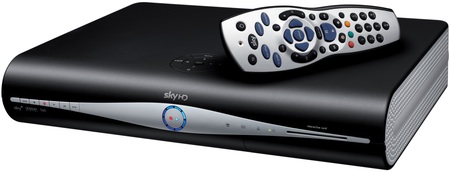
The problems with 'cord cutters' and the collapsing of pay TV (cable TV) has not gone unnoticed at BSKYB according to The Telegraph. They are preparing a major overhaul of their service and their set-top boxes to allow customers access to any programme on any device. They are also looking at Sky+, using the cloud (rather than the local box drive) to store programmes allowing greater accessibility. The multi-screen technology will also allow greater advertising opportunities possibly targeting customers by post code. Direct selling. They also plan to introduce 4K (very high definition programming) and a 'film to own' service. Of course, Sky aren't the only ones bringing Television across many devices with Google and Amazon already in the market and Netflix is signing deals. Traditional TV will become just a part of their subscription service (funny how it used to be the other way around!). Apple of course, are there too. But good to see traditional TV broadcasting embracing digital and getting into the space rather than usually, running from it. Sky, at least, are responding. The only downside to the story is that it's "a year or two away" which is a long time in politics as they say - but a generational time in digital. They'll need to move faster, but at least, they're moving.
In order for YouTube to enter the broader world of broadcasting, it needed to encourage content suppliers and did so through its 100 "premium channels" concept. The intention was to encourage speciality programming which might compete with terrestrial television. 100 channels got 1 million usd each. "SourceFed" looks like the winner. A year later in the 100 million usd experiment, it's about to pull the plug on 70% of the channels and withdraw funding from them. What YouTube have done is to look at the viewership levels, look at the cost, and then determine which channels give the best return. So out of a 100 channels, they reckon a year in, that 30 are doing the job effectively and 70 just haven't made it. Some of them were of course, just crazy. Like the channel dedicated to Al Gore....but if they end up with 30 channels that are viable in terms of audience and cost, that's a result. And a review like this makes sense further enhancing YouTube's reputation as being serious in the broadcaster space. Some of the channel are getting 3-6 million viewers a week which no standard broadcaster can compete with. Online will bring in that level of audience so that even speciality programming can attract in huge numbers. And are the traditional Irish broadcasters experimenting with YouTube? No. Are they experimenting online? No. They think that simply by rebroadcasting their daily content through an online player, is a strategy. It has become as ludicrous as that. I've said it before, I'll say it again - TV broadcasters are getting stuffed online and as more and more devices that facilitate online TV come into the market, the more stuffed they're going to get. And they've not a clue. Not an idea as to what is going on. Notably, as we move into a new era of connected devices, the manner in which we consume TV will change 100%. Not only the manner in that the devices will change (which frankly is insignificant although the traditional broadcasters seem focused on it) but rather the style in which we consume it. The online audience will look for better, niche content which broad market broadcasters will not be able to supply. They don't have the expertise for Social media, the platform, the financial resources (more ads means broad content) nor the skills (just look at their Facebook pages alone. Shocking) and in particular, they lack the understanding. Mostly, they've been propped up by Government for too long so as no longer to have a real commercial bone in their body. So with competitors like YouTube, who have all of those skills but just need to develop the content, which they are, it's a great opportunity for YouTube to simply own the space. Own the platform. They're not there yet....but they are getting there.
In a recession, one way to reduce your costs is to switch from cable TV to internet or "connected" (as it's called) TV. After all, the channels that you currently have are all online and about a million more. Plus you get your videos on demand (like Netflix), YouTube content, Facebook/Social Media, a music centre through itunes and a whole lot more. So it makes sense anyway - but when money is that bit tighter, now's the time to make the move. What you do need is a good, strong internet connection which most of us already have and are paying for anyway. The better the connection the better the download speeds but generally things are improving all the time. Next you need a "smart" TV. Don't have one? No problem. Most Blue Ray players and gaming consoles have this capability of internet connection but failing that, buy a streaming box (like a Roku box as illustrated circa 100 euro) in somewhere like Peats in Dublin. Easy to buy, easy to connect and job done. It's as simple as that. Some obscure programming is not online but that's more than compensated by what is and you'll just have saved yourself that monthly cable subscription as well as, the licence fee if you're in backward Ireland. So internet connected TV makes sense economically as well as by choice. It's cheaper and better, which are the watchwords of Irish businessman, Denis O'Brien. Make it cheaper and better and it's a winner. So a little trip to the electrical retail store to buy a streaming box (if you don't already have a connected device) and you're up and running. It's going to happen anyway so you might as well get in first and impress your friends as well as save some money. And in Ireland, I'm guessing you don't have to pay a licence fee either? Why would you. After all you're using a computer not a TV and you're watching other stations rather than the national broadcaster, RTE. Because if you've choice, you'll move on. So does this mark the end of the licence fee? I can't think why it doesn't. Apart from anything else, you'd have a monitor on your wall and a laptop - not a TV in sight. So it would be impossible to police. Maybe RTE would like to correct me? Another saving. Is this the start of the end of licence fee income? It's sure going to have a massive impact on viewership.