Showing posts with label The washington Post. Show all posts

Monday, 14 September 2015

Ad Blocking. The Washington Post has a go.


The Washington Post has started to block the ad blockers.

So if you have an Ad blocker installed, you won't get access to their articles. 

Whilst it reduces traffic, the point is, that there's no future in having traffic unless it's watching the Ads.

Basically, you get a pop-up when you log onto the Post and they ask you to disable the Ad blocker on your browser if you want access (people who do, will be tiny). But they say it's "a test".

However, if Ad blocking continues at the extraordinarily high rate it is (circa 198 million users), especially in that lucrative younger demographic, online newspapers simply won't exist. Subscriptions alone, won't cover it.

Already, Ad revenue losses to Ad blockers is estimated at 22 Billion usd - don't worry about the actual number because all you need to know is that it's high. Very high and getting very higher!

Ads slow down websites and so Ad blockers improve the browsing experience. Furthermore too, people do not like being cookie tracked by advertisers so that's driving the Ad blocking. And it's hard to see how it will halt and therefore, it's hard to see online publishers dealing with it.

Therefore, they need to move to other formats - such as native content and video - which is impossible to block. 

Fighting the Ad blockers is frankly, like standing on the beach trying to push out the tide.


Friday, 7 June 2013

US Government Data Spying 'Prism'. This is worse than Watergate.


There is something very unnerving about the discovery this week of 'Prism', the US Government's ongoing secret collection of big data.

It's particularly surprising from an administration under Obama. And worrying.

The National Security Agency has been collecting personal data on US citizens notably from Verizon (a big telco) getting personal call details. Furthermore, reports also exist that data has been got from Internet platforms Google, Facebook, Apple, Dropbox, AOL, Yahoo and Microsoft. This was reported by The Washington Post.

Although this morning, those companies are denying it quietly, but formal statements are awaited. Never a good sign when you see delays in formal statements because it usually means they need time to craft the language. For example, they may say they're not "participating" in Prism but perhaps comply when asked etc.

And sources in the know, say they are involved. We will see. 

And it could spell danger when in the past, these companies have gone to lengths in formal statements about their systems/structures/processes when dealing with Government information requests case-by-case. They've always tried to convey a sense of the enormous lengths they go to in order to protect their customers privacy. If they're involved in Prism, it flies in the face of those statements and could cause SEC problems.

Apple sources today, have said "they've never heard of Prism". 

The real issue here through the collection of data, is its use. No doubt the Government will put up arguments about defence needs and home security. They need the data to combat terrorism.

However, in that data will be phone/internet records for example, on Republican politicians and journalists. So if a journalist got a tip-off call on some White House issue, Obama's advisers will now know when and from whom, to whom.

There's never ever been an issue on giving data by ISPs on Terrorism, Crime, Sex offences - never.... and I know because I started one - but only on foot of a Court Order. Go to court, give your reasons and a judge will give you access. No problem.

But the hoovering up ('scuse the pun) of data on everyone is serious, appalling and outrageous in a democracy. It smacks of Nixon and if it's true (which it is in substance) then Obama is going to have real problems a la Watergate. Breaking into offices to get data is one thing, Prism is worse.

However, learn one thing - the US Government is spying on its own citizens.  

Citizens should not be afraid of their Government. Government should be afraid of their citizens. 

Monday, 22 October 2012

Newsweek stops publication December 31. It's going digital.


Newsweek, fresh from doctors surgeries everywhere, will end its print edition in December and focus exclusively online. December 31st will be the last issue of this 80 year old magazine and the online editions will be known as 'Newsweek Global'.

Whilst this is the first 'high profile' magazine to do this, it most certainly won't be the last. Newsweek already has an App available for 19.99 euro a year and it's believed the new online mag will be subscription only.

Brit Tina Brown, editor (formerly of Vanity Fair/New Yorker), described one reason as the cost of printing being "incredibly archaic". However, in truth, its circulation has halved in the last 5 years to 1.5 million which is surprisingly small for a global magazine. 

A decade ago it sold 4m copies with 2.7m in the US alone. It also has become more 'dumbed down' and not the current affairs focus it was known for. 

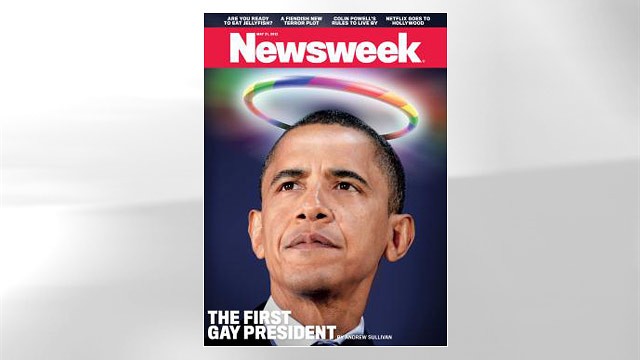
Headlines over a picture of Obama asking "Americas first gay president" and doctored photos showing The Duchess of Cambridge walking with Princess Diana, were typical. It is actually Brown's stewardship that has lost the readers and brought its demise. It has been a sore subject.

Moving the operation online will also mean it get the magazine out with less staff costs because it's thought to be losing about 40 million dollars a year.

It's owned by Sidney Harman (audio pioneer) but it was merged with billionaire Barry Diller publishing interests and Harman bought Newsweek in 2011 from The Washington Post (who had bought it in 1961), famously, for a dollar. 

The tempo of news over the internet has overtaken glossy magazines. The UK Guardian newspaper is rumoured to be going digital only and of course 'Life' magazine has closed - mind you, with a circulation of 7 million at the end.

Newsweek were first with the Clinton/Lewinsky story but held it for checking only to be trumped by The Drudge report which actually established the internet as a place for breaking news, ironically.

So a little bit of history comes to an end but yet, internet publishing gets a boost. There's no question, you'll see more and more of this.

The internet isn't a threat to established publishers, it's just a different way of delivering.