Friday, 16 November 2012
Skype. 280 million monthly users. And it's getting a push from its owner Microsoft with new ad formats.
Skype, which is owned by Microsoft, has 280 million, monthly users. And it's growing at about 40% year on year.
Pretty terrific numbers and now they're going to push it further. Or at least it would seem that they're being pushed by Microsoft's Ad division by all reports.
It has unveiled Skype Apps for Windows 8 (you know, as in Microsoft's Windows 8) but it's pretty quick out of the box. They are also introducing new Ad formats that play on social interactivity.
An example will be promotions that will appear during conversation streams (ads as you speak). Maybe you're talking weddings - up comes a wedding dress designer promotion.
It already carries ads on its home screen and it did launch 'conversation ads', display ads that appear when the user has no Skype credit, earlier this year.
Another plan they have is to create interactive conversations when two people are looking at the same thing. Say a hotel. We're both looking at it so let's have a conversation about it.
Brands too will be able to create groups of like-minded talkers, which you'll join and then the brand can run content through them (such as video). Say you join the Ireland Group - you'll get ads about the country, stories etc.
All a bit confusing? Sure is.... but by developing new and different formats, Skype may attract in brands who want to try something different. It's the nature of the Skype audience being visual, live and online, that's the attraction.
It's clever too in that the audience uses Skype for celebration - weddings, birthdays, christenings and so on that can bring a creative opportunity that's a bit novel. So you could have a brand enter the right conversation at the right time.
Generally Skype has done very well in numbers terms because the core idea is a great one. Despite that, it has a poor interface and shabby marketing, but it will get better and it would seem, it now has a new focus.
What's great about Skype is that it's a game-changer for telecoms and one of the classic online ideas.
It just needs a small push to own the world.
Which it seems, it's now getting.
Thursday, 15 November 2012
You're being watched online. Google and Twitter report growing trend in Government requests for your data.
Google has just reported in its "transparency report" that Government requests for user data is growing dramatically.
In the first half of 2012, there were nearly 21,000 requests regarding 35,000 accounts. In 2009 it was 12,500.
You can see it here http://www.google.com/transparencyreport/
Twitter and Dropbox are also reporting a similar trend in Government requests. Twitter have said they comply with 63% of Government requests although in 2012, that amounted to 1,181 accounts, the vast majority inside the US. And they do inform users of these requests unless prohibited by law.
However, Twitters Government requests already in 2012 are more than the total for 2011. It has deleted more than 5,000 tweets because of "copyright" issues alone which could mask that details (such as reports) are being circulated freely and they could be removed because of "copyright". In other words, if you have a Government document, they can stop it being circulated using this method.
One topical example is that of an 'Occupy Wall Street' protester where a US judge has ordered Twitter to hand over his (Malcolm Harris) details. Which raises the matter of privacy.
It would seem that Governments are using Social Media as a monitor. In order to make these requests, they need to be watching. But it's inherently wrong that Google and Twitter should roll-over so easily.
Other publishers would generally rather go to prison than reveal their source. Whilst there is an argument in cases of say, rape or abuse, with which we all would agree that disclosure is useful, it does however, represent the thin edge of the wedge.
If you allow access to those cases, you have to allow it in all - such as the case of the Occupy Wall Street protester which is political, rather than legal. You restrict the freedom of speech which may be unpalatable to a Government and we know the role that Social Media has played in revolutions, positively.
It's either one or the other.
Comply with access or not.
By complying, it has opened a door for Government to watch you.
And that's not good politically, certainly. As was said once, I don't like you, I don't agree with what you're saying but I'll fight to death for your right to say it.
Wednesday, 14 November 2012
Microsoft Windows 8 President departs with "immediate effect". 10 bilion usd wiped off Microsoft's market cap. Another fine mess.
Microsoft is in the news again.
Following the "launch" of Windows 8, President of 'Windows', Steven Sinofsky resigned on Monday. He was the man who launched Windows 8.
His email is at the end of this blog courtesy of Mashable. Although he goes on to explain that his resignation is nothing to do with anything at Microsoft, it's bizarre timing after 23 years with the company, having just launched their "make or break" Surface Tablet and Windows 8. In particular, it's with "immediate effect" and I'm in the business long enough to know that he knew the damage that would do to his beloved Microsoft. No one leaves like that and remains friends.
So there's more to this than meets the eye.
And the markets have given their view, wiping 10 billion usd off Microsoft's market cap. It's fair to say too, that one man's resignation shouldn't cost 10 billion and it wouldn't, unless the market view it as a deeper issue. Which in my view, clearly they do.
If everyone was still friends and part of the team, this departure would have been handled differently. Steven would have flagged his leaving some months back, a party would have been held to allow himself and CEO Balmer shake hands, staff would have been told in person rather than by mail and nothing would be with "immediate effect".
I have to say too, from a marketing perspective, the launch of Windows 8 passed without notice. Reportedly spending over 1.5 billion usd on the launch, it barely made or makes, the news. Are you familiar with the excitement of it all? thought so.
Microsoft will continue to be in trouble and the once glorious monopoly, is dying a thousand cuts. Somebody needs to do something.
With the general availability of Windows 8/RT and Surface, I have decided it is time for me to take a step back from my responsibilities at Microsoft. I’ve always advocated using the break between product cycles as an opportunity to reflect and to look ahead, and that applies to me too.After more than 23 years working on a wide range of Microsoft products, I have decided to leave the company to seek new opportunities that build on these experiences. My passion for building products is as strong as ever and I look forward focusing my energy and creativity along similar lines.The Windows team, in partnerships across all of Microsoft and our industry, just completed products and services introducing a new era of Windows computing. It is an incredible experience to be part of a generational change in a unique product like Windows, one accomplished with an undeniable elegance. Building on Windows, Surface excels in design and utility for a new era of PCs. With the Store, Internet Explorer, Outlook.com, SkyDrive and more, each of which lead the way, this experience is connected to amazing cloud services.It is inspiring to think of these efforts making their way into the hands of Microsoft’s next billion customers. We can reflect on this project as a remarkable achievement for each of us and for the team. Our work is not done, such is the world of technology, and so much more is in store for customers.
It is impossible to count the blessings I have received over my years at Microsoft. I am humbled by the professionalism and generosity of everyone I have had the good fortune to work with at this awesome company. I am beyond grateful.
I have always promised myself when the right time came for me to change course, I would be brief, unlike one of my infamous short blog posts, and strive to be less memorable than the products and teams with which I have been proudly and humbly associated. The brevity of this announcement is simply a feature.Some might notice a bit of chatter speculating about this decision or timing. I can assure you that none could be true as this was a personal and private choice that in no way reflects any speculation or theories one might read—about me, opportunity, the company or its leadership.As I’ve always believed in making space for new leaders as quickly as possible, this announcement is effective immediately and I will assist however needed with the transition.
I am super excited for what the future holds for the team and Microsoft.
With my deepest appreciation,
Tuesday, 13 November 2012
Google's Ad revenue in the 1st 6 months of 2012, exceeds all US newspapers combined. But newspapers can get into the driving seat.
In the first 6 months of 2012, Google generated more advertising revenue than all of the US printed newspapers. Combined.
Google generated 10.9 billion usd whilst newspapers and magazines, brought in 10.5 billion usd. Of course we are comparing all of Google's global ad revenue (as distinct from just the USA) so in some ways it's a "little" unfair.
However, that's not the point - it's a trend (as I often say) that data like this gives us. And what it shows more and more, is the transition of Advertising spend online to the detriment of traditional media. In other words, advertisers are taking money from traditional media to spend online, they're not generating "extra" spend.
That's not shocking either, but the quick rise is. Google is 14 years old - traditional media has been around for hundreds.
It also shows a need for print newspapers to get on board the online ad train as quickly as possible and I have to say, in Ireland anyway, they are. Their online revenue will compensate for the loss in traditional revenue and again, as I've always said, the Internet is an opportunity for print publishers. The opportunity to compete with TV broadcasters. And print will win if they can just weather the storm.
This is not a trend that can ever be reversed. In fact, it will get stronger and so online advertising formats will begin to flourish to a greater extent. Therefore, media needs to develop them and quickly.
For newspapers, video is the answer. Pre-roll advertising allows them to compete against TV broadcasters for news/weather/sport/entertainment. And they will win advertisers whom traditionally didn't advertise in press, making the Internet, their greatest lifesaver...if they get it right.
Newspapers can break news before TV stations whom withhold their news for their lucrative evening ad breaks. First with the news, brings in the audiences and that will bring in the revenue. Newspapers are the new broadcasters. It's TV stations that are going to be in trouble.
And they don't know it.
Monday, 12 November 2012
Connecting Internet TV. Easy to do, saves a fortune (no more cable sub), greater choice and the licence fee goes. Not a bad day's work then.
In a recession, one way to reduce your costs is to switch from cable TV to internet or "connected" (as it's called) TV.
After all, the channels that you currently have are all online and about a million more. Plus you get your videos on demand (like Netflix), YouTube content, Facebook/Social Media, a music centre through itunes and a whole lot more. So it makes sense anyway - but when money is that bit tighter, now's the time to make the move.
What you do need is a good, strong internet connection which most of us already have and are paying for anyway. The better the connection the better the download speeds but generally things are improving all the time.
Next you need a "smart" TV. Don't have one? No problem. Most Blue Ray players and gaming consoles have this capability of internet connection but failing that, buy a streaming box (like a Roku box as illustrated circa 100 euro) in somewhere like Peats in Dublin. Easy to buy, easy to connect and job done.
It's as simple as that.
Some obscure programming is not online but that's more than compensated by what is and you'll just have saved yourself that monthly cable subscription as well as, the licence fee if you're in backward Ireland.
So internet connected TV makes sense economically as well as by choice. It's cheaper and better, which are the watchwords of Irish businessman, Denis O'Brien. Make it cheaper and better and it's a winner.
So a little trip to the electrical retail store to buy a streaming box (if you don't already have a connected device) and you're up and running.
It's going to happen anyway so you might as well get in first and impress your friends as well as save some money. And in Ireland, I'm guessing you don't have to pay a licence fee either? Why would you. After all you're using a computer not a TV and you're watching other stations rather than the national broadcaster, RTE. Because if you've choice, you'll move on.
So does this mark the end of the licence fee? I can't think why it doesn't. Apart from anything else, you'd have a monitor on your wall and a laptop - not a TV in sight. So it would be impossible to police. Maybe RTE would like to correct me?
Another saving.
Is this the start of the end of licence fee income?
It's sure going to have a massive impact on viewership.
Friday, 9 November 2012
Indoor mapping. A great idea for Apps that's taking off. And a superb business idea.
Indoor mapping is taking off and it's a great little idea for retailers never mind, App developers or brands.
Using GPS (which really works outdoors only) you can locate the store and get directions which we are all used to. However, when you enter it, using Wifi and through a mobile App, you can then locate what you're looking for.
Macy's, the big New York American retailer, have just launched an App which does this, showing you all the various areas/retailers of the store. In a big retail environment, it helps you to get around but also points out things you may not have known were there. Bathrooms, Coffee shops, bag packing, customer service, retailers with special offers and so on.
Google and Bing offer something similar, but simpler, for Airports and shopping Malls. Airports are ideal candidates to show check-in desks, terminals, flight times, delays and so on especially if you're not familiar with that airport. Malls the same, Hospitals and Sports venues another.
In doing that, it of course, also allows advertisements as you literally pass by one shop based on where you're standing. It's not a tricky techy development area either - reasonably straightforward to produce and with Airports, huge audiences. 55 million people fly through Atlanta for example, 47m through Beijing, 40m through Heathrow and I think even Dublin airport has just under 20 million passengers.
With a "readership" level like that, makes it a lucrative business and high downloads of the App, just on airports alone. Charge a dollar for the Atlanta airport download alone and you've a 55m market. In fact, charge 10 cents.
But indoor mapping is a great possibility for retailers in shopping centres and malls. With a search function, say you search "jeans", it will mean that every visitor will be more likely to become a customer because they can find what they want easier and faster. And the App user, can be messaged.
As they say, there's an App for that.
Thursday, 8 November 2012
Sony, Sharp, Panasonic. Brands in a shocking downward spiral. Lessons to be learnt here for marketeers.
Anybody with a doubt in their head about how brands can suffer, who aren't prepared for the digital age, should look at the demise of Japanese electronics. Once held up in universities worldwide in the 80's, as the model for enterprise are now in deep trouble. They weren't prepared.
The continuing decline of brands like Panasonic, Sharp and Sony, and the incline of Samsung, show how the world has changed. And it's a lesson.
Sharp, a 100 year old company, has now raised concerns that it might no longer be a "going concern". Posting a loss of over 3 billion usd for the last quarter, Sharp it estimated to reach combined losses of 10 billion usd and now has problems raising finance. As well as, share price declines.
Because Sharp is burning through cash, it had approached private equity to shore up its position but rumours abound that it has failed and instead, has turned to the Japanese government for what is, a 'bailout'.
Sony has just posted its 7th straight quarter loss (this one was 194 million usd) and is cutting 10,000 jobs. Sony was for so many years, the dominant premium brand. Panasonic is also forecasting dramatic losses.
All three are having nightmares on the Japanese stock market and reaching "junk status" quickly.
These brands have been wiped out by companies like Apple and Samsung in the new world order. Whilst they remained part of the old world order, they did not settle into the Internet world quickly enough.
Sony, inventor of the Walkman, Bravia TV and so much else, took a back seat because they felt that their position was "too big to fail". Most Japanese producers did the same as you can see as indeed have Nokia.
The Internet has become a great brand leveller.
Who'd ever have thought that a South Korean company (not exactly silicon valley is it?) like Samsung, would outsell Apple by a big margin? Never mind leave the Japanese in its wake.
It's extraordinary stuff but extraordinary lessons.
Brands that ignore the online revolution will pay a heavy price.
The decline of these, once world class brands, only illustrate how quickly it can happen through a lack of innovation but also, a pooh-poohing of the online marketplace.
So many established brands have such a poor online strategy that they'll be doomed to fail. Most even still, have poor websites.
Has yours?
Wednesday, 7 November 2012
Tumblr showing stunning growth. 20 Billion page impressions a month. Start up to billionaire in 6 years.
Tumblr is really growing and is now one of the Top 20 visited websites in the US - about 19th (Google is number 1). In July last year, Tumblr was 92nd!! So this is a real dramatic rise.
The site now collects, wait for it....20 BILLION pageviews a month (Facebook collects a trillion a month, Twitter 5.9 billion a month) but this is dramatically up from Tumblr's 13 billion in September. Huge growth.
These are staggering numbers. Founder David Karp started Tumblr in 2007, really for himself to share his blog but the smartphone has really pushed it, which Karp credits as being the business driver. A lot of the site's traffic comes from mobile apps. Again, it points to the role of mobile in online businesses. Mobiles are basically pocket computers and getting more advanced so everything we do needs to be mobile enabled.
There's 77 million posts a day on Tumblr and shows the power of blogging. As a source of content, blogging is big and provides rich content to publishers globally. Tumblr however used blogging to develop photo sharing, a key online activity and the site, www.tumblr.com, looks terrific from a design point of view. It's really overseen by people who care about it because that shines through.
The company had an 800 million valuation mid 2011 and I expect it has now well exceeded that, deservedly. After all, Karp started it with his own money from a salary he was paid when working at Urbanbaby.
It's a real start-up story driven by a techy with an idea and now it's going from strength to strength. One we should admire and point to. Karp is living the dream and has done it in the nicest, freshest way.
Just goes to show.
An idea to billionaire in 6 years.
Only the web can do that.
(Don't you just hate him....)
Tuesday, 6 November 2012
Presidential Election. Where to watch it online, when the results will be out. And who wins.....
Interesting video with the results of all Presidential elections. Look at the great Lyndon Johnson in 64, Nixon in 72 and Reagan's walk-overs of 80 and 84. Great stuff.
With more than 100 million Americans casting their votes and especially in a tight election (which this one is, but Obama looks to have a 2% lead in some polls whereas others put them neck-and-neck at 48%), results will take longer to get out.
Normally you'd expect to see results from 3am to 7am Wednesday GMT but this close race could mean it could go on much longer. Alaska is the last state to close at 5am.
Each state is "called" after they close based on exit polls and actual votes - the ones that are clearly democrat or republican are easier to call early. The swing states are not (often called the "battleground" states) and they include Ohio, Florida, Colorado, Virginia - there's about 13 in total. Ohio is the interesting one and closes at 1230am GMT with both candidates in Ohio today, as their last stop. No Republican has ever won the race without winning Ohio.
The President needs 270 votes to win.
BBC are planning big election coverage and live streaming here http://www.bbc.co.uk/news/world-us-canada-20076298
Ustream also seem to have a comprehensive coverage with ABC News here http://www.ustream.tv/election2012
The last point too is legal challenges. They've already started today, on both sides and I'd expect that if this race is as close as we think, that the courts will be involved - delaying the result further.
So it looks to me like 9am GMT Wednesday morning for a clearer picture as to who won and if it's close, I'd expect legal challenges to go on until Friday.
Just about.
Monday, 5 November 2012
Starbucks Ireland low tax isues, causes protest and boycott. Other brands starting to surface. Brand anger.
I recently blogged about the problems Starbucks UK are having as a brand, following revelations about their low tax payments, particularly in the UK. You can read it here; http://streamabout.blogspot.ie/2012/10/starbucks-brand-that-was-loved-could-be.html
Now they're being faced with a boycott and further protests.
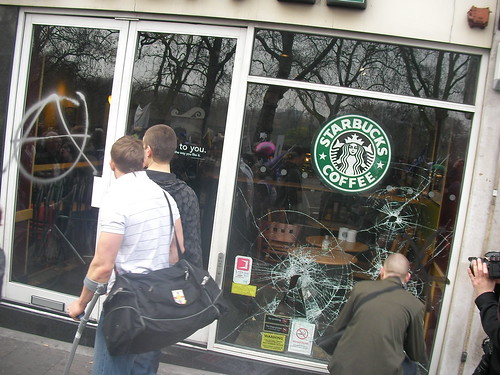
I was not terribly surprised to see a demonstration in Dublin on Friday outside their high profile outlet on Dame Street. The 'People before profit' alliance headed up by Richard Boyd Barrett in attendance, staged a peaceful lunchtime picket. In parts of the UK, it has not been so peaceful.
It's clear that Starbucks have minimised their Irish tax position as well.
According to The Irish Times, filed company accounts showed it paid less than 40,000 euro in taxes between 2005 and 2011 - 6 years. At the same time, it paid 5.7m euro to its parent in so called "royalty" payments thereby diminishing the tax it was required to pay in Ireland.
It is exactly these "royalty payments" that have created their UK problems.
Starbucks Ireland accounts show it made a "profit" for the first time last year of 524k euro on which it paid under 35k on tax - less than 10%. Only once in the previous 6 years did it record a tax payment - of 4k in 2008. Interestingly, in claiming "losses" that year of 5.5m euro, it still paid 1.3 million in royalties to its parent.
The Irish tax regime to attract investment at the standard 12.5% rate, has been constantly controversial. In the eyes of some, it is designed to promote widespread global tax evasion and is not based on the PR spin of investing in a young, vibrant Irish economy.
Starbucks will suffer as a brand, in these days of austerity because consumers don't like greed and corporate greed especially. Vodafone is now starting to get a mention. Notably too, a brand like Starbucks always had a bit of a "hippy honesty" and clearly their halo has slipped, or it was all pretend anyway. Image over substance.
Other brands that have the same issues will fall under the spotlight and be punished for it. Brand anger. A lot of people have themselves major difficulty in paying their tax and it will seem grossly unfair that corporates can avoid tax without penalty and largely, with Government consent.
As consumers suffer more and more, these issues are going to generate anger and brands are going to be punished. Starbucks suck will be a mantra.
It's a new issue that finds itself under the marketing umbrella, caused by austerity. And it signifies a change in consumer attitude that's going to grow.
Brand anger.
Friday, 2 November 2012
Microsoft Surface Tablet gets one big positive review. From Oprah.
I know marketing, I get marketing but this endorsement of Microsoft's new Surface Tablet is bizarre. It's in her O Magazine December issue, which as you can see above is about Christmas and has an annual feature of her "favourite things".
How they ever managed to get Oprah to go along with this I just don't know.
Most of the reviews last week following the launch, were favourable and as you'll know this is make-or-break time for Microsoft as it enters the hardware market for the first time.
So Oprah has declared The Surface Tablet as, "one of her favourite things of 2012" in the December issue of her mag O. "it feels like a Mercedes Benz to me people" she gushes and goes into uncharacteristic tech speak, more Press Release words, about the weight, the kickstand etc.
Oprah endorsed the IPAD in 2010 ("the best invention of the century") bringing in huge sales. So it's one hell of an endorsement.
As a strategy, celebrity endorsement has real value and in the digital age, is easily shared. It's a key moment for Microsoft's tablet and will help hugely. But normally, these are paid for endorsements but given that it appeared as editorial in the magazine, would seem to be genuine.
Thursday, 1 November 2012
Disney buy Star Wars for over 4 billion usd. George Lucas interview.
George Lucas, the sole 100% shareholder of Lucasfilm, has sold Star Wars to Disney for over 4 billion usd.
Star Wars has cult status amongst the online community largely because of its hi-tech special effects and futuristic themes so it's a deal that's got a lot of attention. Lucas, who created the franchise, says he's selling to make sure the movies live on and I'm sure the 4 billion helps - although to be fair, he didn't need the money and interesting too that he was able to hold 100% equity all this time.
Films accounted for 25% of revenue, consumer products 25% and others the balance last year. A new Star Wars movie is promised by 2014 and two more to follow that.
This is an example of Hollywood and digital tech getting closer together - what's been referred to as the 'convergence of the media' or the 'mash of media'. Disney already acquired Pixar for 7 billion and Marvel for 4 billion.
A great pay day for George Lucas who's own imagination started it all and a great day for online as another classic franchise will flood the web.
The Web is becoming THE place for entertainment and that's an opportunity.
As more and more people turn to the web, notably through connected TV, they'll look for more and more entertainment. Already companies like Amazon and Netflix are calling out for produced content (kids and comedy programmes are favoured).
So this is a whole new world of programme opportunity, perhaps sponsored by brands like the shows of old.
Wednesday, 31 October 2012
New survey "The State of online advertising". And it doesn't make good reading.....
Adobe and research company Edelman Berland, have just published a report on the "state of online advertising" which throws up some sobering stats. It shows a marked difference between how consumers perceive online advertising versus how marketeers do.
68% of consumers found online advertising "annoying" whilst only 47% of marketeers did. 14% of consumers found it "eye catching" whilst 21% of marketeers did. And notably 10% only of consumers found it "clever" whilst 22% of marketeers thought it was.
Only 31% of consumers enjoyed the Ads and 45% said the best place for advertising was on "newspapers/TV". Blogs and Apps do badly at 4%. 11% of consumers thought there were "no good ads".
57% of consumers say they've "liked" a brand on Social Media and a massive 53% want a "dislike" button too! 73% said that they thought Ads should "tell a story" and 67% thought a video was "worth a thousand words".
The sense of the survey is that online advertising needs to tread carefully to be receptive and effective. In other words, it's a different medium and so simple adaptations from the offline world, won't cut it. In a lot of ways, online advertising is an intrusion, especially on Social Media and so it needs to be handled with more care. It needs to be relevant and worthwhile.
To advertise to your audience, you need to understand your audience and indeed, understand the medium in the same way that we all understand traditional media.
Consumers feel (54%) that online banners simply do not work and that TV/online video is the way to go. So better formats with better, relevant and less intrusive content will work more successfully.
There's a danger here in online advertising that we're getting it wrong. Knowledge of what is happening in the online space, is power. And perhaps, above all, Ad Agencies should bring themselves more up to speed before they start talking.
There's a lot of research out there that says that the ad makers don't get it. That we don't really understand and are paying it all lip service as "just another medium" - which it's not. The space is different, the consumer attitude when in the space is different, the ability to connect is different. This survey is just another warning.
Take it serious.
Tuesday, 30 October 2012
Starbucks. The brand that was loved could be in trouble over paying low tax.
Starbucks, the brand of choice for the new middle classes, is taking a hammering in the UK and will in Ireland, as its tax affairs become more public.
Whilst tax affairs have never really been the concern of marketing managers, in these days of austerity, issues like this come more to the fore.
The image above is one of many and taken from an 'Occupy London' protest.
A respected market research company 'YouGov' said Starbucks was facing a "brand catastrophe" and that consumer perceptions are declining daily after Reuters published an investigation into Starbucks low tax. It revealed that they only paid 8.6m stg in tax since they opened in the UK in 1998 (about 600,000 a year over 14 years).
In current climates, the public have a low tolerance of anything that even sounds like corporate greed but of course, Starbucks are only availing of "policies" from The British government/revenue to locate there.
Indeed Ireland, has a widely acknowledged and hugely controversial, low 12.5% tax base which means that international companies who locate here, can wash global profits through Ireland at the lowest tax rate in Europe. It's a strategy that attracts investment which is based not on the PR spin of talent/resources/education, but rather, tax advantage. It is utter nonsense to suggest that if you allow corporates to avail of special tax incentives and evade tax in other markets where they trade by utilising EU provisions, that they won't avail of it.
Starbucks have now joined Google (headquartered in Ireland), Facebook (headquartered in Ireland) and Amazon as the focus of disquiet from the public about their tax affairs. Starbucks claim they're actually paying correct levels of tax due to loses incurred in their set-up in the UK although given that it attracts over one million customers a day in the UK, this is hard to believe. A business with that level of custom, should be profitable.
In the UK, tax is calculated on profits after interest costs and royalties and of course, adjusting those royalty costs, allow the company to minimise its tax. The fee is paid to the European HQ in Amsterdam and for example, in 2007 Starbucks would have been handsomely profitable if this "fee" wasn't paid.
However, payments like these, with the consent of HM Revenue, help corporates to avoid tax locally and about 25% of the 700 largest UK businesses paid almost no tax according to The Financial Times through devices such as these which smaller companies have no real access to.
Public anger over corporate tax is absolutely likely to continue and affect brand. Already campaigns against Starbucks, outside their stores, are planned.
The once doyenne of the middle classes could very quickly become a pariah.
And so too, very many others.
Friday, 26 October 2012
Netflix. The new Facebook, there's no doubt. Numbers just in show 30 MILLION subscribers.
Netflix, the video service online that everyone loves and loves to give out about, has powered on.
I blogged earlier this year (http://streamabout.blogspot.ie/2012/04/netflix-greatest-change-in-broadcasting.html) about how they planned/hoped to have an extra 7 million subscribers by end 2012. Numbers just announced show they've a staggering 30 million users in total already.
An increase of 10 million users in two years which given that their original DVD service waned because of online, it's a great credit to them. The US and Canada are the core drivers here but as Netflix expanded this year into 51 new countries, it has really worked.
CEO Reed Hastings (that's him above and who had his salary doubled in 2010, to 5 million usd) on his Facebook page said:
Thank you, thank you, thank you.Add to that Netflix has established itself very neatly in the connected TV market, this will mean that the company is destined to grow and grow.
Thirty million of you are now Netflix streaming members.
I’d like to express my gratitude to each of you. Your choice to be a Netflix member helps us get more content every year, and helps us further improve our member experience. You make it possible for us to offer the most amazing internet television experience ever. Thank you, again. -Reed
An extraordinary story of new media and we know, that Netflix are commissioning programmes to be a player in the general TV market. We also know that they're very conscious of the need to improve their product - a self criticism that marks out a great business.
People always talk about investors looking for "the new Facebook".
Stop.
Here it is.
Thursday, 25 October 2012
Obama Romney Campaigns online tracking exposed. This needs a debate.
More and more, privacy has become an issue and with the new, increasing sophistication of tracking, it is something to be concerned about. After all, when you visit a site and at a simplistic level, get a cookie, we know where you go and what you do. And it's used for ad targeting.
But a report from the US regarding the Presidential election, has exposed the advances made in tracking. Worrying advances.
Both Obama and Romney have ramped up their sites tracking capabilities to understand and target voters better. Unprecedented tools that create profiles about your habits on the web and therefore, target personalised Ads when you visit other sites. BarrackObama.com hosts an astonishing 160 unique tracking technologies. Romney has 110. So think about how much they know about site users. How much they know about YOU.
It's argued that this is new advertising techniques in a digital world, but the key issue is that users don't know they're being tracked so extensively. Online data collectors will benefit from this hugely and it's not disclosed on their homepages (yeah, it's in the real small print). So that's okay then? not really.
Most people are unhappy being tracked - a recent poll suggested 60% - but I think that's low. Most people I know, resent it full stop.
Both politicos too, send targeted emails - but Obama's campaign seems to have brought this skill to the nth degree. They've embedded Facebook names of friends encouraging you to get them to vote - so they know who your friends are.
In my view anyway, and coming from the Ad side, this needs a debate. It's beginning to get unacceptable. I blogged before about Facebook having the right, which they do, to use your photos commercially for example. How about your picture appearing in an Ad without you knowing? Happy? So Facebook is now the biggest photo library in town - without your permission (oh, sorry, yes it's in the small print). But you didn't know that?
That's the issue.
Permission.
No tracking without representation - there you go, a campaign slogan already.
Wednesday, 24 October 2012
Microsoft launch Windows 8 and SurfaceTablet this week. This is make or break time for the once glorious empire.
There's very little excitement ahead of Microsoft's launch Thursday of Windows 8 (that's the start screen above, courtesy of Mashable) and their first venture into hardware - The Surface Tablet.
And there was a time when the world would have started queueing by now.
It's the biggest, most crucial, launch in Microsoft's history of both its controversial Surface Tablet and Windows 8, its new software optimised for touchscreen. Skype (owned by Microsoft) wil be deeply embedded into Windows 8 by the way.
Of course it needed to be done in that Microsoft had to update their software away from the old PC's into tablets, smartphones and new devices. Windows still is the preferred Operating System on over 95% of PC's....the problem is, PC's are not the preferred devices any more. Microsoft have a monopoly....but on the wrong thing.
Microsoft revenue fell 22% in the last quarter, as PC sales took a dive.
It's rumoured that the global cost of launches is 1.5 billion usd with Steve Ballmer CEO, saying that it's going to be "bigger than Windows 95". Well not yet it ain't.
With Windows 95, The Rolling Stones told us to 'start me up' with this it's more like, "cry me a river". If Ballmer is betting the farm on this, then already it's looking over.
According to Salesforce CEO, Marc Benioff, he believes the operating system upgrade is “irrelevant.” While previous Windows releases inspired corporate PC upgrade cycles, “you’re not going to hear about the Windows 8 upgrade cycle. I think it’s the end of Windows"
The end of Windows?
Largely this launch, is to bring the operating system into the touchscreen space - although one wonders how many businesses for example, will be prepared to replace their monitors for the benefit of touchscreen?
Networkworld called it a "non-event for business" and went on to pretty much slate the software. According to Networkworld - Windows 8 is going to get hammered in the next few weeks as consumers try out the new operating system for the first time. Their reactions will likely differ little from
those of reviewers who found much to complain about. The bottom line is
that Windows 8 – particularly on a tablet – does not behave much like
any previous Windows PC operating system.
The launch is a pivotal moment for Microsoft but here's what Computerworld said; The Windows 8 launch will be a rocky one, leading to an "ugly" 2013 for
Microsoft, warns a report from Forrester. And Microsoft's overall share
of the PC-and-devices market, currently at 30%, will remain static at
least until 2016, the report adds.
Curry's and PC World retailers, have said they'll open their doors in London at midnight this Friday October 26 for the launch in an attempt to generate "Applesque" interest.
And on the Focus website; Most
businesses will most likely wait a while before adopting Microsoft
Corp.'s new Windows operating system, scheduled for launch this month,
the founder of Taiwanese computer maker Acer Inc. said Tuesday."For
such a big event, it will be examined and discussed by people. It will
not happen in just one month or one quarter," Stan Shih said when asked
about the business sector's adoption of Windows 8, at the opening of a
consumer centre in Taipei.
Here's what Channel Register are saying; There’s much to be excited about. Yet, not many in the channel are
excited. In fact, the Microsoft ecosystem – component makers, PC
manufacturers, distributors and resellers – is bracing for a lull rather
than a surge in Windows-related sales.
A lull?
I think what you're seeing now is the death crunch. This is make or break time for Microsoft, once the greatest company in the world. Either Windows 8 and The Surface will take off or it won't.
One or the other.
But this time, if it fails, it fails forever.
And that could be the end of Windows.
The end of Microsoft.
You're watching a bit of history.
Tuesday, 23 October 2012
Apple Ipad Mini launch. See it live here. Read about it just below.
Apple are launching the Ipad Mini live online and it's here
http://www.apple.com/apple-events/october-2012/
(You can read about it on my normal blog today, below).
Today Ipad launches the Ipad Mini. A lesson in creating excitement about a low-cost Apple brand without the damage.
Today, the Apple IPAD gets a new family member, the mini-Ipad. In San Jose Apple will unveil their mini under the slogan "the biggest thing to happen to the Ipad since the Ipad". The picture above is a leaked image.
A small tablet (about 7 inches), similar in size to both Google and Amazon, it's exactly what Steve Jobs didn't want to do, so new CEO Tim Cook is out on a limb here. It's likely to be accompanied by a wide-ranging announcement of new software and products creating a Wow! factor. And expect a spectacular launch.
It will be a smaller ipad or, if you like, a bigger Ipod touch, giving the usual fare of movies, itunes and so on. But it will be more portable to allow it to compete with the Kindle Fire and Nexus 7. In particular, it will be the lower cost Ipad and that's the key. An opportunity to bring the expensive Apple product into mass hands at a lower price without damaging the brand itself.
In a way, the mini Ipad will allow you to read a book as a paperback rather than as an Ipad and if anyone can make a Kindle better than Kindle, it's Apple. I expect it to cost about 100 usd.
This is a big announcement by Apple and one can't help wondering if it's intended to steal some of Microsoft's thunder with their launch of Windows 8 on Thursday. Methinks it is. It will also show Apple as the great innovator.
This too is October. The ideal month to launch potential Christmas present brands and I get the feeling that the mini is going to do terribly well. After all, who would be disappointed with an Apple in their stocking? We will see.
It's a lesson in producing excitement of a low cost product without damaging the mother brand. No mean feat.
Monday, 22 October 2012
Newsweek stops publication December 31. It's going digital.
Newsweek, fresh from doctors surgeries everywhere, will end its print edition in December and focus exclusively online. December 31st will be the last issue of this 80 year old magazine and the online editions will be known as 'Newsweek Global'.
Whilst this is the first 'high profile' magazine to do this, it most certainly won't be the last. Newsweek already has an App available for 19.99 euro a year and it's believed the new online mag will be subscription only.
Brit Tina Brown, editor (formerly of Vanity Fair/New Yorker), described one reason as the cost of printing being "incredibly archaic". However, in truth, its circulation has halved in the last 5 years to 1.5 million which is surprisingly small for a global magazine.
A decade ago it sold 4m copies with 2.7m in the US alone. It also has become more 'dumbed down' and not the current affairs focus it was known for.
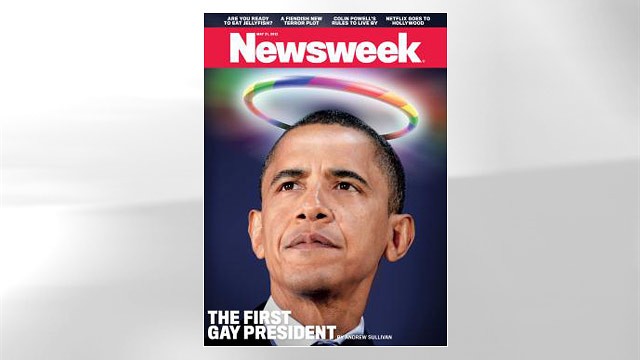
Headlines over a picture of Obama asking "Americas first gay president" and doctored photos showing The Duchess of Cambridge walking with Princess Diana, were typical. It is actually Brown's stewardship that has lost the readers and brought its demise. It has been a sore subject.
Moving the operation online will also mean it get the magazine out with less staff costs because it's thought to be losing about 40 million dollars a year.
It's owned by Sidney Harman (audio pioneer) but it was merged with billionaire Barry Diller publishing interests and Harman bought Newsweek in 2011 from The Washington Post (who had bought it in 1961), famously, for a dollar.
The tempo of news over the internet has overtaken glossy magazines. The UK Guardian newspaper is rumoured to be going digital only and of course 'Life' magazine has closed - mind you, with a circulation of 7 million at the end.
Newsweek were first with the Clinton/Lewinsky story but held it for checking only to be trumped by The Drudge report which actually established the internet as a place for breaking news, ironically.
So a little bit of history comes to an end but yet, internet publishing gets a boost. There's no question, you'll see more and more of this.
The internet isn't a threat to established publishers, it's just a different way of delivering.
Whilst this is the first 'high profile' magazine to do this, it most certainly won't be the last. Newsweek already has an App available for 19.99 euro a year and it's believed the new online mag will be subscription only.
Brit Tina Brown, editor (formerly of Vanity Fair/New Yorker), described one reason as the cost of printing being "incredibly archaic". However, in truth, its circulation has halved in the last 5 years to 1.5 million which is surprisingly small for a global magazine.
A decade ago it sold 4m copies with 2.7m in the US alone. It also has become more 'dumbed down' and not the current affairs focus it was known for.
Headlines over a picture of Obama asking "Americas first gay president" and doctored photos showing The Duchess of Cambridge walking with Princess Diana, were typical. It is actually Brown's stewardship that has lost the readers and brought its demise. It has been a sore subject.
Moving the operation online will also mean it get the magazine out with less staff costs because it's thought to be losing about 40 million dollars a year.
It's owned by Sidney Harman (audio pioneer) but it was merged with billionaire Barry Diller publishing interests and Harman bought Newsweek in 2011 from The Washington Post (who had bought it in 1961), famously, for a dollar.
The tempo of news over the internet has overtaken glossy magazines. The UK Guardian newspaper is rumoured to be going digital only and of course 'Life' magazine has closed - mind you, with a circulation of 7 million at the end.
Newsweek were first with the Clinton/Lewinsky story but held it for checking only to be trumped by The Drudge report which actually established the internet as a place for breaking news, ironically.
So a little bit of history comes to an end but yet, internet publishing gets a boost. There's no question, you'll see more and more of this.
The internet isn't a threat to established publishers, it's just a different way of delivering.
Friday, 19 October 2012
Google. Dramatic Share Price Collapse today caused by leaked Q3 numbers. Mayhem.
The early mistaken release of Q3 "draft numbers" (say Google) today before markets closed, has led to a major drop in their share price and a major spotlight on their image.
From the chart above, see if you can spot when the figures were released? Look like a share price tank to you? Does to me.
A drop of 10%..... but there was so much panic, the shares were suspended from trading. In fact it was mayhem and has now made the news internationally causing all investors to consider will the share tank further? Likely now boys.
Total Quarter revenues were 11.3 billion usd giving earnings of 2.18 billion usd. Most of us would be well pleased. All of us in fact.
The problem was, they were below expectations of 11.9 billion and 2.5 billion and expectations are already "built in" to the share price (the price of shares reflects the future potential of the company, not the current). So when expectations aren't met, shares fall - unless some major explanation is given.
In this case, the unexpected release of numbers meant no explanation was available or ready, hence the mayhem.
Click rates on search ads were down too, by 15% and this is very much core business with one major investor called "shocking". It's now built up into a story that most searches are taking place on mobile using Apps, not Google, further enhancing the fear that Google is losing steam. The reality is, that it's probably because of competition from the likes of Facebook.
Costs rose dramatically too (up a whopping 71%!) 11.4 billion usd largely due to their May acquisition of Motorola Mobility and the 20,000 employees that went with it (nevermind the 12.5 billion in cash it paid for it). Motorola losses are huge, contributing to a bad Google picture.
So overall there's probably good explanations for all of it and with earnings of over 2 billion a quarter, that's about as good a company as you can get.
However, the publicity now, which is bringing story after story but bizarre analysis, is going to be costly. A company like Google, so much the poster-boy of this new world, when it gets bad press, it reminds us all of the 2000 bubble. Maybe the Internet isn't all it's cracked up to be? Can't you just hear it.
It's actually a headline in tonight's Irish news.
And the donkeys of Wall Street will look with glee because they get a commission on a sale just as much as a buy. Shakes up the market, brings in money. The shares have recovered slightly after hours.
So hold onto your hat.
This is going to hurt
Thursday, 18 October 2012
Obama Romney Town Hall. Social Media results in and they're shocking! Shockingly quiet.
Obama Romney Town Hall debate last night didn't have the same Social Media impact that the first one did. Maybe because Obama seemed like a new man and it was all a bit "back to normal".
I stayed up until 4am watching it and in my book, Obama was well back on form and has put his campaign back on track. And in my view, this was the one he needed. The last debate will be too late to have an impact and traditionally, voters have pretty much decided by then. The only reason it comes into play if there's a screw up - otherwise, it desn't matter really.
Romney's reference to "binders full of women" got a big spike on Twitter and became Google's number 3 trending topic after "who is winning" and "live debate". Search for the words jumped 425%.
7.2m tweets were sent compared to 10.3m in the first debate.
The economy was the big issue with 28% of tweets, taxes 17%, foreign policy 16%, energy 13% and immigration 8%. 109,000 Tweets per minute at the peak which was when Obama had a go at Romney with "you're the last person to get tough on China".
It seems to me that the Social Media reaction was pretty stable, not too exciting and reasonable. Probably just that folks were "interested" rather than excited with a TV audience of circa 60 million.
In my view, that all points to Obama being back with a steady hand on the tiller. He didn't lose and probably just held his ground.
Wednesday, 17 October 2012
Microsoft launch XBox Music. Too little, too late. Again.
Microsoft, who are famed for doing nothing really, have just unveiled their X Box music service, called.....XBox Music!
It's a competitor to Itunes with music streaming (30 milion tracks), downloading and indeed, Radio.
It's free if you'll tolerate the Ads or it's a subscription service under 10 usd a month which allows you unlimited steaming which at the moment, is designed for Windows 8 only (so too bad if you're on Android or Mac) but that's all to come shortly. Equally too, a cloud based locker is in the pipeline for storage (and stats during the week on cloud services show it's really being adopted).
The purchase of songs operates exactly like Amazon or Itunes and it's ideally targeted at mobile devices - notably The Surface tablet which has caused such controversy.
Although they did previously have a music service called Zune, it was discontinued as it wasn't competing.
I'm not a fan at all of Steve Ballmer CEO or of Microsoft.
They seem to do everything poorly and get to everything late without any innovation but rather, a "me too" service.
By putting commercial people in charge (Ballmer was a salesman whereas Gates was a techy) rather than techies, they lost their way. Not a mistake that Apple made with Jobs at the helm.
So here too is another example of a music service that's late and rolled out in a limited way - not fully thought through.
It seems to me that Microsoft needs a shake up if it's ever going to reachieve its glory days as world-dominant. Today, Apples's Iphone business alone, is bigger than Microsoft.
Tuesday, 16 October 2012
New York Times launch digital editions for China + Brazil. Newspapers are flourishing......online.
Given all the doom and gloom about print publishing in the digital age in times gone past, in fact the Internet has turned into an opportunity for newspapers as I've said many times before (here being one http://streamabout.blogspot.ie/2012/08/tv-broadcasters-watch-out-newspapers.html)
Now, The New York Times has just launched a new digital edition in Portuguese which is to target Brazil. It includes translated stories as well as contributions from local reporters and images. About 40 articles a day with a focus on news, business and culture. Original photography and local graphics will come later they say.
Earlier this year, they tested a Chinese language version of the paper which is expected to be fully available before year end. Interesting too, that you'll see a screenshot at the top of this blog and who is the advertiser in the top ear spaces? Cartier.
Whilst the US edition has a paywall (subscription) which by all reports has been a great success (I'm hearing the number of subscribers has now exceeded the number of traditional readers - even if that's wrong, it's clearly an upward trend), these editions will remain free for now.
So newspaper publishing online is becoming a fast growing business and these launches, show optimism. In time, newspapers will be 90% focused on their online papers with the printed versions taking a back stage - no harm there at all.
Irish newspapers are also showing signs of getting deeply involved in the digital space too, largely through video, bringing greater strengths to their groups. They have the credible brands to deliver news and if readers want that online, rather than printed, then why not give it to them? It's simply a matter of a different format - nothing to be scared of.
The difficulty with news online is the "trust" factor - you don't know what you're reading nor by whom - whereas traditional brands have got that trust. And so if you read a brand like The New York Times, The Irish Times or The Irish Independent online, you know you can trust it just as much as the printed version.
You'd expect serious investment to follow in newspapers online as these initiatives grow. They're actually building value with the possibility of capital gain in their online presence. In other words, someone will want to buy them. In Ireland, when we question why well-known investors get involved in investing in newspapers now, don't. Stop and think.
And when you think of what we were saying some years back, about the inevitable decline of publishing, how mad is that now?
Instead it's an example as to how traditional business, once it gets its head around digital, can get into the space in a good way. Imagine the market opportunity in China for The New York Times? Wow. And imagine if they tried to do it the old way with paper producers, printing houses, vans, retailers, etc.
All they have to do now, is to do it online with an emphasis on design and they'll flourish. Content is and always will be, king.
Monday, 15 October 2012
Search market share results in from ComScore. Marissa Mayer's Yahoo! continues to fall......
Search Engine market share numbers have just been released by the reliable ComScore and they're not good for Yahoo! Again.
Yahoo! has about 12% of the market but the once world dominant brand, is losing market share month-on-month. I'm personally not surprised because it's a pretty awful search engine giving poor, non-relevant results.
The much heralded Marissa Mayer appointed as multi-million CEO (third in a year!), has yet to announce any strategic plans for Yahoo!. She came over from Google and was their employee number 20 and her appointment caused a drop in share price same day (!).
But one would think she should start with the product for as long as it remains so poor, it will continue to be used less.
Google is gaining from Yahoo's loses and now has a share of nearly 67% with 'Ask', a little known search player continuing to gain at about 3.5%. Bing (owned by Microsoft) is staying put at around 16%. So even Bing has overtaken Yahho's 12%.
Searches are also decreasing in a small way with over 16 billion in September, down about 4% on August.
But there's no doubt the focus continues on Marissa Mayer's Yahoo given such a large shout and dance was made on her appointment earlier this year. Their continuing decline in the face of Google growth is enhancing a view that Yahoo is just not rescueable.
Equally too, users constantly find the interface annoying and the product annoyingly bad. If this continues, Yahoo will cease, plain and simple, because they have already lost confidence of the market.
The hope was that Mayer would restore it.
Not with numbers like this.
Subscribe to:
Posts (Atom)