Friday, 8 February 2013
New York Times. Subscriber paywall working but Ad revenues are down. This is the line quality publishers need to walk.
The New York Times is growing its digital subscriber base although its advertising revenue is declining.
668,000 thousand digital subscribers for the group is up from 566,000 in September. Advertising revenue though is down by -8%, largely due to declines in the print versions (down -10%) whilst digital revenue is down just under -2%. But they're down.
The problem here is a trade-off between a model that makes money from a subscriber paywall versus a model that makes money from advertising. If you have paid subscribers (paywall) then you've less readers compared to when it's free. As some of the content is closed off for subscribers only, free readers move away elsewhere. Therefore the page impressions decline and consequently too, the ad revenue will fall. Charge for content and you'll have less readers and therefore, less advertising.
However, the NYT overall revenue is up +5% so the growth in subscribers revenue is more than offsetting the consequential loss in ad revenue. For now.
In return too, its shares are up +15% bringing more capital value - so people like what they're seeing.
If a paywall subscriber model is adopted by publishers like the NYT, it actually puts pressure on content. Paying readers want more up-to-date content, more services, more video, more coverage because they're now paying for it. They'll want detailed business analysis for one. Quality journalism.
So a paywall will work best in a quality title where affluent readers will be more able and more willing, to pay. It's a risk for sure but that depends too on where the paywall is placed - a combination of good free content (on the homepage for example) with subscribers getting detailed content, might be a good balance between maintaining digital Ad revenue and generating subscriptions.
If you can walk that line, it's an opportunity that The NYT is proving.
Thursday, 7 February 2013
Facebook launch big video initiative to communicate to developers. Nice way for other corporates too....
Live Video works great - except when it's news as this Reporter found out. Great put-down.
Facebook needs to communicate with developers. And how are Facebook doing it? On video.
Called Developers Live Wednesday, it's now a video channel where everyone can watch and share. Using live streaming, it allows instant access to Facebook engineers and to solve problems quickly. Using pre-recorded video too, they can answer common questions in a FAQ style from Facebook staff.
Video allows easy demonstration of technology allowing you to replay and replay and replay and the site will then add to its video library. Or go back later and have another look if it's still unclear.
The first one is on Feb 19, hosted by a Facebook expert in web and mobile platforms, it's targeting gaming developers telling them things to look out for and answering questions.
Developers can request an invite on, well, Facebook https://www.facebook.com/events/426183044125307/
You can also see who's going to watch and so on. Nice, happy page it is too. And a nice development by Facebook.
Video is a great tool to communicate online and using live video can deal with issues immediately as well as, building a Video library online. And it's easy to do as well as being relatively low cost. Inviting people into your Facebook page helps the build up.
Great ideas for companies. Great for Streamabout too.
If it's good enough for Facebook......
Wednesday, 6 February 2013
Pope doing well on Twitter. Religion doing really well. Why? People pass positive thoughts on. Brands could learn from that.
I think it's fair to say that the Pope, leader of the 2,000 year old Catholic Church, has been a success on Social Media, notably Twitter (handle is at Pontifex).
Having over 2.5 million followers in only a few months since his first tweet on December 13, that's pretty good going. So much so, they've launched his own YouTube channel (largely to see his speeches), a 'PopeApp', Facebook page and an online news portal.
Still some way to go to catch The Dalai Lama's 9 million followers, but he was one of the first into the digital age.
Leader of America's largest Church in Lakewood Texas, Joel Osteen is also taking to it and pretty much becoming a star. Although if you've ever heard him talk, you'll understand why - this is the greatest orator of them all. You'll see a young Joel on this blog video talking about the power of positive words (just for interest!).
Apart from the obvious, in that they're using Social Media to communicate, the real strength is that their positive messages are retweeted time and again. In other words, when Osteen says "God is with you in your hour of need", people pass it on and at a minimum of 7,000 retweets. That in turn brings more people in and so it grows, exponentially.
Good news travels fast it seems.
And there's a lesson in that I think.
Just taking this blog as a super tiny sample, I know if I blog about something "bad" or negative (like the series I did on Tax avoidance), not only do I get criticised but my readers fall away that day. When it's something good or positive, they drive up and it's more likely to be "liked" or shared.
People want good news, they want to smile in the dreary drudgery of daily lives. And so The Pope and others with generally uplifting words, do well on social.
Brands could learn a bit from that (as indeed, could Bloggers). Tweet well and you'll do well. Nasty, cyber bullying doesn't and is, as we know, pretty destructive which by the way, by passing it on we must take some responsibility.
So that's today's sermon.
Nice, positive words do well on Social Media.
I love you all (!)
Tuesday, 5 February 2013
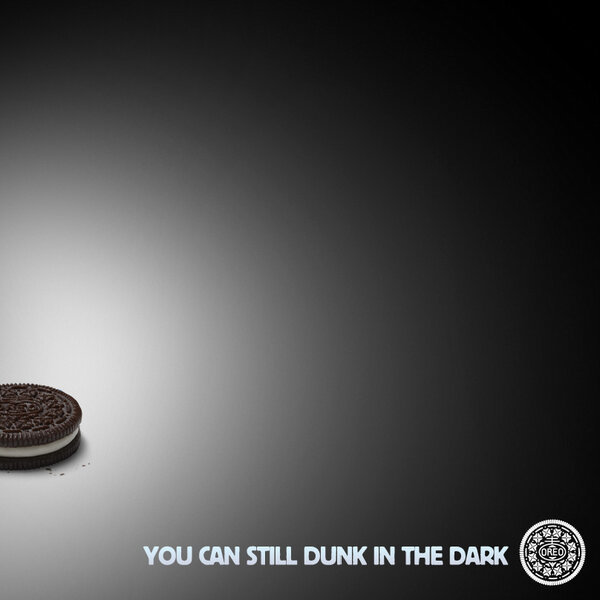
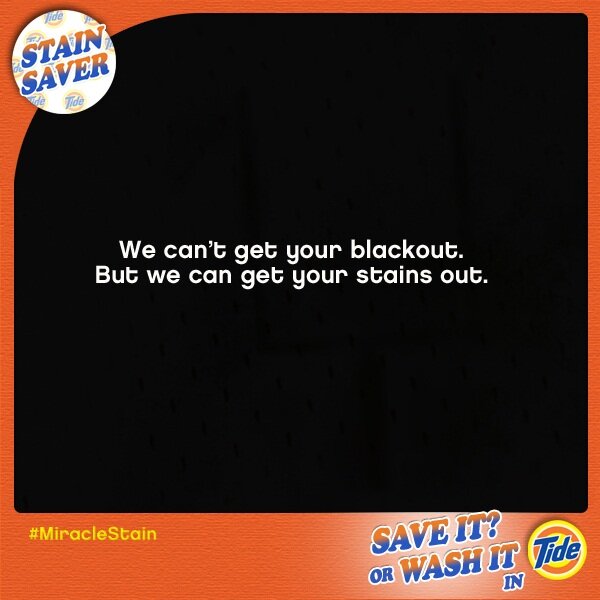
Superbowl Power Outage. Brands really capitalised on it with Social Media. Full marks to Oreo, Jim Beam, Tide and 6 others.
Full marks to Mashable too, out quick with a great story about brands who capitalised on Superbowl Social Media without paying for the expensive commercials. And great too, because it showed brands who were literally, thinking on their feet.
You may (or may not) have been watching The Superbowl, as I was, and as it entered the third quarter, a blackout/power cut ensued. The game stopped and the stadium went into darkness. Out then popped the top Ad for Oreo on Social Media, 4 minutes after the blackout - "No power? No problem.You can still dunk in the dark". Super. And I've no idea how they got it ready so quickly.
Next up was Tide with this...
And then Jim Beam who have a brand called 'Black'.....
Other brands got in too. Calvin Klein with a video of a fairly hunky man doing press ups under the headline, "Since the lights are still out..."
PBS, the Broadcaster, (the excellent broadcaster), tweeted that viewers shouldn't worry because they had 'Downton Abbey' on instead.
Walgreens tweeted that they had candles for sale.
And Audi said they were going to send some of their LED lights to the stadium.
They were also bidding immediately (especially brands like Bud Light) for Adwords 'power outage' and 'blackout'. How brilliant that is.
Fairly great that Agencies and their Clients were that alert to capitalising on something that they couldn't have predicted. Pretty smart thinking. And good energy.
It was a touch-and-go game at the end with Baltimore's Ravens winning what has become a really fabulous spectacle.
A magnificent night in New Orleans.
Monday, 4 February 2013
Last Nights Superbowl commercials. 3 interesting picks but you can watch them all here.
You'll see all of last nights very expensive (nearly 4m usd a throw) here by clicking/cutting+pasting this link http://www.youtube.com/user/superbowl2013ads
Gangnam style was of course the most watched YouTube video of 2012 so use it in the Superbowl makes perfect sense. Must have cost a bomb.
A couple of my other highlights though and starting with this one which uses stills rather than footage. A nice idea....
This more more bizarre as an ad campaign against Ad campaigns in The Superbowl that promote sexism and using twitter. Interesting stuff....
And this for me, the winner. Magic track, incredible cast, lovely idea....
But have a look at them all. Well worth it!
Superbowl Ads. Expensive airtime, super Ads and probably the most watched TV programme ever in The USA.
Tonight is Superbowl Sunday - just in case you've been in a cave (!) and haven't heard. What makes it exciting is ad watching. A lot of brands are now launching "teasers" in advance of the game to get you "teased" to look out for the final version. This one for Samsung (in two parts) looks terrific and titled "the next big thing". At 2 minutes, I'm guessing they'll spend about 12 million just on the one Superbowl broadcast alone. Is it worth it? Have a look but I think it's a great spot (Seth Rogen and Paul Rudd are very well known stateside). The second part is great and below.
Possibly the most expensive airtime on the planet in terms of overall cost per commercial (3.7 million usd a piece) but not per capita. Interesting for example, that Ireland's own Late Late Show is more expensive per viewer than The Superbowl. Because even though you pay 3.7 million for a Superbowl spot, you reach about 200 million people who will watch at least part of the game (mainly the 3rd and 4th quarters so end spots can be more valuable). The final Samsung commercial is going out, for example, in the 4th quarter.
Consequently based on a standard trade measure of cost-per-thousand CPT (the cost of reaching one thousand viewers) Superbowl does very well in value terms because the audience is so huge. Therefore, all spots are well sold out.
About 130 million will watch the game end-to-end and that will make it the most watched US TV programme ever. Because the content (American Football) limits it to US viewer appeal, it doesn't reach the viewing heights of sports with global appeal like Soccer. About half the planet for example, watch The World Cup Final, putting the viewer numbers in billions.
So a lot of us will watch the Ads and, as I've blogged over the last couple of days, the Ads can really make a difference as the "Dart Vader/Star Wars" spot did for VW last year. Already over 200 million viral views. 'Doritos' and recently 'Go Daddy' largely built brand recognition with their Superbowl spots as indeed did Steve Jobs choose it to launch his new Apple Mac in the 1984 Superbowl.
It's a huge night for advertising and social media nevermind, for football.
Friday, 1 February 2013
Amazon. Shares jump after results. Book sales +5%. But Ebook sales +70%. On the verge of greatness.
Amazon shares are moving upwards (+10%) on foot of their last Q4 quarterly results which showed a jump in operating income to 405m usd from 206m usd a year ago. Not bad, up 22%.
Revenue rose 21% to 21 billion usd although below industry expectations, slightly......
Down 47% was its profit - down from 177m usd to 97m and that's the number that's got the headlines when in fact, the key measure should be growth and operating income. Living Social, Kindle investment and increasing distribution centres all dragged the profit down. Cloud computing services, video content (its LoveFilm video streaming on demand service) sales helped to lift it.
Operating margins were up too (the % of profit on a sale) and that bodes extremely well for the company that has struggled to make significant margins and profits over its existence. It is now on the threshold of greatness.
Sales of books were up 5% but ebook sales were up 70% (!) and Kindle Fire being its most popular product on the site. Amazon are also forecasting +15% growth (and as high as +25%) in this quarter (Q1 2013).
The main driver is the Kindle and the transition from printed books to ebooks. Like Apple's Itunes business, Amazon are ready for this long term. So too their video movie business which competes with Netflix. Ebooks are now a multi-billion business and this is the company that's driving it.
I'm a fan of Amazon.
What they're doing with Kindle, is actually bringing a low-cost Ipad to market. The core functionality might be book reading, but video and social and email and everything will be there soon. Own the device, you own the content.
As regular readers (well okay, the 2 regular readers) of this blog will know, I'm a voracious reader but I switched early to Kindle with some reluctance. However, I have never looked back and nor has anyone I met who made the change.
Fantastic innovation - which as we know, like Apple, is the key to success.
Fantastic Amazon.
Thursday, 31 January 2013
A WTF Moment. Blackberry 10 launches and appoints a new Global Creative Director. Alicia Keys. Yep, the very same.
Research-in-Motion, the Canadian Company that owns 'Blackberry', are in another 'make or break' launch today of the Blackberry 10.
It's a company that doesn't stay out of the news and were sharply criticised earlier in the year for this very launch being post the Christmas sales time. In other words, they were missing the boat of high phone sales.
The CEO is Thorsten Heins, who bears the brunt of most of the PR having taken over under a promise of total revitalisation which just hasn't happened. Yet. Probably because he has the personality of a chair.
So big drum roll for the big launch today.
And then lo and behold, they actually trump their own phone publicity by announcing a new Global Creative Director for the company - Alicia Keys. Yep, the same Alicia Keys. You know, "Fallin'" ("in and out, of love, with you").
Now you're wondering (I can sense it) what exactly would Alicia Keys know about phones? We all are really - but the reason is clear, she says, because "I've always wanted to work with a technology company". Oh, oookkkkaaaaayyyy, I get it now.
Previously she was quoted as saying she was an "Iphone junkie" though? But she tweeted to clear that up by saying she was delighted to be with Blackberry now ("we're dating" she said, on the launch video above).
She'll be doing the national anthem at The Superbowl on Sunday, presumably with her Blackberry. By the way, Blackberry have bought the 1st Superbowl Ad up this weekend. I'm going to hazard a guess here.....it's Alicia Keys singing about The Blackberry 10. Betcha.
But all the PR is about her and not The Blackberry 10 as a consequence of this move.
The good old Washington Post reported that a possible PR alternative was to change the company name instead to 'Research in stagnation' and wonder, like me, what the hell is a 'Global Creative Director' anyway?
And suggested that they had thought Blackberry was moving away from the keyboard? Those kind of comments.
Techcrunch did a whole piece about what she was wearing and a "What the?" byline saying "What Alicia Keys? The singer Alicia Keys?" incredulity. One Techcrunch commentator wondered if he was reading the satirical, The Onion!
Celebrity endorsement does make sense for sure. However, doing it at a launch of the new phone is, well, PR suicide. It's the celebs who get the mention not the phone.
I don't know anymore. I must just be getting too old for this game and not down with the kids anymore. I mean I'd never have thought of appointing Alicia Keys as the Global Creative Director of a phone. Not in a million years.
Wednesday, 30 January 2013
Top 10 Superbowl Ads of all time based on Social Media views.
The Superbowl Ad Title hots up. Here's the previous winners and I can't agree always....Apple Mac's Ridley Scott '1984' launch commercial comes in at 10. Should be at 1.
And the most watched ever is one I just don't get...
But whilst you're here, have a look at today's next blog and see a preview of the Mercedes 2013 commercial. Stunning.
Mercedes Superbowl Ad Preview. Rolling Stones? Wow!
Did you ever see anything like this for a Superbowl commercial?
The Stones 'Sympathy for the Devil' what did that cost?
And model Kate Upton, Usher, William Dafoe?
Things are hotting up for the Superbowl best Ad title on Sunday.
Superbowl Sunday. 36% of TV viewers will have a second screen open. 52% will follow the game on Social Media. 3.7 million for 30 seconds of airtime. And a lot of chicken wings.
This weekend is 'Superbowl Sunday', (49ers V Ravens) the final of the NFL and traditionally, the most expensive airtime in the world. 3.7 million usd for 30 seconds in fact.
What's interesting too, is that the Coaches on both teams are brothers. So it's Brother Versus Brother and Dad will therefore win whatever happens.
It was a commercial in the Superbowl that launched the Mac in 1984.
However, interesting research today by 'Century 21', an advertiser in The Superbowl, which showed that 88% of viewers will watch it from home (as distinct from the Bar or elsewhere). The main reason is being able to replay - a key issue in American Football more than any other game.
The other main reason is that 72% also liked the idea of having access to food and drink easily.
However, yet again we're seeing 36% saying they'll have a 'second screen' open during the game. Presumably to follow the Social Media patter or indeed, to watch it more closely. 52% are going to follow the game on Social Media.
Second screen viewing is now a part of TV consumption from a mountain of research and notably during Ad breaks as viewers turn to watch their laptops/tablets. Critical for advertising that's so expensive if viewers turn to the laptop during the break.
And the sophistication now of Social Media means there's plenty of distractions to entice them away. CBS is the main broadcaster and already, spots are fully sold and Social Media is getting the spillover.
Bud, Audi, Chrysler, Coke, Doritos, Century 21, Go Daddy, Kia, Hyundai, Ford, Mercedes, M&M's, Oreo, Samsung, Pepsi, Blackberry, Taco Bell, Tide, Toyota, VW, Disney and others are all lined up as advertisers in the broadcast.
And each one has it linked through a huge effort on Social Media - notably Audi and Bud. It's real integration of the media.
On Facebook, Twitter, Google+, analysis shows that 49er fans are more likely to share and be active than Baltimore Raven fans based on season games.
One wonders if they'll ever be watched on traditional TV in the future and not directly online as internet ready TV's get into the mass market next year. Then you'll need just the one screen.
Tuesday, 29 January 2013
Steve Jobs gets mixed reviews in his new movie.
Well, I mean Ashton Kutcher (34) gets bad reviews because Steve Jobs is actually dead (something Apple analysts have a problem getting their head around).
The new move 'Jobs' launched Friday at The Sundance Film festival and will be in cinemas in April time. It's a biopic, starting at the start (ironically) in the 70's and goes up to the ipod launch in 2001.
It's said to be not "always flattering" of Jobs but some say that's just Kutchers portrayal....meoww.
Seemingly it's just "passable entertainment" and few reviewers find it interesting - which surprises me because the story should be. Although, no matter what, we'll all probably go see.
The UK Telegraph (a pretty good barometer I might add) says it's an "almighty mess".....Steve's co-founder 'Woz', is played as a clumsy, hairy geek which frankly, seems spot on? They're also pretty critical of Kutcher ("the poverty of his skills as a serious actor are on full display", "he clumsily signposts every emotion" and if that wasn't enough, "his diction is incoherent") so no Oscar there then.
But even if you're not right-wing, other papers have given it a thumbs down too including The San Fran Chronicle. The Montreal Gazette reports that Woz (Steve Wozinack) didn't like it either and in true fashion when asked did he like it, said simply 'No'. But they made a story out of it.
He later sent out a Press Release which also simply said, "none of this shit happened". Good man Woz, he's lost none of it.
So it's not looking good. Pity.
One wonders if they will follow it up with the Apple story after Jobs and under the new influence of replacement MD, Tim Cook. A part 2, a sequel.
But then I'm not sure I'd go to see a movie either called just...'Cook'.
It'll be out in April so we will go see then for ourselves. If you do, let me know, and I'll post your review.
Monday, 28 January 2013
There's 38 sugar cubes in a supersize Coke and so Coke are facing bans. So they do a TV Ad to respond. And it makes things worse. When Advertising backfires.
New York's Mayor, Michael Bloomberg, promised last spring that he'd ban the sales of big, supersized sugary drinks (portion control), school bans on dispensers of them and possibly increase a sales tax on them.
He had already completed the ban on smoking and this is his new challenge - obesity.
The average American drinks 45 Gallons of soft drinks a year.....sugary sodas are the single largest source of calories in the American diet. A regular Coke has the equivalent of 27 sugar cubes in it. And the supersize Big Gulp? 38 sugar cubes. 36% of Americans are obese and are estimated to cost 147 billion usd in medical care.
So last year, New York started an advertising campaign aimed at anti-soft drinks in a campaign to tackle obesity and diabetes. In other words, they took on Coke, whom have been described as the "seller of liquid candy". Which they are and over which there should be no dispute.
The 75 Billion usd soft drink industry, fronted by Coke, has now launched its response and industry lobbyists have taken to court to block Bloomberg's plans on the ban as well as an Ad campaign of their own. And this response will in fact, do the industry more harm than good.
Their is a growing backlash against the company by consumers and outrage fuelled by their very own TV Commercial. It's like tobacco companies whom when faced with an Ad ban, came out to explain that cigarettes were not linked to cancer - and produced medical quacks to prove it. Coke is doing the same thing and that is really annoying people. Coke are trying to pretend that they are actually, at the forefront of doing good work on obesity. Dear, oh dear.
Frankly, I am not surprised there's a backlash. Watch this next commercial and it's just shocking where Coke is sponsoring kids breakfast clubs. Shocking and disgraceful marketing and advertising. They are going to be the authors of their own bans and demise.
They're running a two minute Ad on national TV (top of this blog) and a 30 second approach. One commercial "coming together" shows the supposed initiatives Coke has taken to address the calorie/obesity problem. Another shows the ways you can burn off the calories - like "laughing out loud" is one, I kid you not.
Against a background of slim actors sipping Coke and healthy youngsters exercising, a voice over offers a simple explanation for the growing obesity crisis in the eyes of Coke - "If you eat and drink more calories than you burn off, then you'll gain weight" goes the Coke jingoism as a woman jogs through shot.
Pathetic? unbelievably so and any attempt to try to position Coke as being in the vanguard of obesity is just ludicrous and won't work. Is the Ad Agency thinking at all? The idea that Coke is somehow involved in the fight against childhood diabetes, just is beyond belief, whilst at the same time, like McDonald's, uses appalling marketing tricks to target kids. Like sponsoring their breakfast clubs. Jesus. It's like tobacco companies saying that they are at the forefront of tackling cancer.
Of course, by doing all of this, it is growing its own criticism, drawing more people into the debate which weren't previously. The commercial angers people and clearly it has backfired. This commercial angered me and looking at the Breakfast Clubs and this commercial, it's about time Coke got a new marketing team or proposition. They're damaging their own brand.
As a Fellow of The Institute of Advertising, a Fellow of The Marketing Institute, a former board member of the European Ad Council (EAAA) and as a former 2 term Ad Institute President, I'd support a ban on Coke in schools, an Ad ban, a ban for larger drinks and an Advertising tax, simply because Coke are both contributing to obesity AND damaging advertising.
When you produce advertising you have a responsibility, because it is so very powerful and with that responsibility, there are things you must not do - lines you do not cross. Coke, it seems to me, could care less. They'll do whatever it takes.
European action is already underway - France taxes these drinks, Denmark taxes saturated fats, Hungary taxes hamburgers and the UK is considering a "fat tax".
Bloomberg says that more people are going to die from obesity than smoking and he's probably right. This is not a man to be diverted and he's prepared to take on this insidious industry, head-on. Good man.
As for Coke?
They're eating themselves through poor planning and crass advertising execution.
Let them.
Friday, 25 January 2013
Microsoft under constant pressure. New commercial here, focuses on nostalgia, the Microsoft of old. Will marketing like this work?
Microsoft are under pressure. Basically they found themselves the leaders, in the wrong market - PC's - and having a dominant position didn't help as PC sales tumbled. So they've tried to re-invent themselves without a product innovator (a Gates or a Jobs) at the helm and rather have the most peculiar salesman, Crazy Steve Ballmer, instead.
Search him on this blog and you'll see the videos and you'll see what I mean. Enough said.
Their foray into Windows 8 recently doesn't seem exactly to have set the world on fire and their 'Surface Tablet' has contributed to strong revenue in the last quarter to December no doubt. But what of the future and where they're going?
They plead for their relevance today by promoting their past. In other words, use nostalgia.
"We're the brand that's always been here", "We're the brand of establishment, of trust", Remember us? That kinda' thing and in that way, hope to jolt happy memories from former Microsoft users (which we all were) into thinking, you know what...they were there at the start for me. Aaaahh.
But it will work too. The commercial is nice and clean with viral potential as we all do a "do ya remember that!" and pass it onto our friends.
It's very brand rather than substance and targets children of the 90's. The endline, "you grew up...so did we" is a direct plea.
The final copyline "Reconnect with the new Internet Explorer" establishes trust around a thing we all knew - IE.
What it will do is to help 'trial' and get people to take another fond look at Microsoft but that has to be followed by substance - by relevant, useful product. And that's the problem.
Advertising can get people to try a product again, but only once. The worry is, that it's exactly because Microsoft has nothing to say, that they chose this route. When you've nothing say, talk about past glories.
And they'll be found out.
Thursday, 24 January 2013
Good news from Google. Revenue up, Margins up, Ad rates holding-ish. It's clear - more advertising is going digital.
Google's core revenue is up and beats analysts expectations. Its shares have increased by +5% and notably its Ad rates, although a slight fall, seem to be "holding". Good news.
The 4th quarter is a critical, a seasonal time for Ad sales (Christmas).
One of the reasons is the growth in mobile search where users access Google by smartphone and those CPC rates are always lower. So if you like, the averages are down because of "blended product". Or in other words, an increase in its lower-cost product brings the overall price down.
But a "hold" on Ad rates is good news for the Ad community - things may be bottoming out. Clearly too, there's increased demand for Google Advertising and so, one might assume, more demand in general. It's clear - more Advertising is going digital.
It has already sold the Motorola set-top TV business for just over 2 billion usd.
All in all, encouraging numbers not just for Google, but for the trade itself. They are market leader and so tend to show the trend. And this trend is up.
It came too on the day that RIM who owns Blackberry Crackberry, say that they'll launch their new phone on January 30th. And that, in contrast to Google, is really make or break time.
But this is all good.
Wednesday, 23 January 2013
Jan 24 1984. Steve Jobs launches his personal computer. The Apple Mac.
In 1982 a young Steve Jobs started developing a personal computer with a graphical user interface with 'Woz', Steve Wozinack. He is often the forgotten genius.
2 years later, The Mac was launched with a very famous, masterpiece commercial called '1984' shot by Ridley Scott (who had just completed 'Blade Runner' 2 years earlier).
Conceived by Agency Chiat Day and shown in The Superbowl break (during the 3rd quarter on January 22nd). A 900,000 usd spot which then, was huge. It clearly targeted "Big Brother" IBM and perhaps the most influential commercial ever, along with Hegarty's "Grapevine" Levi's commercial. '1984' was only aired one other time on TV so that it qualified for awards.
It borrows a lot, if you ask me....from Fritz Lang's 'Metropolis', a movie I strongly urge you to see. That's not to take away from it one bit. It did exactly what it needed to do and still is in line with the 'Think Different' concept. Individuality. And I personally think it's world class, have no doubt.
The Mac came with 128 kilobytes of Ram (it was known as the 'Mac 128' or the "thin Mac"), a floppy drive (!), a mouse, Black and White screen, and with MacPaint/MacWrite and later, MacOffice as the software. A beige case, a handle on the top to make it easy to lift and sold at 2,500 usd. It was convection cooled (rather than by a fan) because it was quieter - a Steve Jobs marketing decision. You can see him present it on Jan 24 1984, on the video at the top of the page.
And it talked! Briefly. A truly world changing day.
Happy MacBirthday.
Tuesday, 22 January 2013
Samsung new TV and Online Video targets one thing. Blackberry.
Samsung are already known for TV Commercials and online video that goes after The Apple user. Now their new campaign targets Blackberry, already struggling.....so this won't help.
Although they don't mention Blackberry, they make it clear whom they're talking about, showing clueless employees who persist with out-of-date phones using keyboards. So it's aimed at the business users firstly.
It's supposed to be a start-up office launching a game called 'Unicorn Apocalypse' pretentiously enough.
Perhaps not the best commercial ever at all but it's hard-hitting enough for Blackberry users to understand. And it's a symbol of Samsung's ongoing attempts to take on all-comers. They recently were the stars of the show at The Consumer Electronics Show in Las Vegas.
Samsung are not prepared to stand still. With world domination clearly in their minds, the brand is going from strength to strength and producing unbelievable profits. They are afraid of no one and even prepared to kick a brand like Blackberry, when it's down.
Unlike Apple, they pay a little less attention to branding commercials and tend to go aggressively for the jugular.
Watch out for Samsung.
Atari files for bankruptcy. Another world class brand that ignored digital.
Anybody who grew up in universities in the 1980's, as I did, knows Atari very well, which started in 1972. Between lectures or just not attending them, pool tables and Atari games filled the gap. Asteroids was genius, played on gaming machines that consumed money, never mind Pong.
This was the cool and dominant games company that started gaming. We wore their logo on T-shirts.
The 40 year old company has now filed for bankruptcy in the US - although in part, to draw a distinction from its French parent. The French company bought Atari in 2008 and has seen a 50% share price collapse.
The US company only employing about 40 people, has moved more into digital and mobile gaming and it's seeking protection from creditors. It intends to sell off its assets, its brands, which are so recognisable.
The collapse of Atari is the familiar story of the demise of companies like HMV, all the music brands that let Itunes kill them, Blockbuster, Borders, Sony, Panasonic, Sharp and all the dominant brands who let digital get past them. Brand leaders that just ignored the web.
Thought it was a "bit of a waste of time"...."Can't make money on the web" etc... and all the platitudes of old men that cost thousands of people their jobs. Families ruined by a lack of foresight from middle aged men earning millions.
And they're still around.
Atari could have owned online gaming.
They now could be bigger than Znyga.
Oh ye, of little faith.
Monday, 21 January 2013
Lance Armstrong and Nike.
The problem with celebrity endorsement in advertising is that you're banking on human frailty. It's a real quick way to get credibility and cachet for your brand but a super fast way to lose it.
Once celebs get accused of something, they're tainted goods. I was involved in a campaign for Suzuki cars for example, featuring Ronaldo at a cost of 1 million stg. Then he was accused of rape, just as the campaign launched and we spent the week editing him out and re-shooting it. But, in some ways, the damage is done once you start announcing it.
Tiger Woods moments also cost him dearly but cost his sponsors too, like Nike, who had so much aligned themselves to him. Michael Jackson child abuse charges caused problems for Pepsi - clearly.
And yet at the time, no one was more sponsorable than Tiger Woods and Michael Jackson - both clean, home living boys it was thought.
And so too Lance Armstrong. Clean living, cancer survivor, good looking champion of 7 Tour De France. The All-American boy but now we know differently. Although I watched the Oprah interview and I have to say, I saw redemption although few did. A new honesty that will help him re-build his brand, I think.
Worse still, his featuring in a Nike commercial actually gets Lance to say "What am I on?" ....."I'm on my bike". Yep, sure, almost defying the rumours. Which of course now, makes it worse and makes it viral again to Nike's chagrin.
And that's the problem. People.
We all make mistakes, we all do things we shouldn't and when a brand puts its future in the hands of those human frailties, it takes a chance. A really high profile chance that it probably should never take. Nope, probably never.
If you're going to enter these endorsement stakes, spread the risk - by sponsoring a team rather than a person.
There's safety in numbers.
Friday, 18 January 2013
Apple's marketing conundrum in China. Answered.Brilliantly.
Only last week I blogged about Tim Cook's announcement that Apple was going to make China it's "number 1 market". However, my point was that it created a marketing conundrum. (http://streamabout.blogspot.ie/2013/01/apple-sees-china-as-their-number-one.html)
If Apple stayed premium priced (as it is) then few Chinese could afford it. If it dropped prices, then that would have a global affect on the brand as it re-positioned itself more downmarket. It suffers hugely from lower priced competition anyway in the form of Samsung who outsell the Iphone 4:1.
So it was an interesting marketing issue.
Today we have the answer. What Apple have done on its China website is to let buyers pay for products in instalments and mostly, over two years. So the price remains the same, but the payment plan is structured to be affordable. Good solution, leave it to Apple.
It's only for purchases been 48 usd and 4,800 usd and some additional fees are paid at the end, presumably to cover the cost of credit. An Iphone in China is 850 usd, well outside the average Chinese salary (averages 577 usd per month) and dreams but this way, it puts it into affordable reality.
Apple is currently the 6th biggest player in China but only starting.
This is a great solution and great marketing.
Simple yes, but then you have to think of it and implement it.
I wouldn't have.
Thursday, 17 January 2013
Google are serious about developing glasses. These have real potential.
The growth of Glasses as a replacement for the mobile phone - or indeed, just as a new type of glasses - is stepping up a gear.
At the CES show last week, I blogged about the introduction of Goggles that allow you to video whilst ski-ing downhill for example and live streaming it to your friends. (http://streamabout.blogspot.ie/2013/01/video-glasses-mark-2-launched-this-week.html)
And Instagram had a go at 'Instaglasses' (http://streamabout.blogspot.ie/2012/07/instaglasses-from-instagram-this-has.html). Google's launch last year is here (http://streamabout.blogspot.ie/2012/04/google-goggles-apple-fiddles.html)
Google have just announced a big session around what they call 'Google Glass' (as distinct from what we know as "Google Googles"). They're holding a 'Glass foundry' this month, to introduce developers to the concept and to start to build the platform.
The Glasses, which they demonstrated last year, have the option to record video, get weather updates and see messages so already they've achieved a level of good sophistication. Now they're taking it further.
'Explorer Editions' of the Glasses are expected to be in people's hands next year and are currently being ordered at 1,500 usd a pair. The developers who attend the foundry event, will be able to use the glasses and the whole purpose here is for Google to get feedback.
It's early development days but this marks a real serious input by Google into developing a better product and platform because they....eh, see the light. They know there's a good business model here.
Glasses have real potential to deliver all sorts of content and to be able to do things hands-free (such as video by head movements alone). These Google versions look smart (always has been an issue) and at 1,500 usd expensive. But that's a starting price and they'll reduce in time for the mass market. The applications are enormous - Sports being one - but so many others including 'Driving glasses' that show directions, locations and geo targeted offers (possibly using 'Foursquare' for example).
It's something every one of our kids will have.
I can see it now.
(sorry)
Wednesday, 16 January 2013
Netflix makes another content move. Deal done with Turner + Warner. This is some company.
Netflix is moving on with more content deals. Having the cash, allows it to compete with traditional broadcasters and win, snagging content deals that will propel it into outer space.
Netflix knows well too, that they've "got away" with poor content already and have clearly identified their content as a weakness. Something to be admired in a company.
Their positioning as a more "children" brand - insofar as they see that as being the initial hook to get subscribers - means they've a kids content focus. So now they've done a deal with Turner and Warner Brothers bringing past series of Cartoon Network and Adult Swim, starting in March.
Animation's Green Latern and TNT's Dallas will arrive in 2014. Cartoon network includes Johnny Bravo and every parent's nightmare, Ben 10. Robot Chicken and Children's Hospital are amongst many that's included - you mightn't know them, but your kids do. Very well.
The list of programmes is endless.
The Warner Brothers selection includes The West Wing, Chuck, 666 Park Avenue and Revolution. Previously Warners had said they didn't want this content streamed but seem to have succumbed to the inevitable.
Netflix has also arrived on Windows 8.
The growth of Netflix, notably in 2012, has been staggering and I don't know how many times I've blogged Netflix but it's a lot - simply, it's hard not to because this is a business that just keeps in the news. Always doing stuff.
The losers in all of this? DVD rental and traditional TV.
The winners? all of us.
Tuesday, 15 January 2013
Google's new Chrome browser has a new focus. Voice. This could be the next wave.
The manner in which we input data - typing that is - is both tedious and old fashioned. Like touchscreen has taken over the phone, voice commands will now take over email, twitter, desktops and computing.
Apple's 'Siri' is an example of that and although cumbersome at the start (and a bit of a novelty) intelligent software allows it to recognise your voice to make it better. But all the talk is of improving voice recognition.
Now the new Google chrome browser (version 25) comes with it, a good attempt at voice commands, notably for email and web apps. On a phone or tablet, voice commands are very useful but also now on desktops.
Google's Chrome demo is about speaking to create an email so they've highlighted it as the feature.
Whilst there are software versions available to download - such as HAL and Dragon - the system is yet to be perfected so that commands are better understood. But have no doubt, it's getting much, much better and with a focus from Google and Apple, it could become the next wave.
One would think that if voice recognition worked as it might, we'd all be using it and such is the market scale that it's getting real focus. Tweeting by voice is a clear example of the need never mind email.
Voice tweeting you can already do but in a small way using brands like Shoutomatic which I've blogged about before. Wholesale voice is coming.
It could well be the next wave.
Monday, 14 January 2013
HMV ready to call in administrators Tuesday.
All major media are reporting that HMV are to call in administrators (Deloittes mentioned) tomorrow Tuesday, putting their 4,000+ jobs in its 238 stores, at risk. ITV are now reporting it as definitive. It follows a poor sales time at Christmas which was THE last ditch effort.
It's very very sad for creditors and staff - I know, I've been there. It doesn't affect Waterstones whom HMV sold in 2011 for 53 million stg.
Here is my Blog from before Christmas which gives you the background:
It was July 1921 when Edward Elgar (the 'Land of Hope and Glory' man) opened the first HMV ("His Master's Voice" which featured the famous logo and 'Nipper' the dog as above) store in Oxford Street, London, pictured below.
Elgar was the first composer to understand the "gramophone", as being a technology of the future.
The men behind the store, Williams and Owen, had founded 'The Gramophone Company' in 1897 to help spread the new technology (what was a recording device), and opening a shop to sell it, seemed to make sense. Ten years later they merged it with Columbia to create, Electric and Musical industries. EMI. Still one of the world's leading record labels and famous for signing The Beatles in the 60's.
Pioneers.
But today, it is the very threat of technology, that has brought about the demise of HMV. Internet digital sales, such as Itunes, has eroded sales on the high street and HMV stood by, like so many companies of old and watched it all happen. Who was in a better place to adopt online music when it began, than HMV? It was the music brand. Indeed, it was the DVD brand.
In 1984, Dublin's own, Bob Geldof, opened the flagship store on Oxford Street as the biggest music store in the world and it still is. I was in it many, many times. In 1998, HMV was spun off from EMI and sold to Advent International, a private equity house. In 2002, it floated on The London Stock Exchange at a 1 billion sterling valuation. Last Friday it was worth less than 10 million.
It now faces a breach of its banking covenants in January and therefore, "material uncertainty" of 220 million stg debt with 8 Banks. When you start to breach banking covenants, it's the start of a quick but slippy slope. I know. I've done it and it's the first big flag of impending doom.
Why is it happening?
Alan Giles CEO since 1999 said in 2004 he wouldn't "bet the company" on making the investment needed for digital because, "if we had bet the company then we would have lost it". Irony. They didn't make the investment and now they have lost it.
In fact, since he said it, the sales of "singles" has risen from 40m a year to 180m a year (!) almost entirely due to digital downloads. So talk about an opportunity lost.....
The Web now accounts for 60%+ of sales, HMV has about a 20% market share of UK sales and 5,000 staff losing about 36 million stg every 6 months and 176 million in net debt. The share price has gone to 2p, from £2.72.
Christmas accounts for 60% of all annual sales so these days right now, are critical to the future of HMV. However, it's unlikely they're going to make it.
Their online offering http://hmv.com/hmvweb/home.do is frankly, naff. Real "retailer built", rather than Social Media savvy. And they no longer have the money to make the investment they need to.
And HMV is now irrelevant in a changing market landscape. Even today, it just isn't at the digital races. It's simply become extinct.
It is the story of a big brand that didn't get digital. Like their sister company, Waterstones, who let Amazon own books - or Blockbuster/Xtravision who let Netflix own video - or TV broadcasters who let The Huff Post own the news - or Microsoft who let Apple own computing - they are the story of the ongoing saga of dinosaurs in a world that's changed. There's no excuse either because even allowing them to miss the boat at the start, they've done little to catch up. It's appalling actually because that lack of thinking, might now cost 5,000 jobs.
Instead of walking away with some payments no doubt, the management team should be taken out and flogged. Publicly.
But herein lies a lesson for the other companies out there who have their heads in the sands. There still is lots of them and they will be replaced by this new order.
The Web is here, are you?
It's very very sad for creditors and staff - I know, I've been there. It doesn't affect Waterstones whom HMV sold in 2011 for 53 million stg.
Here is my Blog from before Christmas which gives you the background:
It was July 1921 when Edward Elgar (the 'Land of Hope and Glory' man) opened the first HMV ("His Master's Voice" which featured the famous logo and 'Nipper' the dog as above) store in Oxford Street, London, pictured below.
Elgar was the first composer to understand the "gramophone", as being a technology of the future.
The men behind the store, Williams and Owen, had founded 'The Gramophone Company' in 1897 to help spread the new technology (what was a recording device), and opening a shop to sell it, seemed to make sense. Ten years later they merged it with Columbia to create, Electric and Musical industries. EMI. Still one of the world's leading record labels and famous for signing The Beatles in the 60's.
Pioneers.
But today, it is the very threat of technology, that has brought about the demise of HMV. Internet digital sales, such as Itunes, has eroded sales on the high street and HMV stood by, like so many companies of old and watched it all happen. Who was in a better place to adopt online music when it began, than HMV? It was the music brand. Indeed, it was the DVD brand.
In 1984, Dublin's own, Bob Geldof, opened the flagship store on Oxford Street as the biggest music store in the world and it still is. I was in it many, many times. In 1998, HMV was spun off from EMI and sold to Advent International, a private equity house. In 2002, it floated on The London Stock Exchange at a 1 billion sterling valuation. Last Friday it was worth less than 10 million.
It now faces a breach of its banking covenants in January and therefore, "material uncertainty" of 220 million stg debt with 8 Banks. When you start to breach banking covenants, it's the start of a quick but slippy slope. I know. I've done it and it's the first big flag of impending doom.
Why is it happening?
Alan Giles CEO since 1999 said in 2004 he wouldn't "bet the company" on making the investment needed for digital because, "if we had bet the company then we would have lost it". Irony. They didn't make the investment and now they have lost it.
In fact, since he said it, the sales of "singles" has risen from 40m a year to 180m a year (!) almost entirely due to digital downloads. So talk about an opportunity lost.....
The Web now accounts for 60%+ of sales, HMV has about a 20% market share of UK sales and 5,000 staff losing about 36 million stg every 6 months and 176 million in net debt. The share price has gone to 2p, from £2.72.
Christmas accounts for 60% of all annual sales so these days right now, are critical to the future of HMV. However, it's unlikely they're going to make it.
Their online offering http://hmv.com/hmvweb/home.do is frankly, naff. Real "retailer built", rather than Social Media savvy. And they no longer have the money to make the investment they need to.
And HMV is now irrelevant in a changing market landscape. Even today, it just isn't at the digital races. It's simply become extinct.
It is the story of a big brand that didn't get digital. Like their sister company, Waterstones, who let Amazon own books - or Blockbuster/Xtravision who let Netflix own video - or TV broadcasters who let The Huff Post own the news - or Microsoft who let Apple own computing - they are the story of the ongoing saga of dinosaurs in a world that's changed. There's no excuse either because even allowing them to miss the boat at the start, they've done little to catch up. It's appalling actually because that lack of thinking, might now cost 5,000 jobs.
Instead of walking away with some payments no doubt, the management team should be taken out and flogged. Publicly.
But herein lies a lesson for the other companies out there who have their heads in the sands. There still is lots of them and they will be replaced by this new order.
The Web is here, are you?
Apple sees China as their "number one market". But it creates a problem on price. A real marketing conundrum.
Apple for once, seems to be in a bit of a marketing bind. Their CEO Tim Cook, currently on a visit to China, said China will be "Apple's number 1 market in the future" even taking over from the US. And who would argue with that.
In fact China is going to be the biggest market in the world for most brands in the future, full stop. Remember too, there are Chinese technology companies (I can name 5 already) of note who will also have an impact outside China - this is not a one-way street.
The problem Apple have in tackling China and indeed, in competing globally with Samsung (who outsell Apple 4:1) is price. Apple is and always has been, the premium brand ($400/$500) but China needs a low cost brand (under $200). The winning formula for Samsung was of course, to do it better (or copy) than Apple and sell it cheaper - that's proved a winner. The problem with China is they don't have the incomes en masse to support Apple's current pricing. So they simply won't be able to buy Iphones and Ipads in massive numbers at current pricing.
Never mind just China, with a worldwide recession, Apple needs to consider its pricing anyway.
If Apple reduce their pricing, it will shift the brand values worldwide into a place where I'm sure it doesn't want to go - cheap rather than premium - and affect every market in which it trades.
Although interesting isn't it, that a brand can be premium in one market and cheapest in another? Corona beer in Mexico is the 10 cent, cheapest, downmarket beer. In Ireland and the UK it's $4 and premium. Same beer, same bottle, different markets.
If Apple don't reduce their pricing but try the old marketing trick of developing a new "low cost" brand - The "A Phone" or something - it will be absolutely transparent and have exactly the same impact. Apple will be cheapened.
Of course a cheapened brand is not a bad thing in recession - not at all. One only has to look at Irish Airline brand 'Ryanair' and sees them sweeping across Europe. Cheap and nasty but a huge success.
So it's a brand conundrum and a particular problem with a brand as established as Apple. My view is the way out is to move towards value add. In other words, retain the existing pricing (more or less) but then give something with the brand - buy one get one (bogof) or possibly a loyalty scheme (Apple club) giving massive rewards and so on. Subsidise the upfront cost.
We will see what Tim Cook does. Already Apple have indicated that they will not be reducing prices....but we'll see. If they're going to crack China, whatever about competing with Samsung, they have a problem and it's not going away.
But then I'm talking about Apple and we know they'll find a way, they always do. But it will be interesting marketing to watch.
Subscribe to:
Posts (Atom)